Start with the room, not the thermostat
Before buying anything, notice how your workspace changes through the day. A desk beside a sunny window may be pleasant in winter but uncomfortably bright and warm in summer. A corner near an exterior wall may feel cooler when the weather turns cold. If possible, try working in a different spot for an hour or two before rearranging furniture permanently.
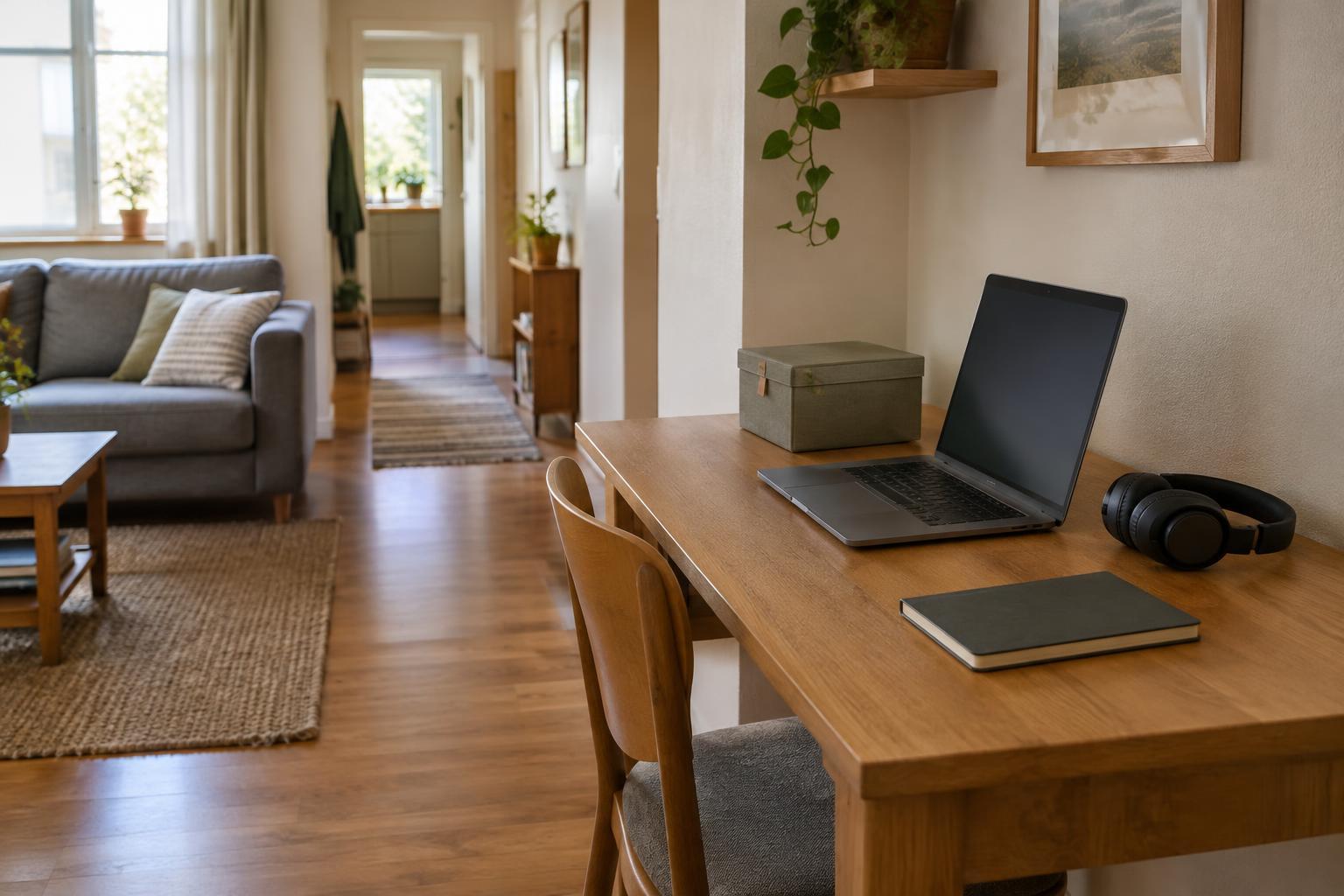
In a multipurpose room, even a small move can help. Shift a narrow desk out of direct sunlight, rotate your screen to reduce glare, or move your chair away from a draft. Keep enough room to open doors and walk around the furniture. A workspace should feel usable without making the rest of the room difficult to live in.
Set up for warmer days
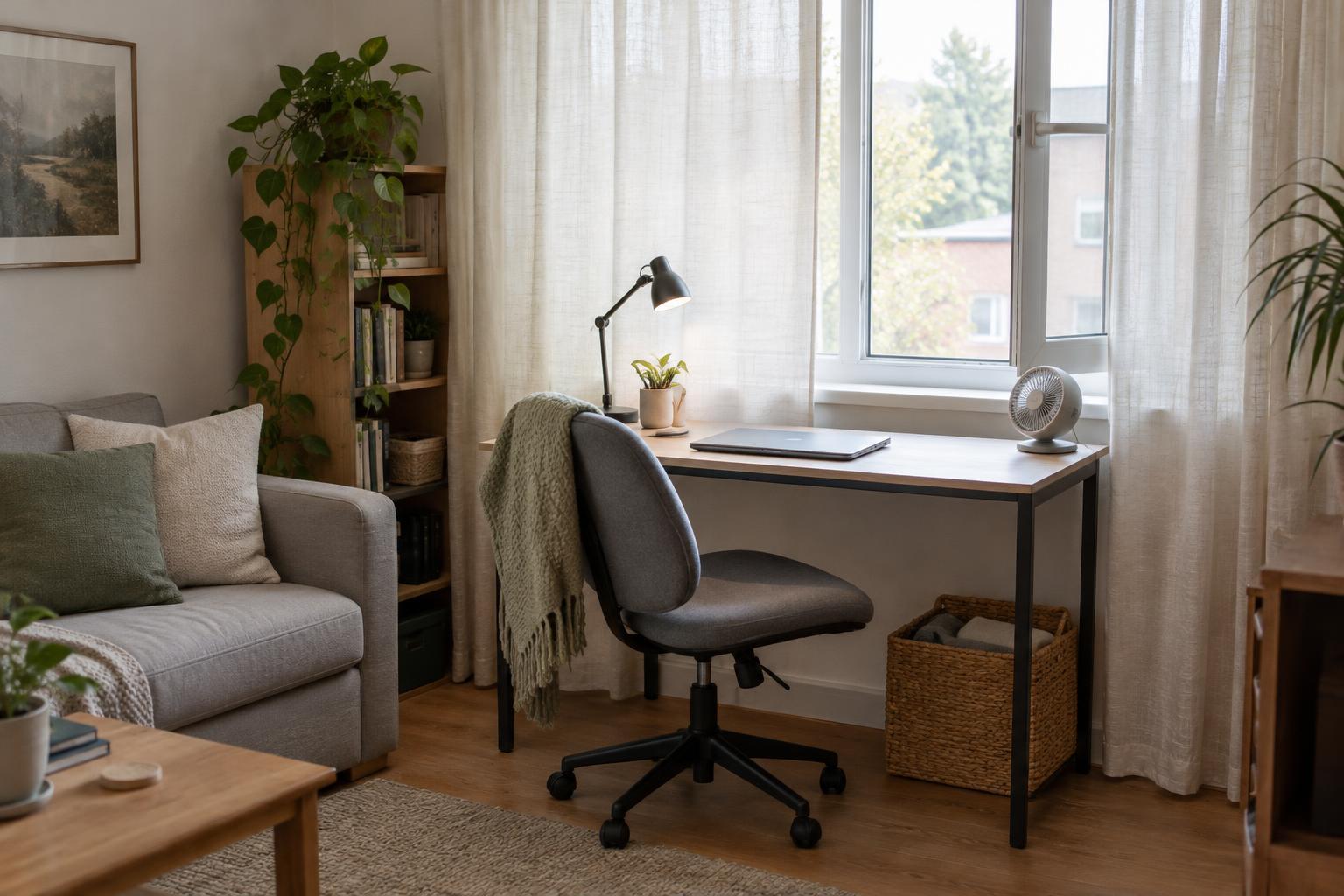
On hot days, manage sunlight before it heats the area around your desk. Close a blind or curtain when the sun falls directly on the workspace, then reopen it when you want daylight without glare. If you use a fan, position it where it can move air across your working area without blowing papers around or putting cords in a walkway. Follow the instructions for any electrical equipment, and keep it clear of water.
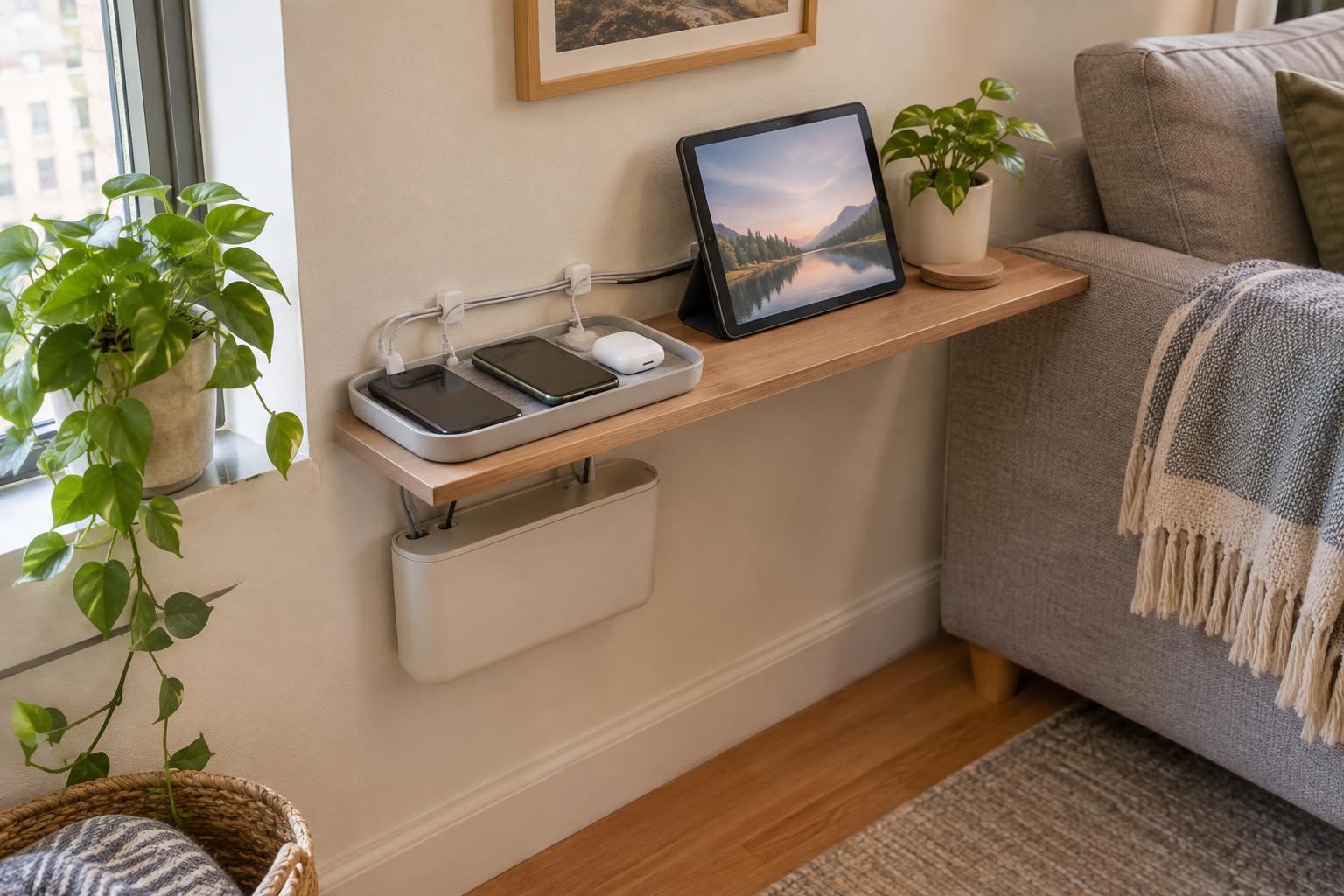
Reduce the small sources of warmth you can control. Switch off a task lamp when daylight is enough, and avoid leaving unused devices running beside you. A light, breathable chair cover may make a seat feel more pleasant, especially if the chair material becomes sticky. Keep a drink within reach but away from your keyboard and plugs. These modest changes are easy to reverse when the room cools down.
Make colder days easier without crowding the space
Cold-weather comfort often starts at your feet and hands. Try socks, slippers or an extra clothing layer before adding another appliance to a crowded desk area. A washable throw over the back of your chair is easy to grab and can be put away when the room is used for something else. If your feet rest on a cold floor, a small mat may make the spot feel more inviting.
Check for drafts around a window or door, but avoid blocking ventilation or covering a heat source. Close curtains after daylight fades if they help the room feel less exposed; keep fabric clear of heaters. If you use a portable heater, follow its safety instructions, give it the clearance it requires and plug it in as directed. A compact workspace is not a good place to squeeze a heater among papers, cables and furniture.
Keep the desk flexible across seasons
Choose adjustments that do not require a full room makeover. A movable task light helps when winter daylight is limited, while a blind or curtain gives you more control over summer glare. A laptop stand or separate keyboard can make it easier to shift your setup to another part of the table without working in an awkward position. Test any new arrangement during a normal work session, not just while the desk is tidy.
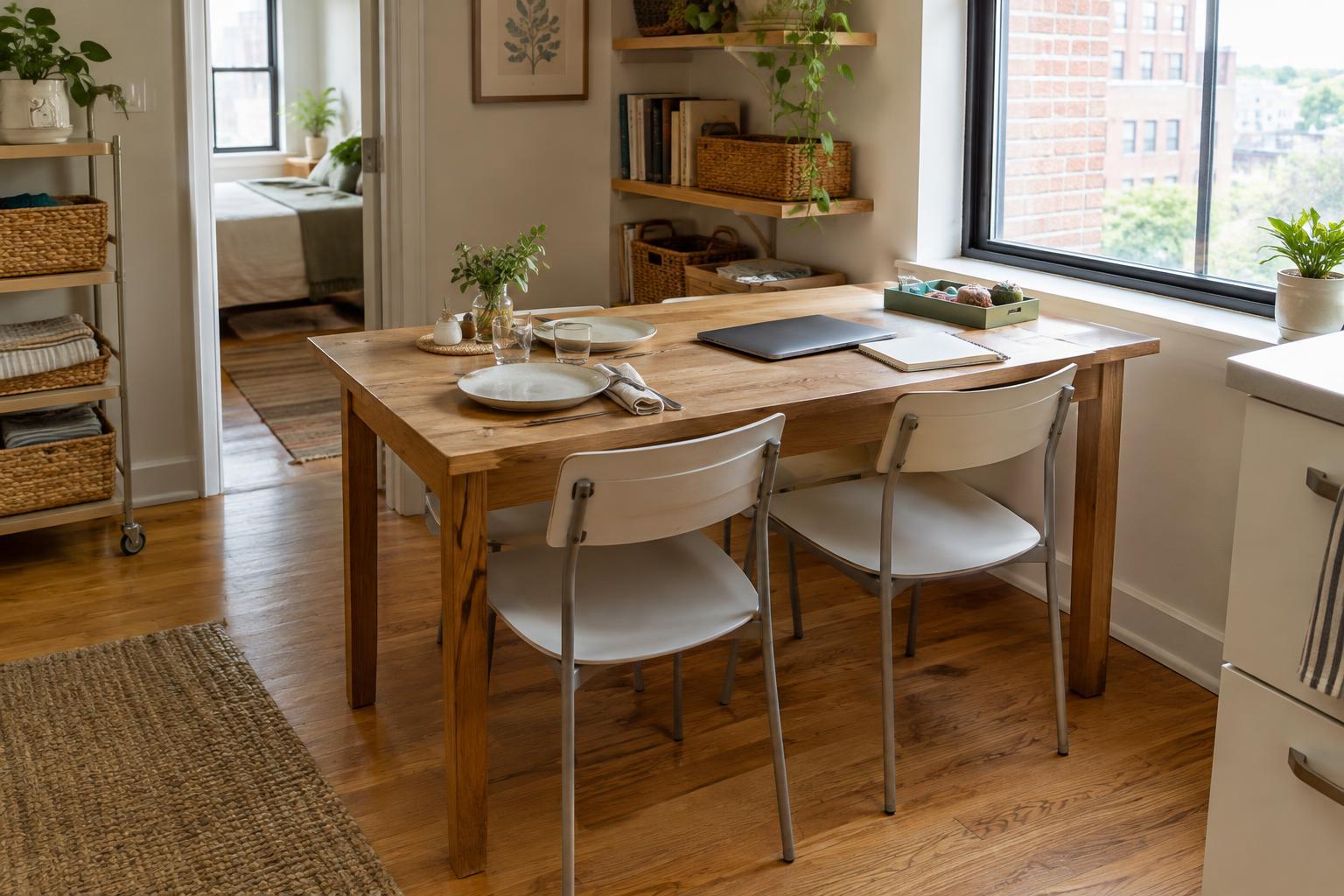
Give seasonal items a nearby home. A small basket can hold a throw and spare layers; a drawer or shelf can hold a fan when it is not in use. If the desk is also a dining table or hobby surface, keep essential work items together on a tray so you can clear the space quickly. The goal is not to own separate summer and winter setups, but to make a few useful pieces easy to swap.
Build comfort checks into your workday
Weather changes are a useful prompt to reset your routine. At the start of a work session, check the light on your screen, the temperature around your chair and whether a window or door needs adjusting. Then make one change at a time. Moving a blind may solve glare without relocating the desk; adding a layer may be simpler than changing the temperature of the whole home.
Take short opportunities to stand, stretch or step away from the desk when your work allows. It is easy to mistake a cramped position for a room that is too hot or cold. At the end of the day, put away loose layers, switch off equipment you are finished using and clear the floor around your chair. A quick reset keeps a small workspace ready for both the next work session and the room’s other uses.