Start with the door, not the organizer
Over-door storage works best when it fits a specific door and a specific job. Before shopping, decide what you want to keep there: light accessories, cleaning cloths, pantry packets or something bulkier. Then check whether the door swings freely, closes securely and has enough space on the side where the organizer will hang. A basket that fits the door may still hit a wall, shelf or nearby furniture when the door opens.
Measure the door’s thickness at its top edge and compare it with the organizer’s stated hook size. Look at the gap between the top of the door and the frame, too. Some doors have very little clearance; even a thin metal hook may stop them from closing. Check the floor clearance if the organizer has long pockets or a low basket. Measurements matter more than a label such as “standard door,” which may not describe yours.
Test the top clearance before committing
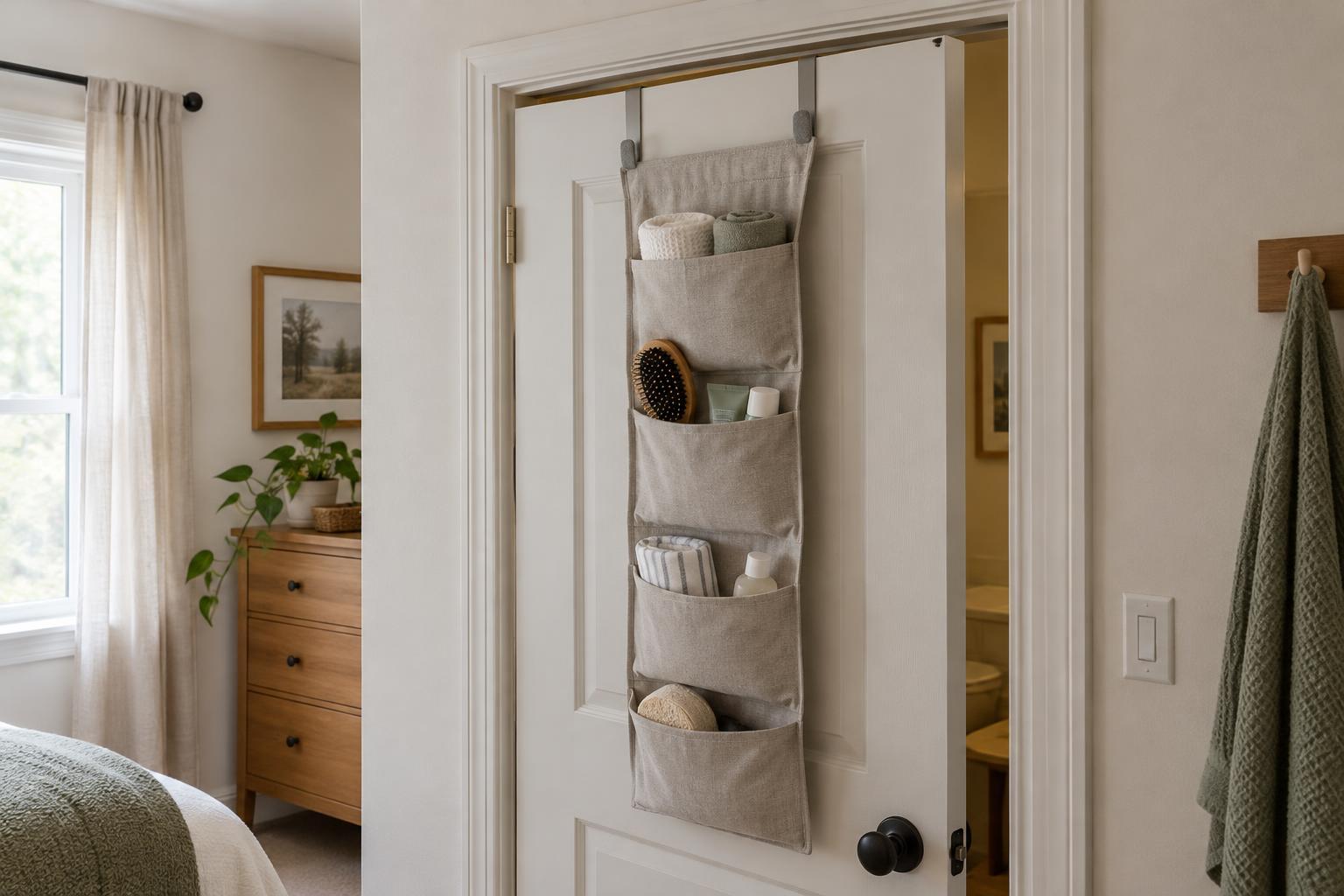
The hook is the part most likely to cause a closing problem. If you can inspect an organizer before buying, look for a low-profile hook with smooth edges and a shape that sits flat against the door. A bulky hook, thick protective pad or raised seam can catch on the frame. Padding helps prevent scratches, but it also takes up space, so account for it when checking the fit.
Once the organizer is in place, close the door slowly without forcing it. Watch and listen for rubbing at the top, check that the latch catches, then open the door fully to see whether the organizer strikes anything. If the door needs a push it did not need before, the fit is not right. Do not bend the hook against the frame or remove parts of the door to make it work. A slimmer organizer or another storage spot is a better choice.
Match the style to the contents
Soft pocket organizers suit small, lightweight items that would otherwise scatter across a drawer: gloves, spare cloths, hair accessories or charging cables. Clear pockets make contents easy to spot, while opaque fabric can look calmer in a visible room. Check pocket depth before buying. Shallow pockets are easy to reach into but may let tall objects tip out when the door moves.
Rigid baskets can hold bottles or folded supplies more neatly, but they tend to project farther from the door. Measure that depth if the door opens close to a wall. Hooks or rails use less surface area and may be enough for a few frequently used items. In a compact room, the most useful organizer is often the smallest one that holds what you actually need, rather than a full-length unit that invites clutter.
Protect the finish and avoid overloading
Check that any part touching the door has a smooth finish. If a hook or basket rubs, a thin, removable protective pad may help, provided it does not make the door harder to close. Be cautious with adhesive pads on delicate paint or veneer: test in an inconspicuous place and follow the product’s removal directions. Keep the organizer clean and dry, especially on a bathroom door, so trapped moisture and grit do not mark the surface.
Follow the organizer’s stated load limit, and consider the door as well as the organizer. Put heavier items lower down when the design allows, and avoid loading one side more than the other. Glass bottles, large cleaning refills and heavy tools are usually better on a stable shelf. If the organizer swings, rattles or pulls the door out of its usual alignment, remove some weight. Check it occasionally for bent hooks, loose stitching and new marks on the door.
Know when another storage spot is better
Not every door is a good candidate. Be especially careful with doors that have closers, tight seals, unusual top edges or a required safety function. Do not add an organizer to a fire-rated door or alter its operation without checking the applicable building rules and the door manufacturer’s guidance. In a rental, check any restrictions before using adhesives, screws or hardware that might leave marks.
If the door cannot close normally with an organizer, move the storage rather than forcing the fit. A narrow freestanding cart, a shelf inside a cupboard or hooks mounted where permitted may solve the same problem. An over-door organizer earns its place only when it adds convenient storage and leaves the door working exactly as it should.