Start with the space around the desk
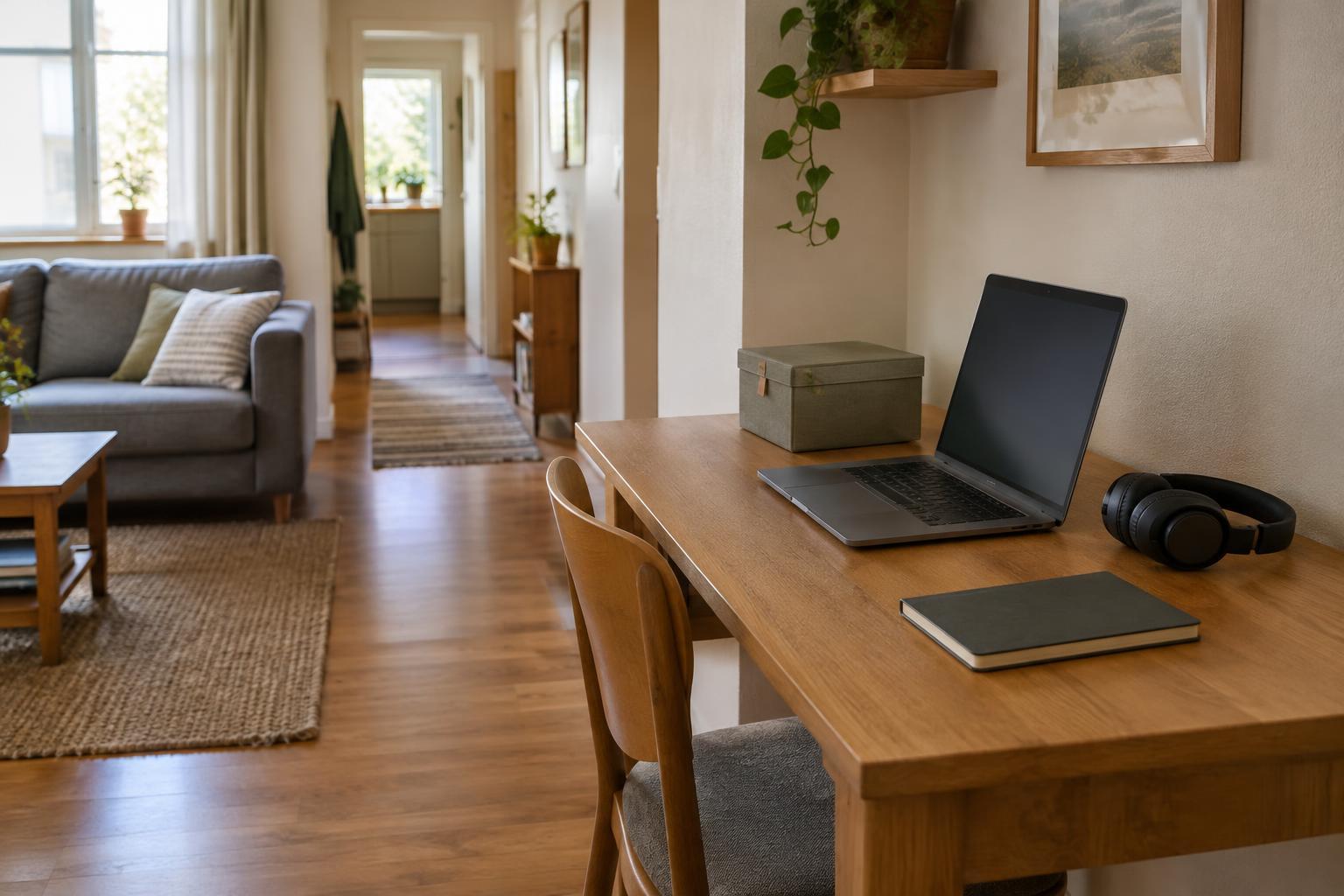
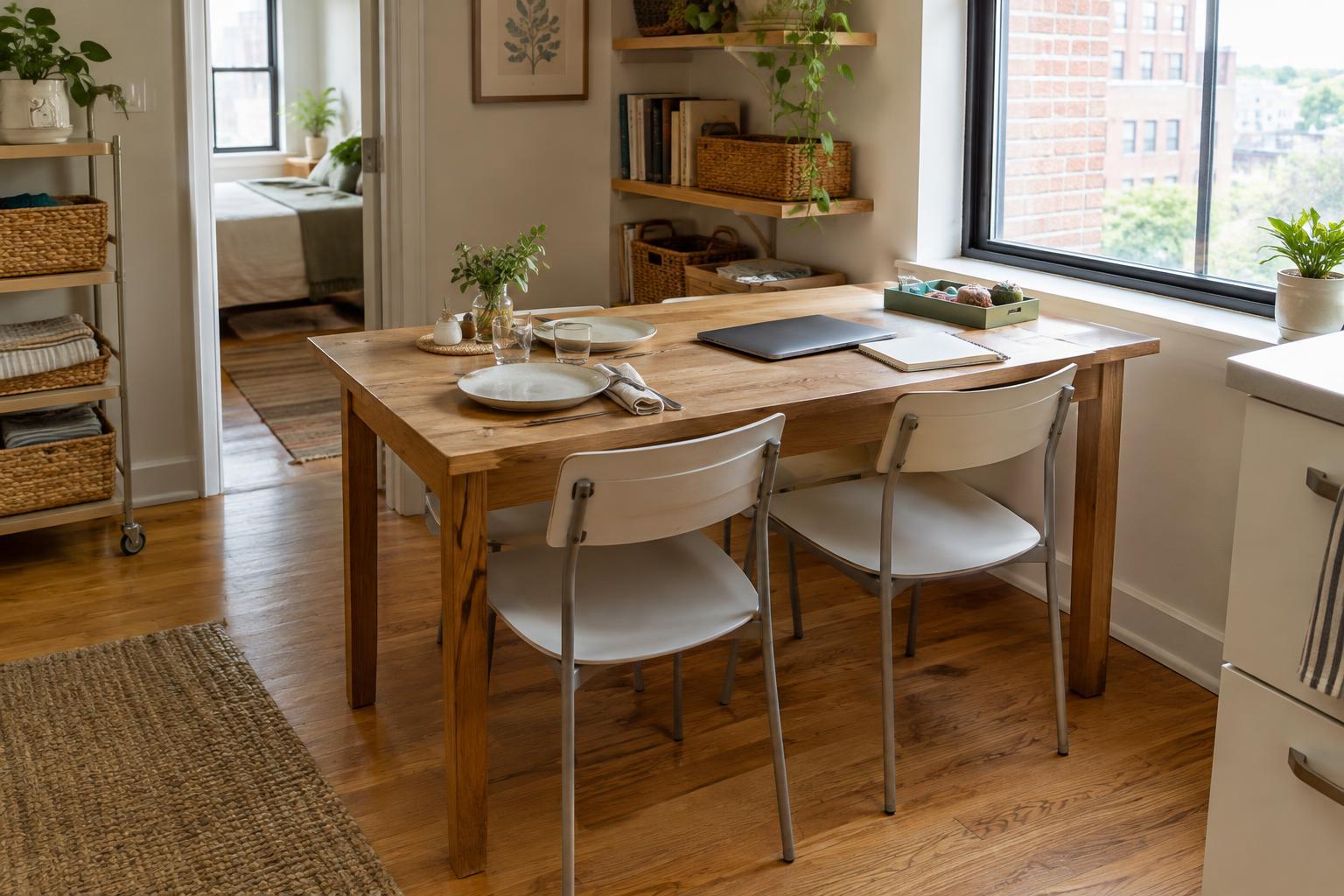
Before comparing chairs, measure the space where one will actually move. Note the desk height, the clear width between its legs, and the distance from the desk to a wall, bed or other furniture. Leave enough room to pull the chair back and stand up without shifting everything nearby. If the work area shares a dining room or bedroom, also consider where the chair will go when work is finished.
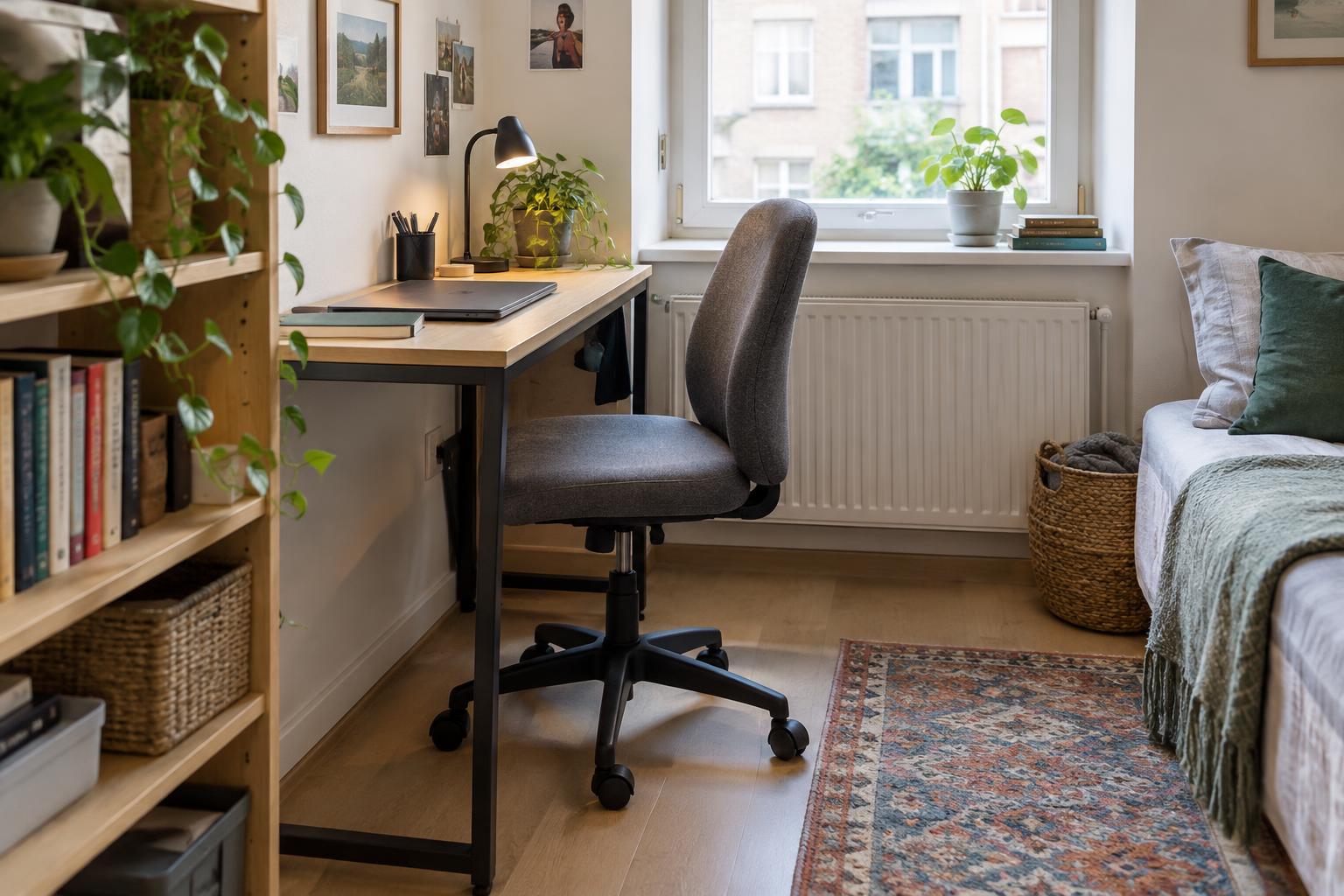
Check more than the chair’s advertised width. A wide base, fixed arms or a high back can prevent it from sliding under a desk even if the seat looks compact. Measure the space beneath the desktop, including any drawer or support rail. If a seller provides dimensions, compare them with your measurements and allow a little clearance rather than assuming a close fit will work.
Prioritize fit over extra features
A good starting point is a chair that lets you sit with your feet supported, your thighs reasonably comfortable and your shoulders relaxed while you work. Seat-height adjustment is particularly useful if you share the chair or might change desks later. A backrest that feels supportive in your usual working position matters more than a long list of adjustment controls you will never use.
Try to sit in a chair before buying if possible. Check whether the seat presses behind your knees, whether the backrest meets your back comfortably and whether you can move without feeling cramped. Armrests may help some people, but they can also stop a chair from fitting beneath a small desk. If a chair is otherwise suitable and the arms are removable, that flexibility may be worth having. Comfort is individual, so use product descriptions as a shortlist, not a substitute for a test.
Match the chair to how you work
How long and how often you sit should shape your choice. If you work at the desk for substantial stretches, put the budget toward a stable chair with a comfortable seat and usable adjustments before paying for a particular look. If the desk is used only occasionally, a simpler chair may be sufficient, provided you can sit and move comfortably during the time you use it.
Think about the floor and the room’s other jobs, too. Check that the chair rolls smoothly on your flooring, or consider a chair without casters if rolling would be awkward in a tight corner. A swivel can make it easier to get in and out without dragging the chair sideways. In a living area, a visually quiet chair may blend in better than a bulky one, but its appearance should not be the only reason to buy it.
Stretch the budget without buying twice
Set a spending limit that includes any delivery charge or accessories you genuinely need. Then decide which requirements are non-negotiable: for example, fitting under the desk, adjusting to a usable height and feeling sturdy. This helps you compare a plain chair that meets your needs with a more elaborate one that does not. An inexpensive chair is poor value if you soon have to replace it because it will not fit the room.
Secondhand chairs can be worth considering, especially when you can inspect them locally. Sit in the chair and test every adjustment. Look for a level base, a seat that stays at its set height, secure arms and backrest, and wheels or feet that are in good condition. Ask about the return policy when buying new, particularly if you cannot try the chair first. Reviews can help flag recurring practical problems, but check that they describe the same model you plan to buy.
Make the whole setup work together
Even a well-chosen chair may feel wrong if the desk forces you to reach up to type or leaves too little room for your legs. Once the chair is in place, adjust its height and position, then look at where your keyboard, screen and frequently used items sit. If raising the chair leaves your feet unsupported, a stable footrest or another firm support may help. Keep cables and storage out of the chair’s path so you can move without catching anything.
Finally, test the setup during an ordinary workday rather than judging it after a minute of sitting. Notice whether you keep edging forward, bumping furniture or rearranging the chair to make room. Small changes to desk layout may solve those issues without another purchase. The best chair for a compact home workspace is not necessarily the smallest or the most adjustable; it is one that fits the room, suits your working habits and remains comfortable to use.