Start with the space you want back
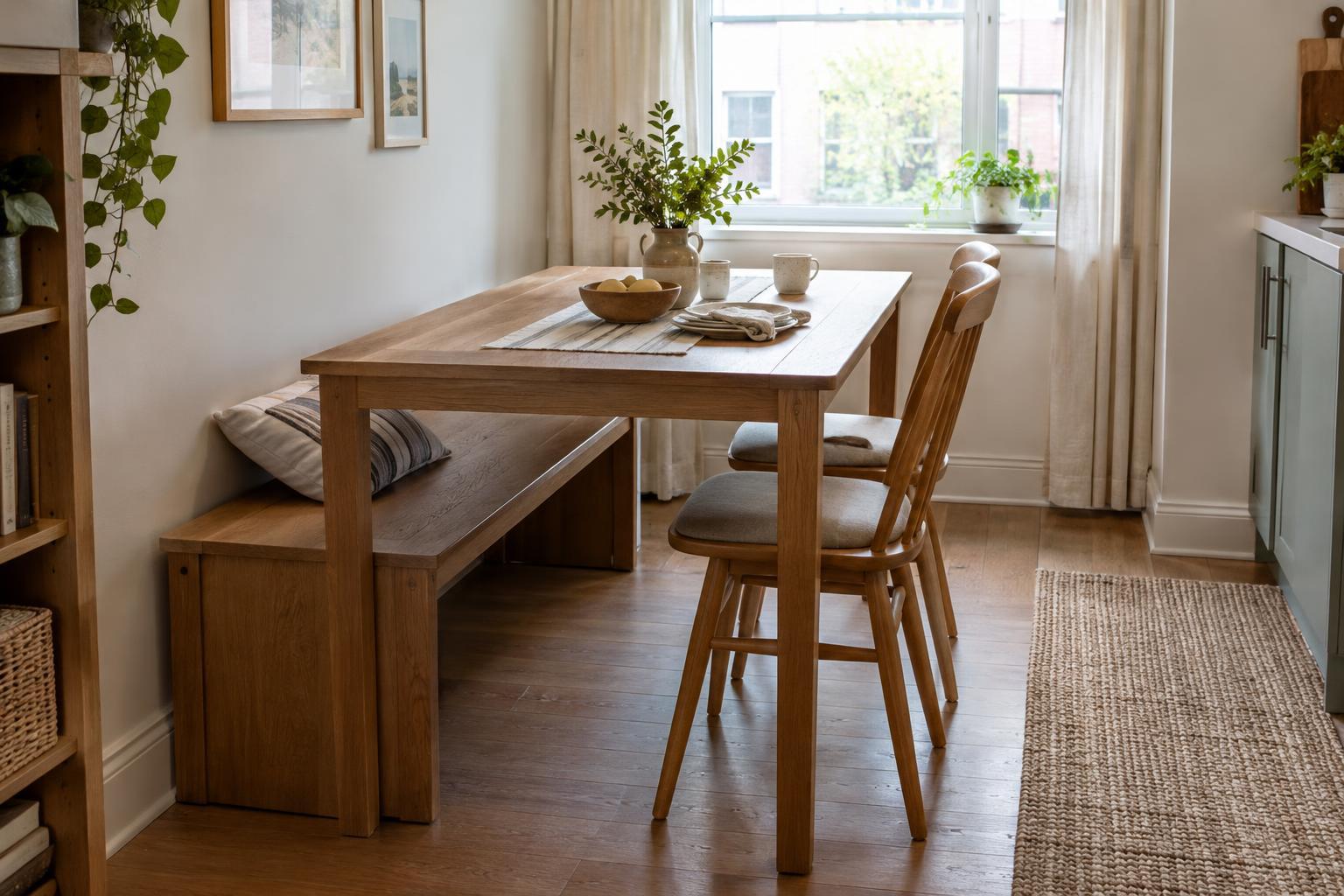
In a small dining area, the problem is often not the size of the table but the space needed to move around its chairs. A bench can help because, when no one is using it, it may slide mostly or entirely beneath the tabletop. That can clear a walkway, make a corner easier to reach or give a multipurpose room more open floor space between meals.
Decide where the bench will earn its place before buying one. It might replace two chairs on the side facing a busy route through the room, or sit against a wall where chair backs would get in the way. Keep chairs elsewhere if people need the flexibility of moving individual seats. A bench is most useful when its everyday tucked-away position improves how the room works.
Measure the opening, not just the tabletop
A bench can be shorter than a table and still fail to slide under it. Check the clear distance between the table legs or supports at the height where the bench will pass through. Then check the space from the floor to the lowest part of the table frame, including any apron beneath the top. Compare those measurements with the bench’s full length, depth and height, allowing a little clearance so it does not scrape every time you move it.
Look closely at where the table legs sit. A table with legs near the corners often offers a wider opening than one with angled legs or a central support that blocks the bench. If you want the bench to disappear almost completely, measure how far it can travel beneath the table before it meets a leg or base. Painter’s tape on the floor can help you picture both its stored position and the space it will occupy when pulled out for a meal.
Remember to test the dining position too. There must be enough room to pull the bench away from the table and for people to get on and off it. A bench that fits perfectly underneath but blocks a door when occupied will not solve the room’s real problem.
Choose a bench people will want to use
A backless bench is usually the simplest choice for tucking under a table. Before choosing one, compare its seat height with a dining chair you find comfortable at that table. Consider who will use it regularly: a bench suits people who do not mind sharing a seat, but it can be less convenient for anyone who needs a backrest or finds it difficult to step past another diner.
Depth matters as much as length. A narrow seat may be easy to store but uncomfortable for a long meal; a deep upholstered seat may project into the room even when pushed in. Smooth, wipeable surfaces can make sense where meals, crafts and homework happen at the same table. A loose cushion adds comfort and can be changed or cleaned, though it may also increase the bench’s height enough to affect its fit.
If you are considering a storage bench, check that you can actually open it in the intended spot. A lift-up lid may be awkward beneath a table, so it is best for things you retrieve occasionally rather than daily. Whatever the design, follow its stated load guidance and check that it feels stable when people sit near either end.
Match the bench to your routine and budget
For the lowest-cost change, first see whether an existing bench or sturdy seat in your home could work. If buying secondhand, take your measurements with you and inspect the joints, legs and seat for looseness or damage. A simple, sound bench can be easier to live with than a more elaborate one whose drawers, back or bulky frame prevent it from fitting under the table.
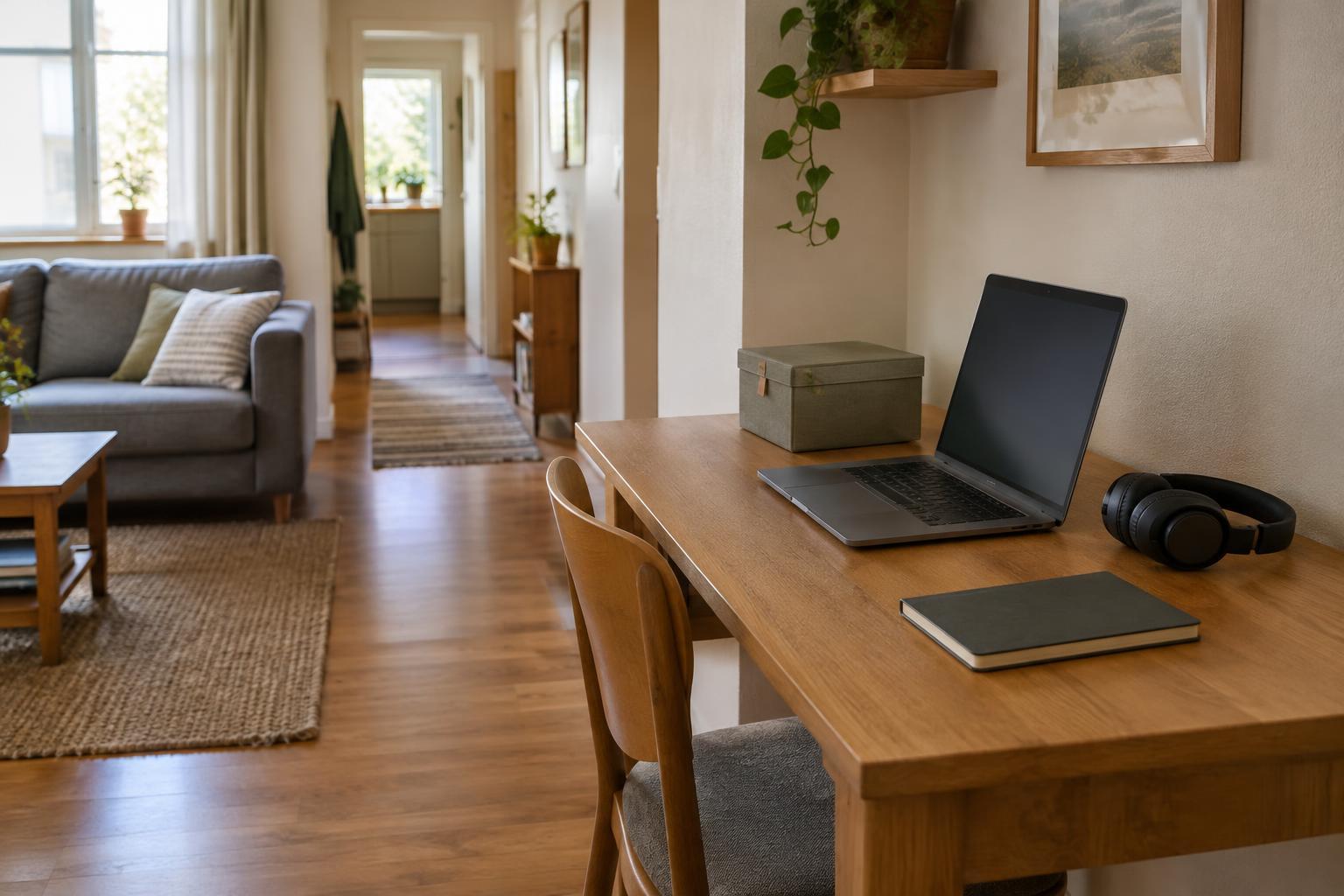
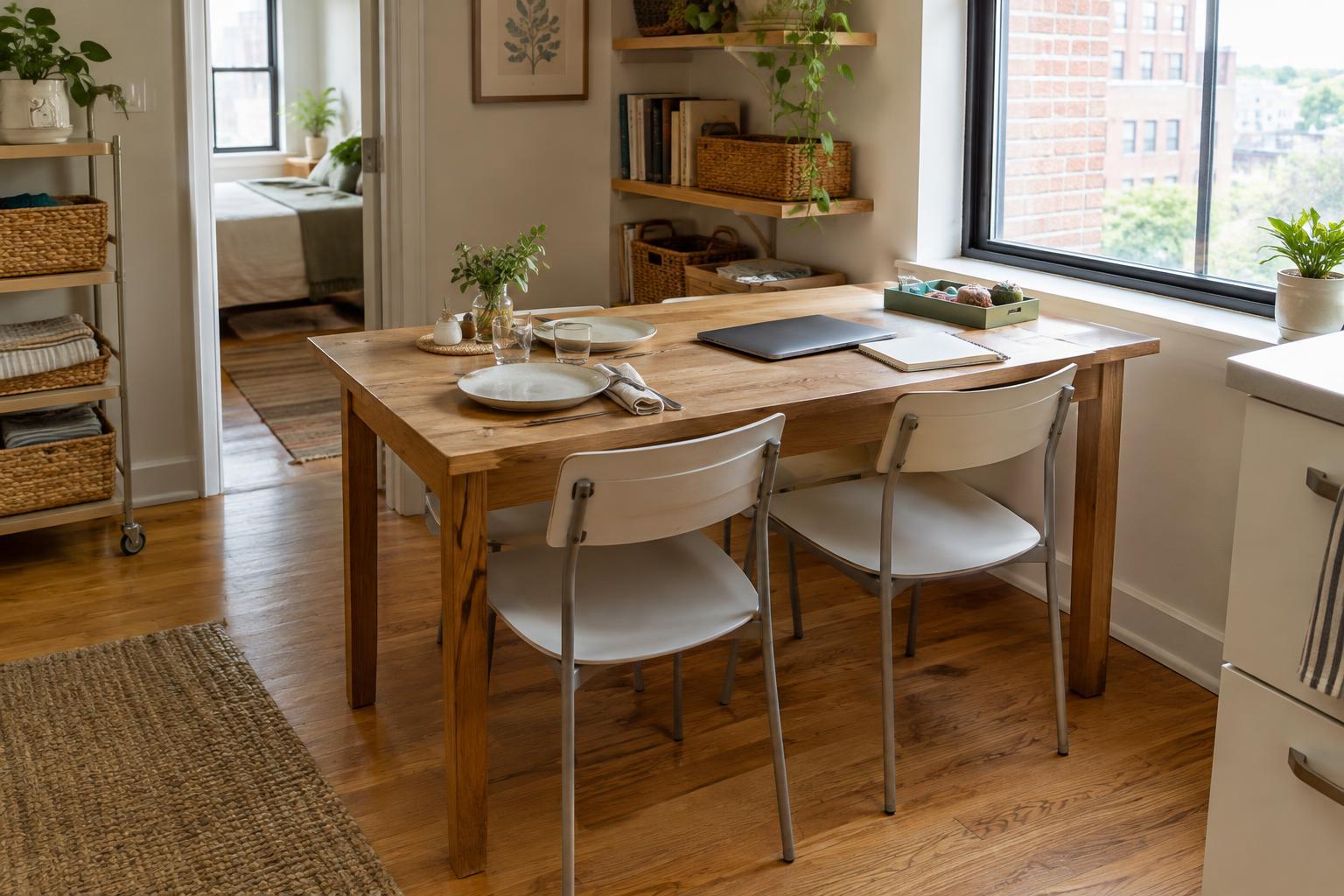
Think through a normal day in the room. If the table doubles as a desk, the bench may be a handy spare seat while a supportive chair remains the main work seat. If children use the table for projects, an easy-clean finish might matter more than upholstery. You can soften the look with a removable cushion or nearby textiles rather than paying for a style that is harder to maintain.
Set it up so the space stays flexible
Protect the floor and make the bench easier to move with suitable pads or glides for its legs. Check them periodically, particularly if the bench is pulled out several times a day. Avoid placing baskets or other items beneath the table where they will stop the bench from sliding in.
Once the bench is in place, use the room for a few days before adding more furniture. Pull the seat out, walk around it, open nearby doors and drawers, and tuck it away again. If those movements feel easy, the bench is doing its job: providing seating when you need it and giving the floor back when you do not.