Start with the dirt that does the most damage
In an entryway, kitchen or multipurpose living room, crumbs and tracked-in grit collect where people walk most. Removing that loose debris is the first job. If you mop over it, you may spread it around or drag abrasive particles across the finish. A quick pass over the main walking route can be more useful than waiting until you have time to clean the entire floor.
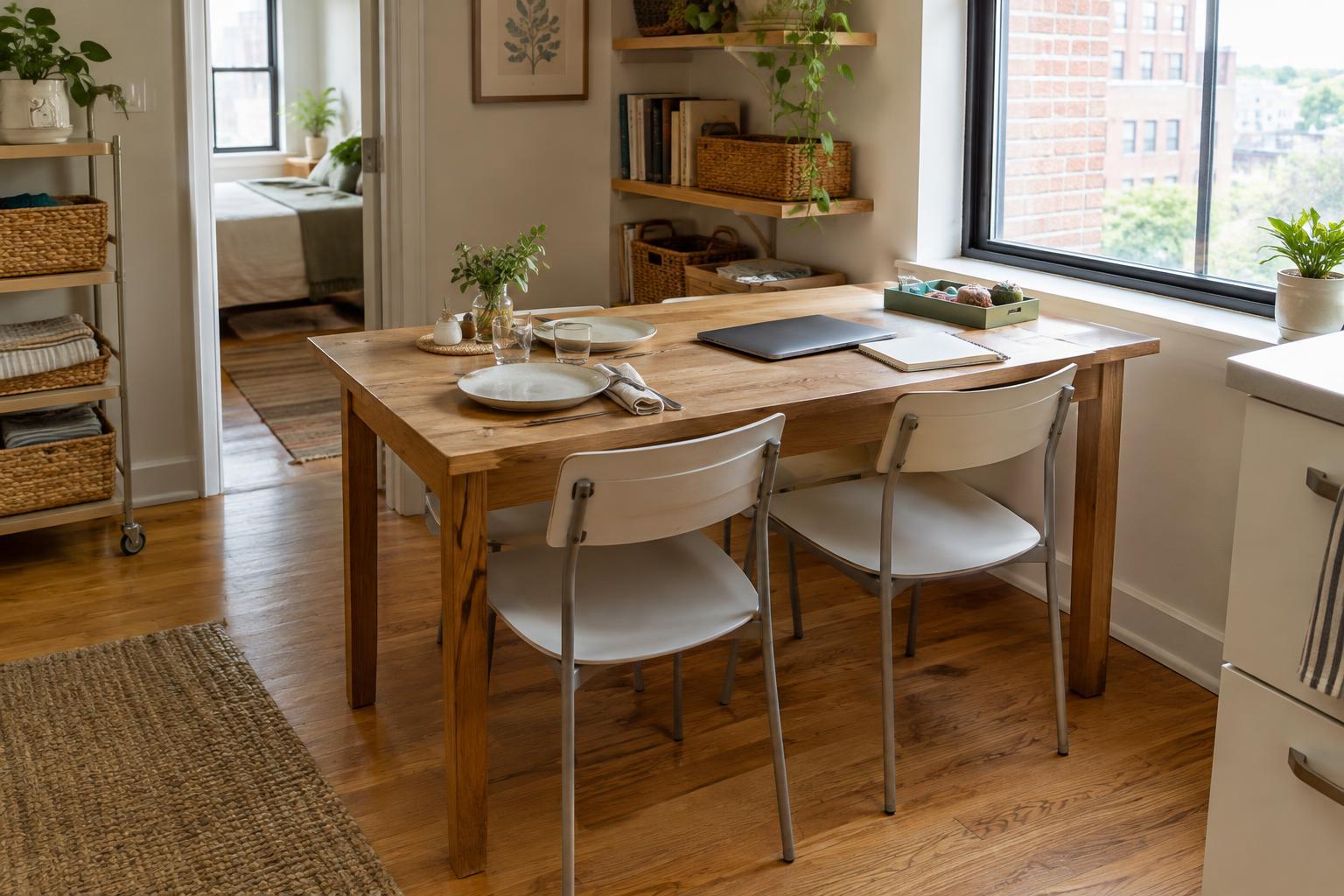
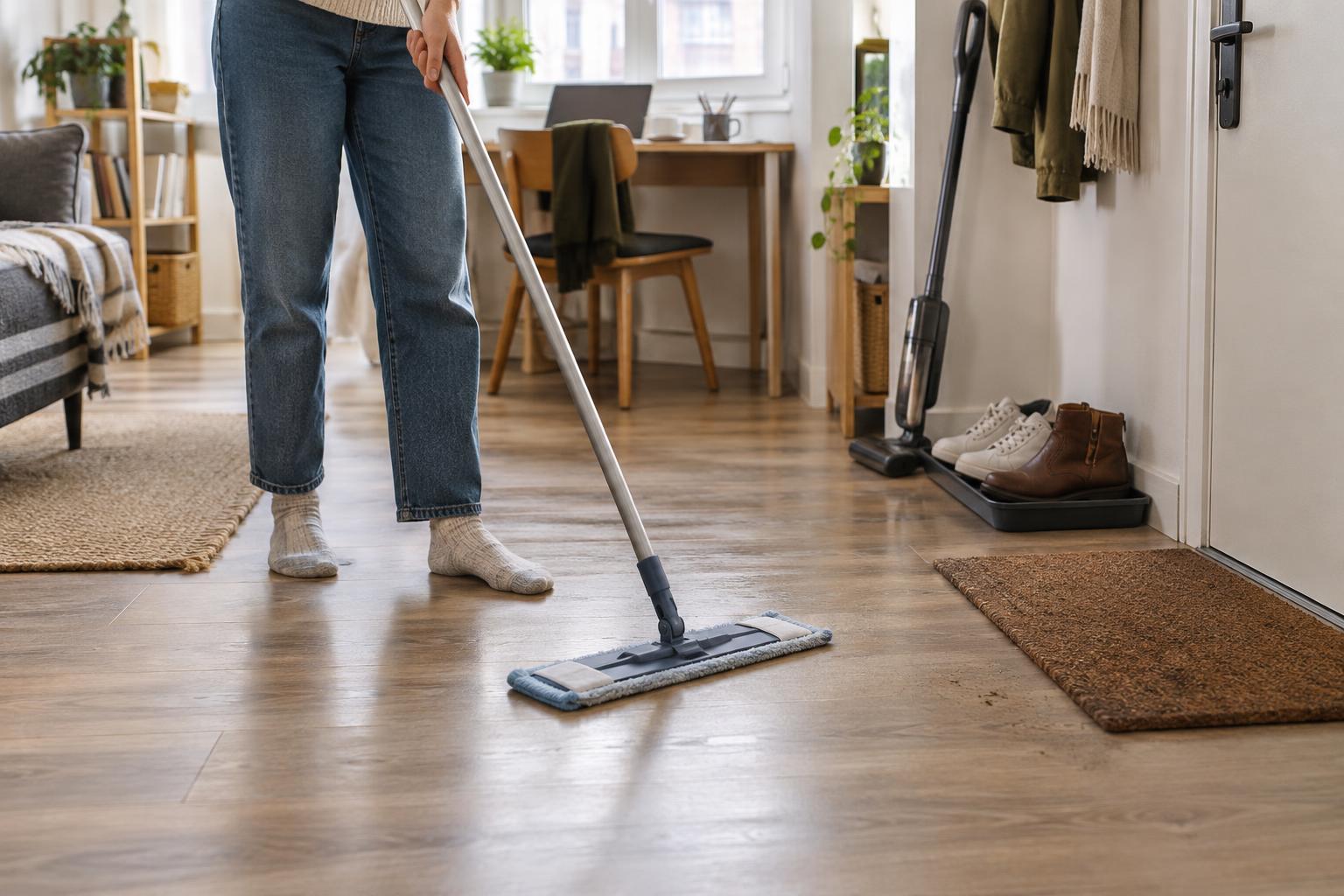
Make the routine fit the room. Keep a broom and dustpan or compact vacuum where you can reach them without moving furniture. An entry mat can catch some dirt before it reaches the floor; shake or clean the mat regularly so it keeps doing its job. In a small room, focus daily or as needed on the doorway, under the dining table and beside the work area, then clean the edges during a fuller weekly pass. The right frequency depends on shoes, pets, cooking and how quickly debris appears.
Choose sweeping or vacuuming by the mess
Sweeping works well for visible crumbs, dry leaves and small patches of dirt. Use gentle strokes to gather debris rather than pushing it into corners or under cabinets. A dustpan with a thin, flexible edge makes the final line of fine dust easier to collect. A microfiber dust mop is another option for fine, dry particles, but it needs washing or shaking out when it becomes loaded with dirt.
Vacuuming can be faster for a larger open area or for debris along baseboards and between furniture legs. Use a hard-floor setting or a suitable floor head, and check that the wheels and underside are clean. Avoid a rotating brush that could scratch a delicate finish unless the flooring or vacuum maker says it is suitable. A crevice tool helps at thresholds and along cabinet kickboards. If your vacuum scatters larger crumbs, sweep those first and vacuum the finer debris afterward.
Neither tool needs to be the only one you use. For example, sweep after dinner around the table and vacuum the whole room when you clean under chairs. Check for small stones before moving stools, rolling a desk chair or dragging a storage bin across the floor. Lifting an item takes little time and avoids grinding grit into the surface.
Mop with the floor material in mind
Mopping removes the stuck-on dirt that dry cleaning leaves behind, but more water is not necessarily more cleaning. First, sweep or vacuum. Then follow the flooring manufacturer’s care guidance if you have it, especially for wood, laminate, luxury vinyl or a recently installed floor. Use a cleaner intended for the surface, dilute it as directed and test an unfamiliar product in an inconspicuous spot. Avoid combining cleaners.
For tile, a damp mop can usually tackle everyday marks, while grout may need occasional attention with a suitable soft brush. Sealed wood and laminate generally call for a well-wrung mop rather than standing water; moisture left at joints or edges can be a problem. For vinyl and other resilient floors, a damp mop is often practical, but product and finish instructions still matter. If you are unsure what the floor is made of, start with the gentlest recommended method you can confirm rather than soaking it or using a harsh scrubber.
Work in small sections so you can see whether the mop is picking up dirt or simply moving it. Change dirty water or rinse a washable mop pad as needed. Keep children and pets off a wet area until it dries, and wipe up any puddles, particularly near thresholds and cabinets. If a floor feels sticky after drying, too much cleaner may be left behind; check the product instructions before going over it again with a clean, barely damp mop.
Handle spills and stubborn spots without scrubbing the whole room
Pick up spills promptly with an absorbent cloth, then clean any remaining mark using a method appropriate for the floor. This matters in a shared kitchen and living area, where a splash can be walked across the room before anyone notices it. Dry the spot afterward if moisture could sit in seams or against trim.
For a mark that does not lift with ordinary mopping, try a soft cloth and a little suitable cleaner before reaching for an abrasive pad. Test first in a hidden area. Avoid scraping with a metal tool, which can damage a finish. Tackling one spot separately saves time and reduces wear on the rest of the floor.
Keep the routine easy to repeat
A realistic plan might be a short sweep of the busiest path whenever it looks gritty, a more thorough sweep or vacuum around furniture once a week, and mopping when the floor shows marks that dry cleaning cannot remove. It is fine to adjust that pattern. A rainy week may call for more attention at the door; a quiet room may need less.
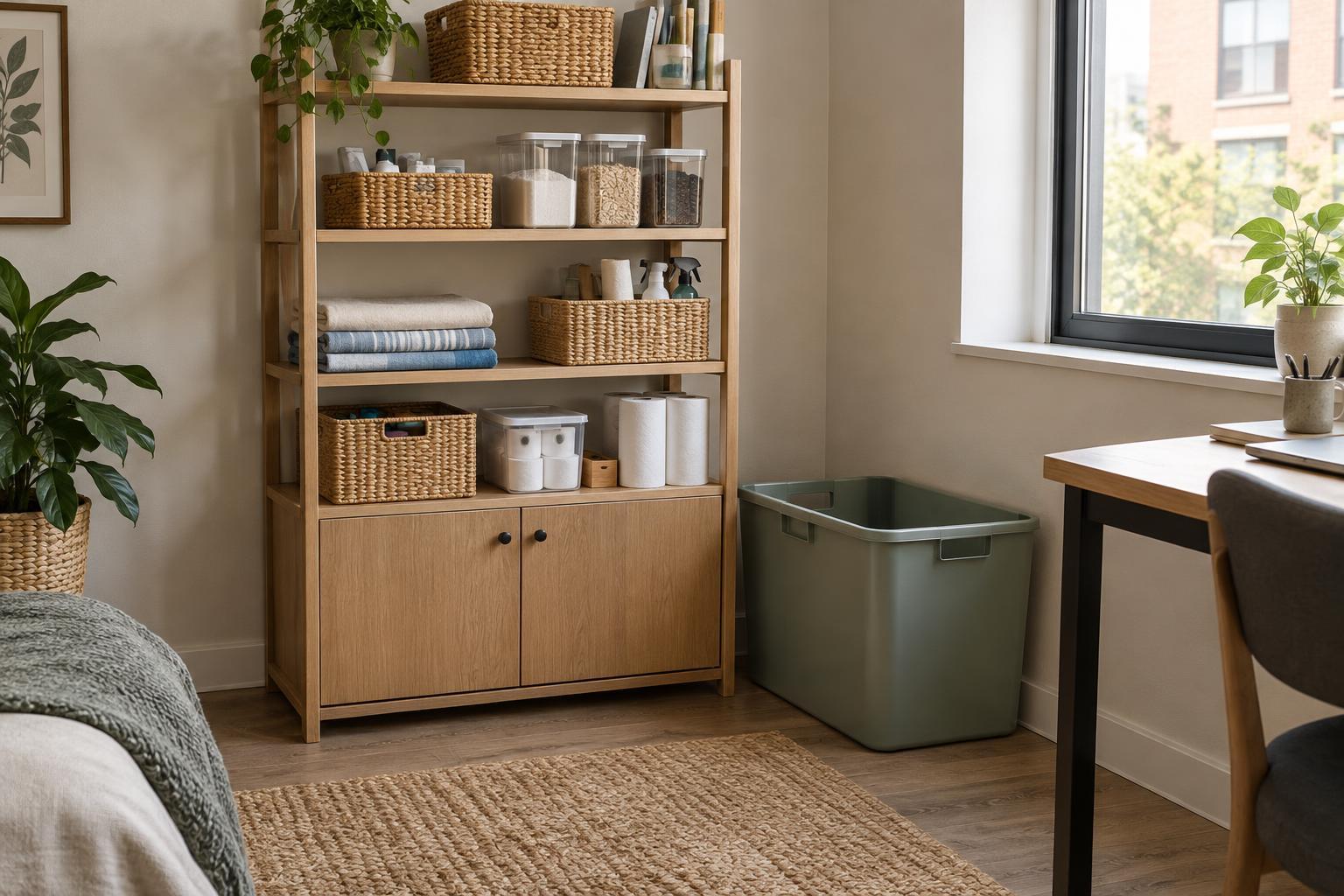
Store only the supplies you actually use: a compact dry-cleaning tool, a mop with washable pads or a reusable head, and a floor-appropriate cleaner. Put felt pads on furniture that gets shifted and clean chair wheels if they pick up grit. These small upkeep habits help a busy floor stay presentable without turning every cleanup into a room-wide project.