Give crumbs fewer places to travel
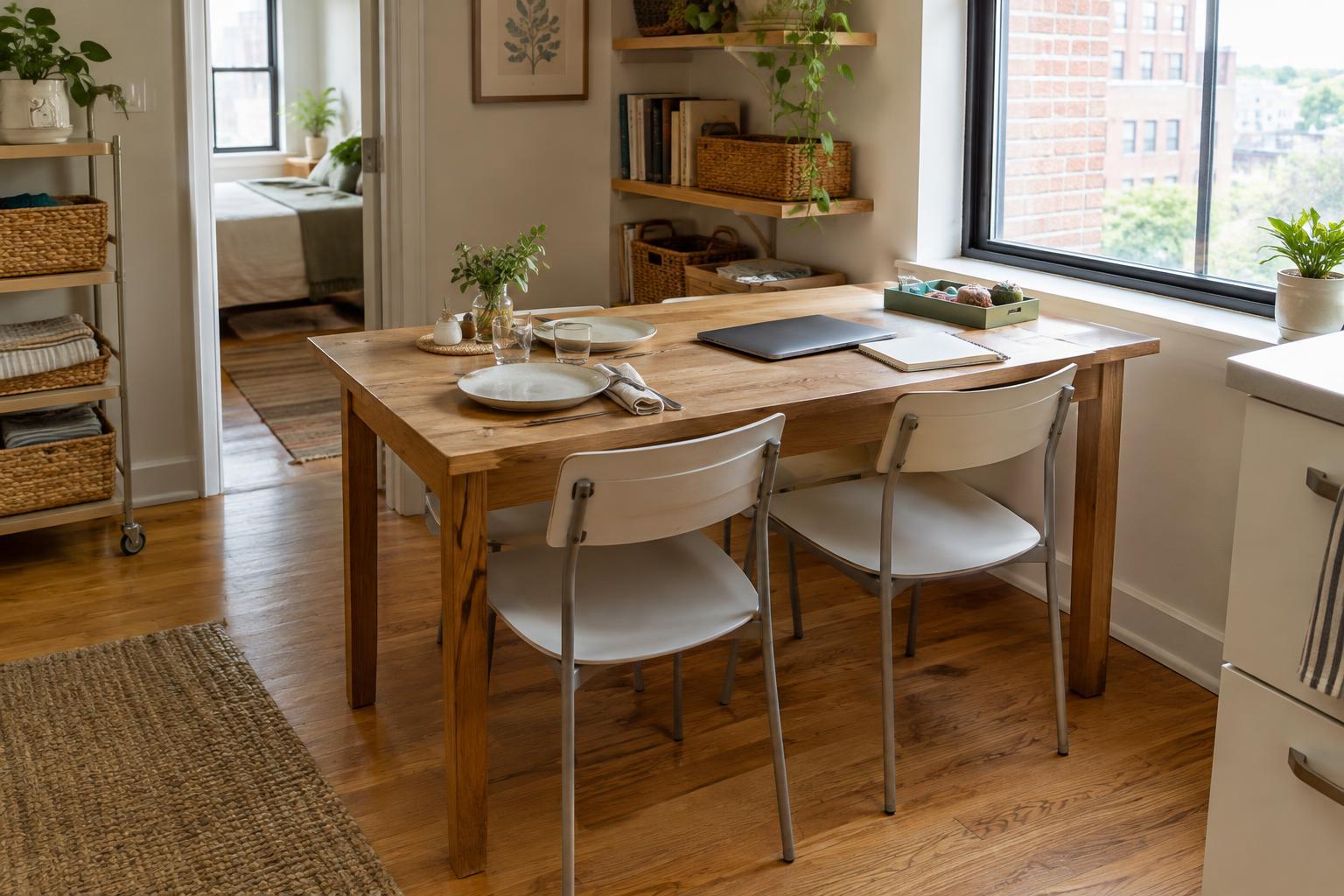
In a kitchenette, the route from cutting board to plate to sink may be only a few steps, but crumbs still find seams, appliance bases and the floor. Start by keeping one clear area for food preparation. A tray or cutting board large enough to catch toast crumbs and vegetable scraps gives you something you can lift and empty, rather than wiping debris around a crowded counter.
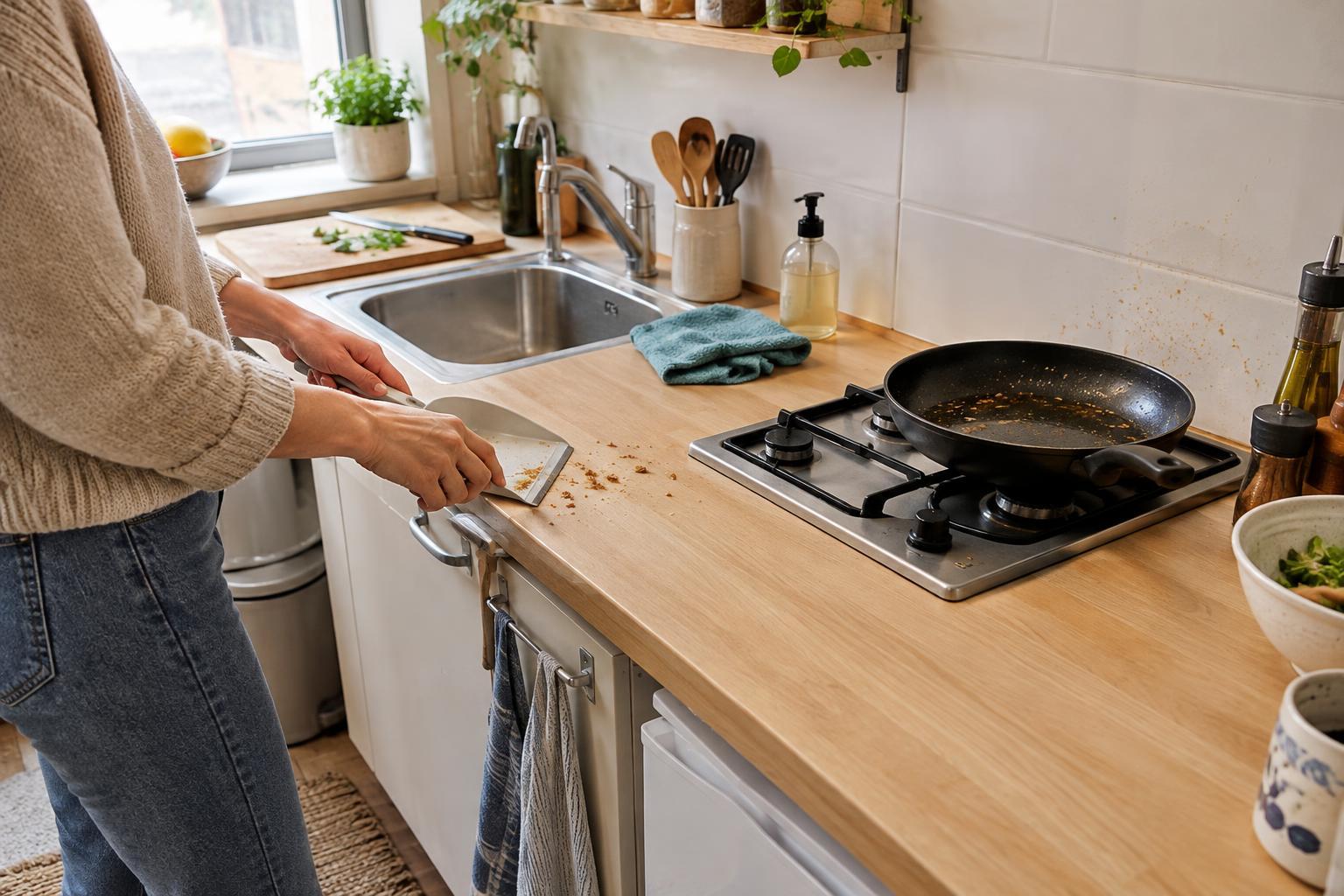
Put a small bin or scrap bowl within reach while you cook. Sweep dry crumbs into it before using a damp cloth; water can turn flour, bread crumbs and other loose bits into a paste that is harder to remove. A handheld brush and dustpan, or a clean cloth used dry, will handle most everyday spills. Check the narrow gaps beside a microwave, kettle or hot plate when you clear the counter, since crumbs tend to collect where appliances stay put.
Deal with grease while it is still easy to reach
Grease is easier to control when it stays near the pan. Use a lid where the recipe allows, lower the heat if oil is spitting, and keep a wipeable surface clear around the cooking area. After cooking, let the hob and nearby surfaces cool before cleaning them. A little dish soap in warm water is often enough for fresh greasy marks; wipe again with a clean damp cloth if the surface feels soapy, then dry it.
Pay attention to the spots your hands touch: cupboard pulls, tap handles, the microwave door and any switch used during cooking. They can feel sticky even when the counter looks clean. Follow the care instructions for your worktop and appliances, particularly for delicate finishes or electrical controls. Avoid spraying cleaner directly into seams, sockets or appliance openings. Never mix cleaning products, and store them away from food.
Set up a five-minute closing routine
A kitchenette rarely needs a full clean after every snack. A short reset after the main meal is more useful: put food away, collect scraps, wash or stack dishes, clear dry crumbs, and wipe the worktop and cooled cooking surface. Finish by checking the floor directly in front of the counter. That small patch often catches what the worktop misses.
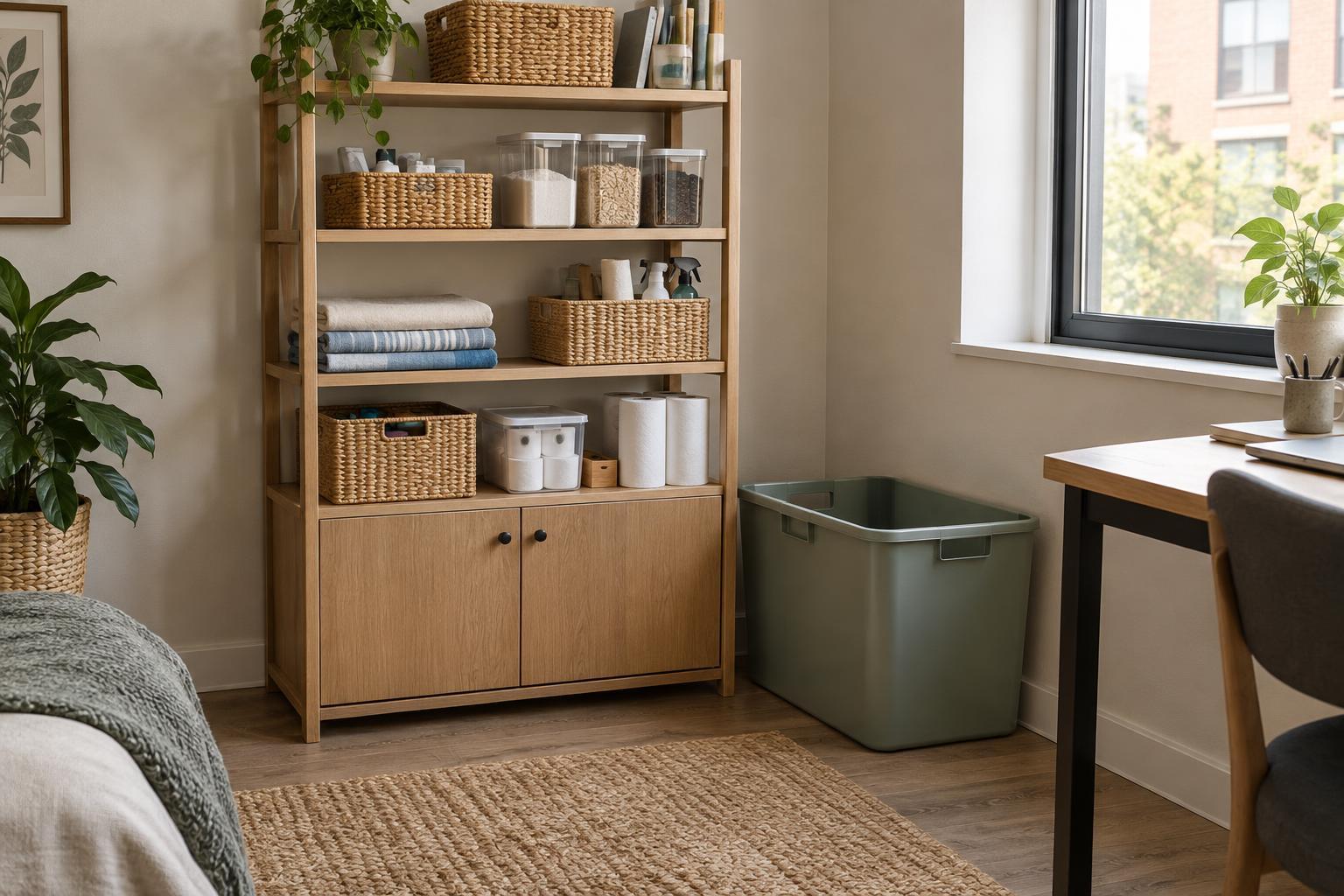
Keep the supplies for this routine close together so you do not have to search for them. A cloth, dish soap, a brush and a small rubbish bag may be enough. Give cloths and sponges a place to dry between uses, and replace or wash them when they become dirty or smelly. If counter space is scarce, use a caddy that can live under the sink rather than leaving bottles beside the food-preparation area.
Prevent buildup without adding clutter
Once a week, move the lightweight items that usually stay on the counter and clean underneath them. Wipe the backsplash, the edges of the hob and the outside of any appliance used for cooking. Check the bin lid and the floor edge near the units. These small jobs help prevent a film of grease from building up in places that are easy to overlook.
Choose additions that solve a specific problem rather than buying a full set of organizers. A washable mat under a frequently used coffee maker might catch drips; a shallow tray for oil and seasonings can make the surface beneath them easier to wipe. Leave enough room around appliances for their normal use and ventilation, and do not put a mat or tray where it could interfere with heat or electrical equipment.
Make the routine fit the way you cook
If you mostly make toast and simple lunches, crumb control may matter more than heavy-duty degreasing. If you cook with oil often, prioritize wiping nearby surfaces and washing splash-prone items regularly. Use any extractor or available ventilation as directed when cooking, and deal with cooking oil after it cools rather than pouring it down the drain. Small amounts can usually be wiped from a pan before washing; collect larger amounts for disposal according to local guidance.
The goal is not a spotless kitchenette at every moment. It is a space that can be made ready for the next meal without first uncovering the sink or scrubbing yesterday’s mess. Keep the daily routine short, notice where debris actually gathers, and adjust your tools and storage around those spots.