Start with the space you already use
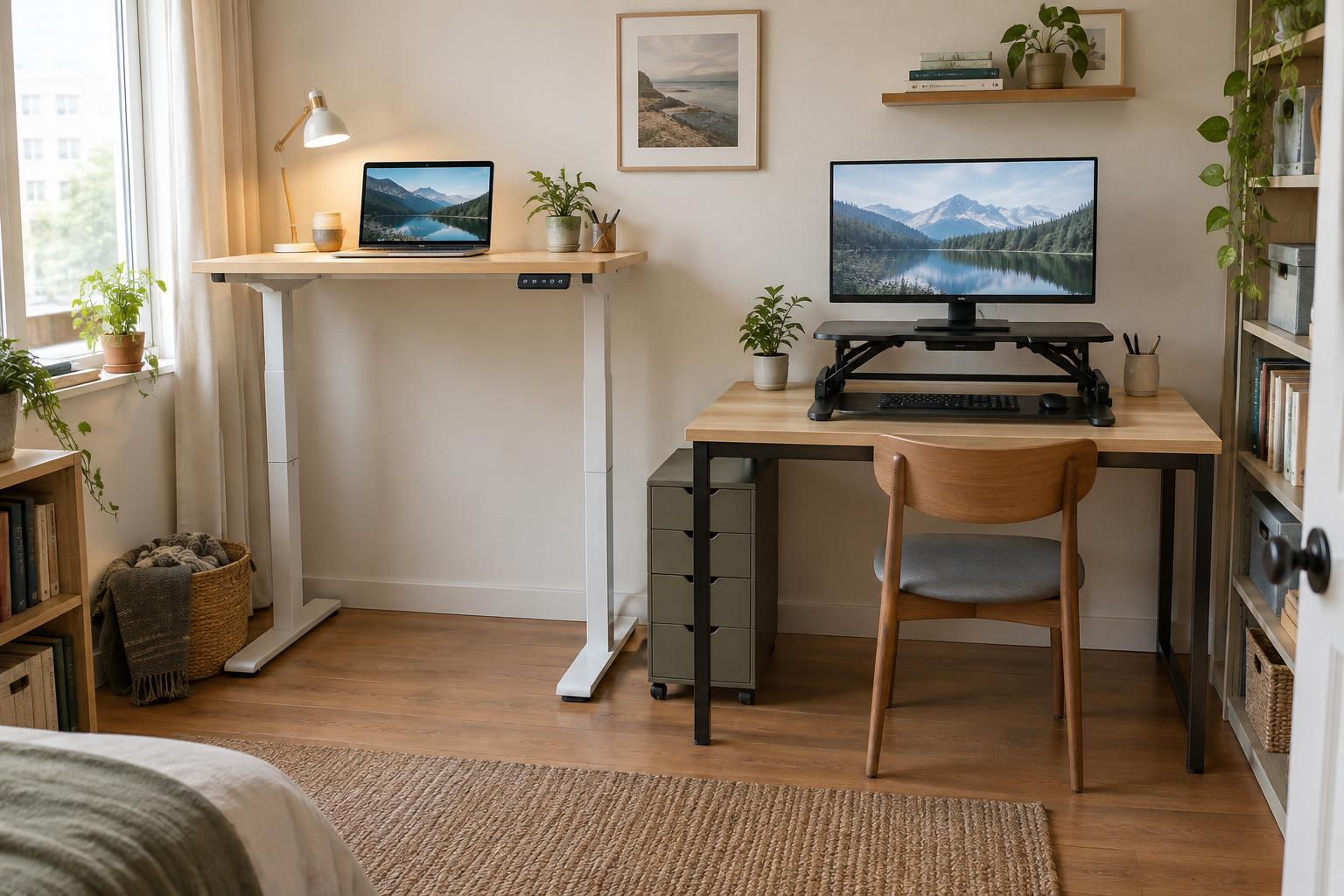
A height-adjustable desk replaces your current work surface. A desktop converter sits on top of one and raises a smaller work area. Both offer a way to change working positions, but they solve different space problems. The best choice depends less on how small the room looks and more on what else the desk needs to do.
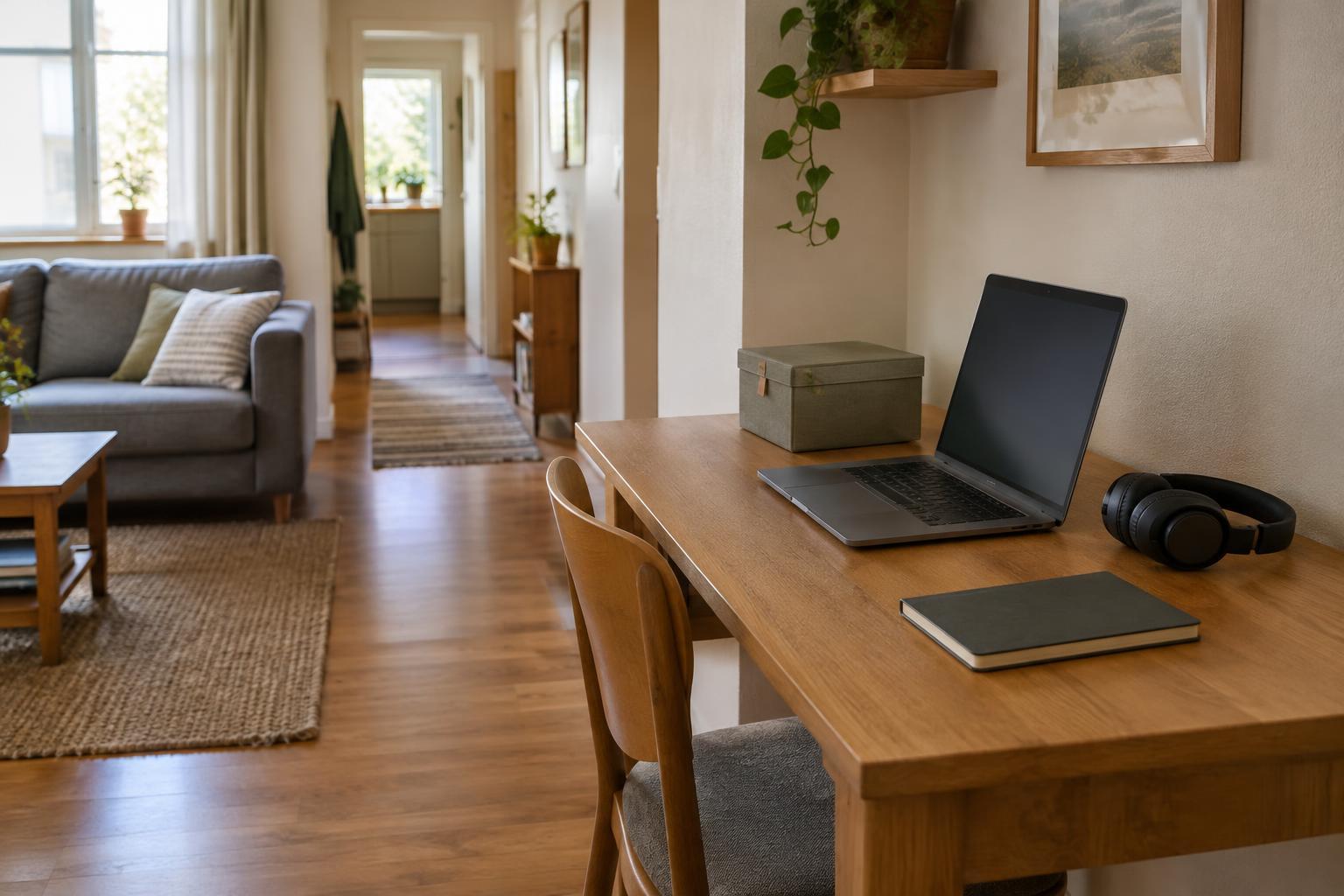
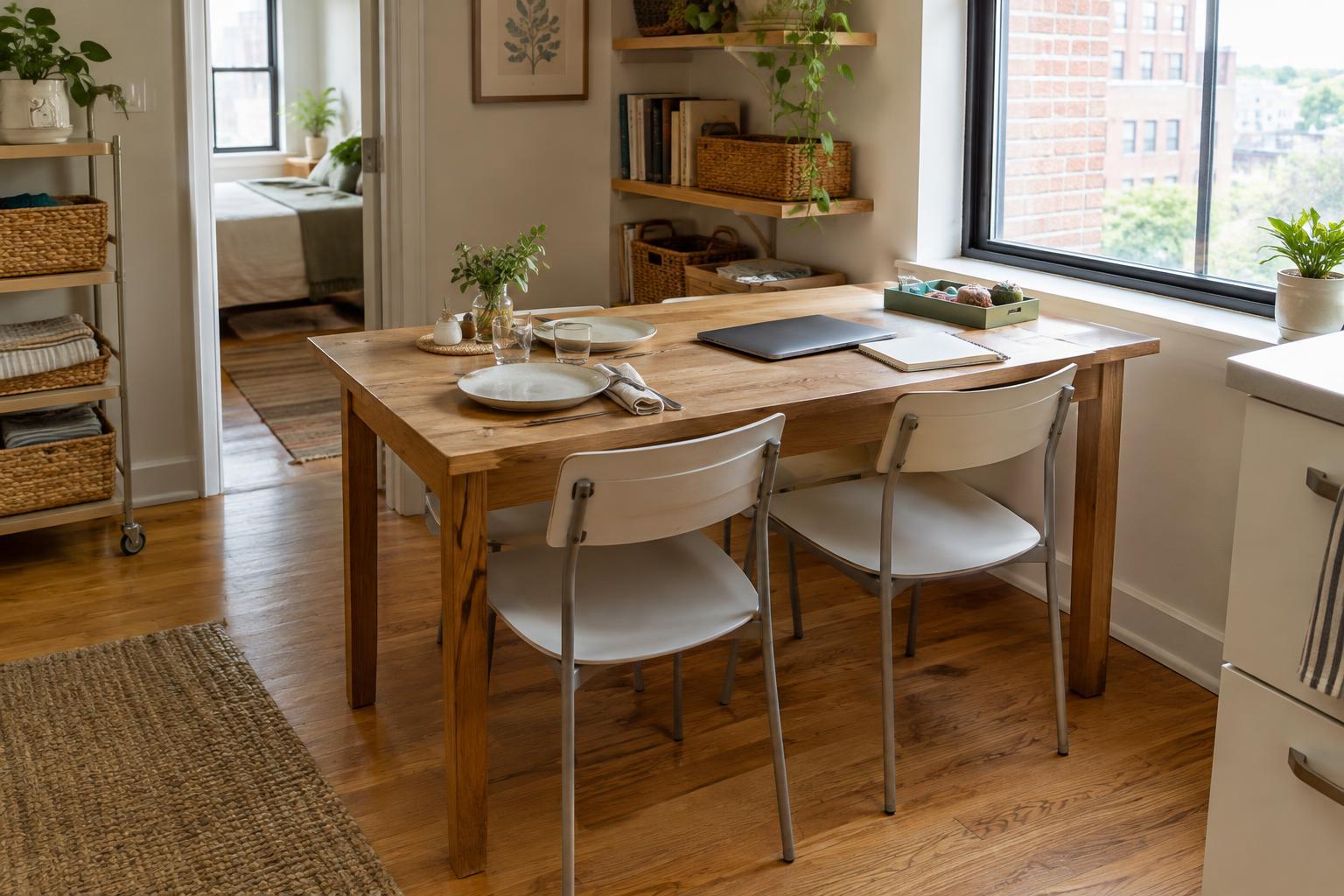
If your desk is also a dining table, craft surface or homework station, a converter may be easier to try without changing the furniture underneath. Bear in mind that it still occupies part of that surface when lowered. A height-adjustable desk can give you one clear, dedicated worktop, but its frame and legs need a permanent place on the floor.
Measure the spot before shopping. Note the available width and depth, then check nearby shelves, window sills and wall-mounted storage that could obstruct a rising screen. Leave room for your chair to pull back and for you to stand comfortably. In a tight corner, those clearances can matter more than the difference between two product widths.
Compare usable surface, not just footprint
A converter can preserve an existing desk, yet its platform may leave less usable room than the desk beneath it. Check whether the raised area holds your screen, keyboard, mouse and anything you reach for often. Some designs have a separate keyboard tray; others lift everything together. A notebook or mug may have to stay on the lower surface, where it is less convenient when you stand.
A full adjustable desk usually lets the entire worktop rise together. That can be useful if you spread out papers, use two screens or regularly switch between computer work and other tasks. It does not automatically save floor space, though. Compare the assembled desktop and frame dimensions with the furniture you would remove.
Look at how each option moves, too. A converter may extend forward as it rises, taking up standing space that its lowered measurements do not reveal. With either option, check that cables have enough slack throughout the movement and will not snag on furniture.
Work out the full cost of each option
A converter is often the smaller initial purchase if you already own a sturdy desk or table. Its total cost may rise if you need a separate monitor arm, a larger base surface or a better way to manage cables. A full height-adjustable desk is a bigger furniture decision: allow for any delivery or assembly costs and for what you will do with the desk it replaces.
Make a short budget with two columns. In one, list the converter and anything required to make it fit your current setup. In the other, list the adjustable desk and any accessories you would need with it. If you plan to keep your current table for another purpose, account for the room that both pieces will occupy.
The least expensive workable choice is not always the smallest one. A converter that crowds a shared table might make the room harder to use, while a modest adjustable desk could replace several pieces of furniture. Equally, replacing a sound desk may offer little benefit if a converter already gives you enough working area.
Think about how often the room changes roles
For an occasional home-working setup, a converter can be appealing because the underlying furniture stays in place. Some can be moved aside when the surface is needed for another task, although that is easier said than done if the converter is heavy or carries a monitor. Check its weight and where you would store it before treating it as portable.
For a regular workstation, a full adjustable desk can make transitions simpler: the keyboard, screen and other essentials remain together as the surface moves. It may also be easier to keep visually tidy than a platform stacked on a table. On the other hand, a dedicated desk can limit how freely you rearrange a multipurpose room.
Whichever you choose, check the stated height range against your sitting and standing setup. You should be able to place your keyboard and screen at comfortable positions without awkward reaching or tilting. If a product cannot accommodate both positions in your space, its ability to rise is of limited use.
Make the decision with a simple room test
Mark the proposed footprint on the floor or existing desk with removable tape. Place your usual work items inside that outline and try the tasks you do most: typing, writing, consulting papers and clearing the surface afterward. For a converter, also mark any space it needs when raised. For a new desk, picture the old furniture removed rather than comparing it with an already crowded room.
Choose a converter if your current surface is stable, you have enough depth for its movement and you want to keep the room easy to repurpose. Choose a full adjustable desk if you need more raised worktop space, expect to use it regularly and have a suitable permanent spot. Neither choice needs to be a perfect workspace upgrade; it needs to fit the tasks and the room you actually have.