Start with what the room needs to do
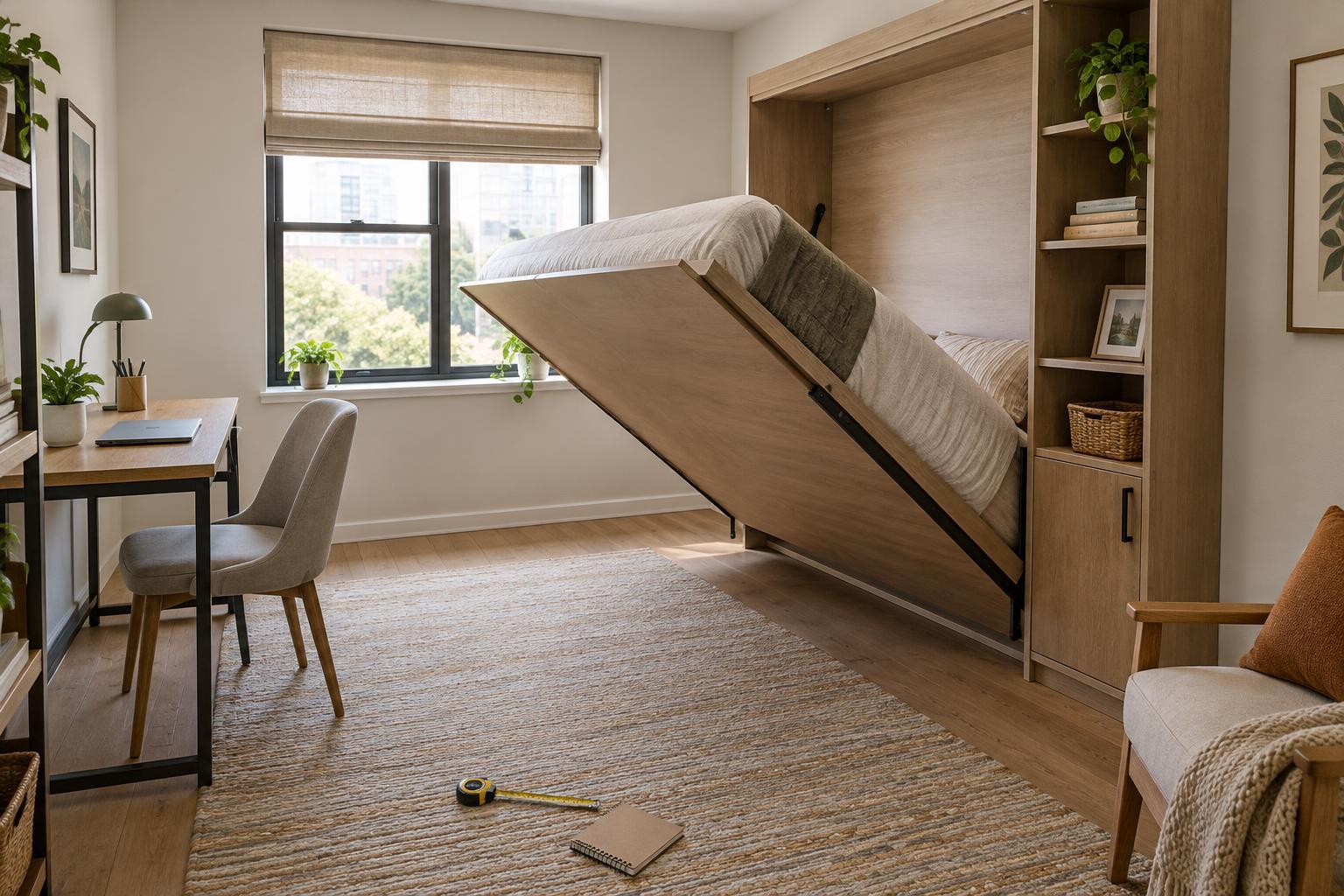
A wall bed folds away when it is not in use, making it appealing in a room that doubles as an office, guest room, or living area. It does not, however, make the bed disappear. The cabinet still occupies wall and floor space, and the room must remain usable when the bed is lowered. The first question is whether you need a clear floor every day or simply want a more comfortable place for occasional guests.
Sketch the room twice: once with the bed closed and once with it open. Mark doors, windows, radiators, outlets, light switches, and furniture that must stay in place. If opening the bed means dragging a desk across the room each evening, the arrangement may become tiring. If a small chair can move easily and the rest of the room stays functional, a wall bed may be a better fit.
Check the mounting surface before choosing a model
Wall beds need secure installation to resist the forces created when the bed opens, closes, and is used. Do not assume that a wall that can hold shelves can support a wall bed. Mounting requirements vary by product; some designs attach to the wall, while others also require floor anchoring. Follow the manufacturer’s instructions for the exact model rather than relying on a general installation method.
Identify the wall construction and what is behind the finished surface before ordering. Stud location, masonry condition, baseboards, and hidden wiring or plumbing can all affect placement. A thin partition or a wall with uncertain construction may need further assessment. If you cannot confidently verify that the proposed location meets the product’s requirements, ask a qualified installer to inspect it. In a rental or shared building, check what alterations are permitted before planning any anchors.
Measure ceiling height too. A vertical wall bed needs enough height for its cabinet, while a horizontal design uses more wall width and may suit a lower ceiling. Neither orientation is automatically the better space-saver: compare the closed cabinet dimensions and the open-bed footprint for your particular room.
Measure the full opening path
The mattress dimensions alone will not tell you whether a wall bed fits. Look up the manufacturer’s measurements for the cabinet when closed, the bed when open, and any required operating space. Tape the open-bed outline onto the floor. Then walk around it as you would in normal use, including the route to the door. Make sure you can reach the bedding and operate the bed without squeezing between hard furniture edges.
Test the movement in your plan, not just the final position. A chair tucked under a desk might fit beside the open bed but block its path as it lowers. Ceiling lights, wall sconces, shelves, and artwork can also interfere. If a desk or sofa is built into the wall-bed system, check its position in both modes and whether items must be cleared off it before opening the bed.
Pay attention to smaller practical details: where pillows and spare bedding will live, whether the mattress can stay made up, and how you will clean behind or beneath the unit. These details matter most when the bed will be opened often.
Budget for the whole project
A useful budget includes more than the advertised cabinet price. List the bed mechanism or complete unit, a compatible mattress, delivery, installation, and any permitted wall or floor work. Add likely room adjustments, such as moving a shelf or replacing furniture that obstructs the open bed. If you are comparing a ready-made unit with a custom design, request an itemized description of what each includes so the totals are comparable.
Avoid choosing a mattress before checking the bed maker’s limits for size, thickness, and weight. A mattress you already own may not be suitable. Also ask how the warranty treats installation, moving the unit later, and replacement parts. A lower purchase price may not be the better value if it leaves essential installation or room changes out of the estimate.
Decide whether the trade-off works for you
A wall bed is most practical when the reclaimed floor space has a clear purpose and the bed can be opened without rearranging the whole room. It can be less appealing if the wall is unsuitable, circulation becomes tight when the bed is down, or the cabinet removes storage you need more than open floor. A daybed, sofa bed, or conventional bed with storage underneath may be simpler in those situations.
Before committing, compare two complete room layouts rather than two bed prices. Include what stays accessible, what must move, where belongings will go, and what the room looks like in its most-used mode. If the wall bed passes the mounting and clearance checks and makes daily life easier, it may earn its place. If it only looks spacious while closed, keep looking.