Map the light before choosing a plant
A plant that looks perfect on a shelf may struggle there if the shelf is far from a window. Before shopping, look at the room at a few points during the day. Notice where sunlight falls directly, where daylight is bright but filtered, and where corners stay dim. Curtains, nearby buildings and furniture can all change the light a plant receives. Check the exact place you plan to use, not just the room in general.
Think about whether that spot changes with the seasons or when you close blinds to work or watch a screen. “Low light” does not mean no light: a windowless bathroom or an unlit corner is not a reliable home for an ordinary houseplant. If your favorite display spot is too dark, use a different spot for a living plant rather than buying one and hoping it adapts.
Choose plants for the spot, not the empty space
For a bright windowsill that receives direct sun, consider a compact succulent suited to indoor growing. Give it enough room that its leaves do not press against hot glass, and check the care information for the particular variety. A spot with bright, indirect light offers more choices, including many spider plants and pothos varieties. A shelf that gets some daylight but little direct sun may suit a ZZ plant or snake plant, although both generally grow more slowly in lower light.
Size matters as much as light in a compact room. A small plant on a narrow sill is easier to live with than a large one that blocks a window or crowds a desk. Before buying a trailing plant, decide where its stems can hang without catching on a chair or covering a work surface. If children or pets can reach the display, check whether the specific plant is suitable for your household; familiar houseplants are not automatically safe to chew.
Let the pot support both the plant and the room
Start with a pot that fits the root ball rather than buying the largest decorative container you can find. An oversized pot can hold moisture longer than a small plant needs. A nursery pot with drainage holes is a useful starting point: you can place it inside a decorative outer pot, then lift it out to water and let it drain. Empty any water left in the outer pot so the roots are not sitting in it.
In a small room, pots are part of the decorating scheme. Repeating one finish, such as matte ceramic or warm terracotta, can make plants of different shapes feel connected. You do not need matching sets: a simple color palette helps a secondhand pot sit comfortably beside a new one. Measure a shelf or sill before buying, and allow space for a saucer, watering access and leaves that will spread beyond the rim.
Arrange greenery without giving up useful space
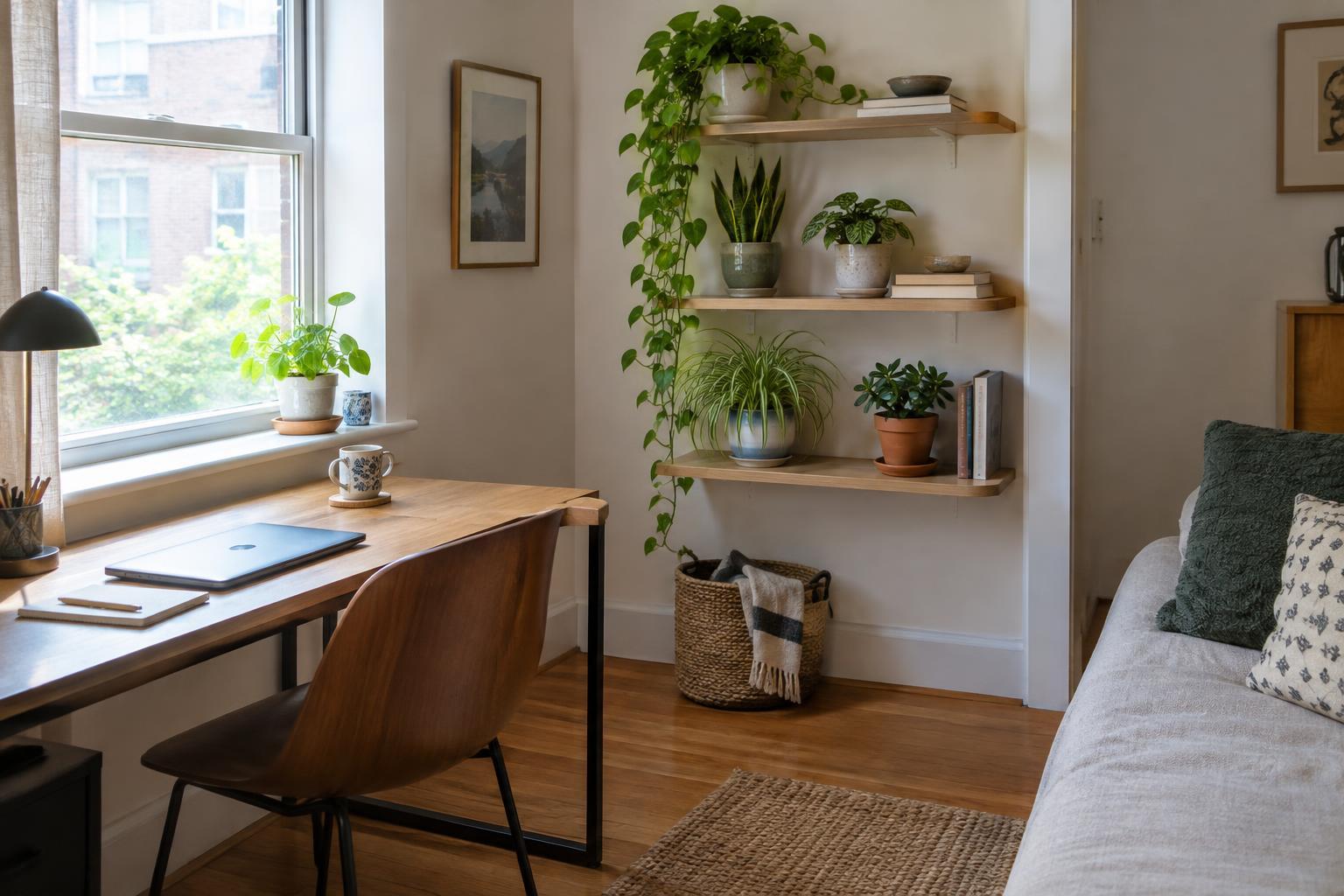
Choose two or three positions with different heights instead of filling every available surface. A small upright plant can sit beside books, while a trailing plant might soften the edge of a sturdy shelf. Keep plants clear of walkways, frequently opened cupboards and the part of a desk where you need to work. On a multipurpose table, one pot that is easy to move may be more practical than several that need rearranging each day.
Group plants only when their light needs suit the same location. A bright spot can become a simple display with one taller plant behind two smaller ones, provided each still gets enough light. If floor space is scarce, use a windowsill or an existing shelf before buying a stand. Check that shelves can bear the weight of pots and damp soil, and protect surfaces that could be marked by water.
Keep the project affordable and easy to maintain
There is no need to decorate the entire room at once. Begin with one plant in a spot you have assessed, using its nursery pot inside a container you already own if it fits safely. Live with that arrangement for a few weeks before adding another. This gives you a chance to see whether the plant gets enough light and whether watering it is convenient without moving furniture.
Rather than watering on a rigid schedule, check the potting mix and follow the care needs of the plant you chose. Move a plant if it consistently leans toward the window, loses its healthy appearance or blocks a task you do every day. A successful small-room display is not the one with the most greenery; it is one that leaves the room usable and makes caring for each plant straightforward.