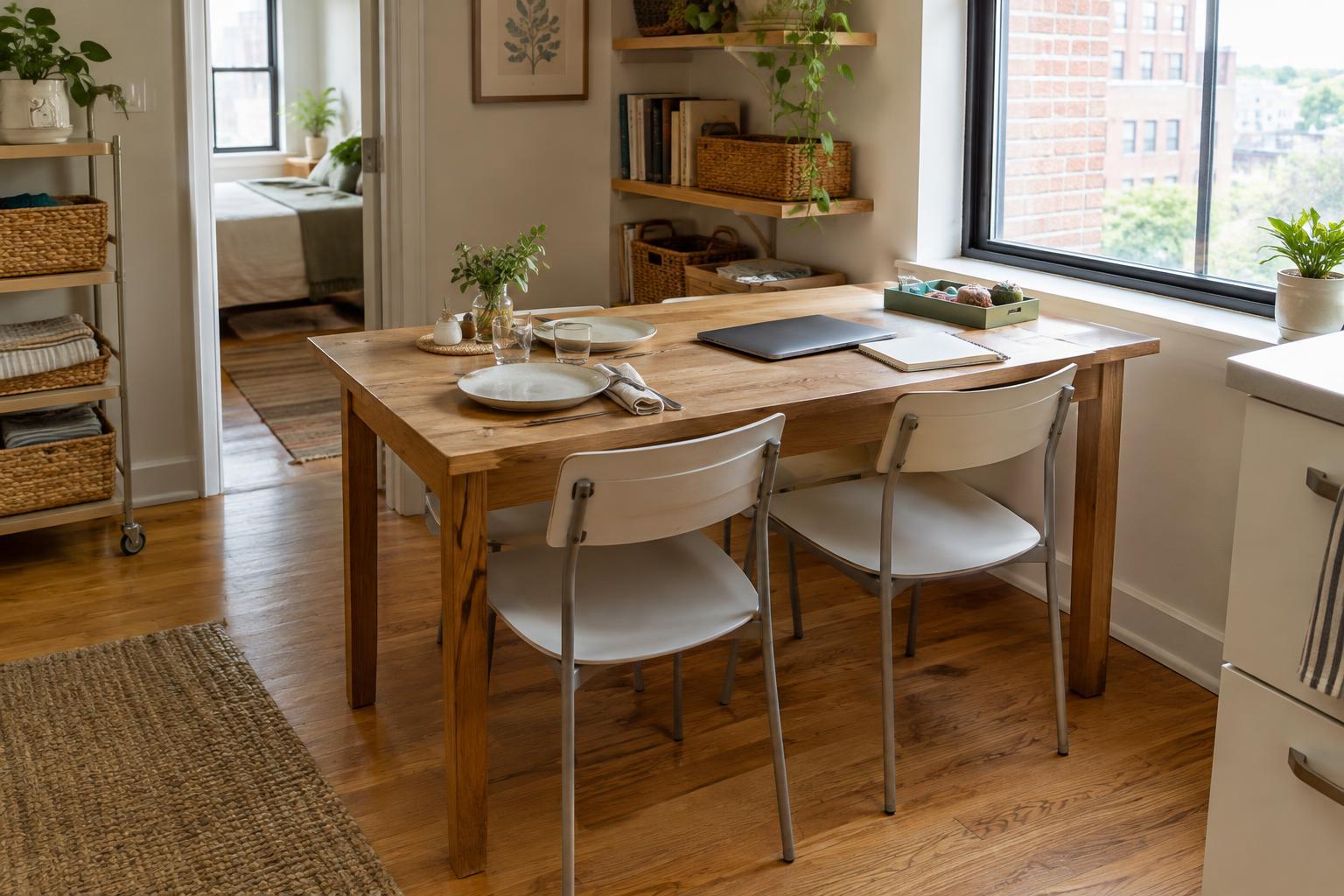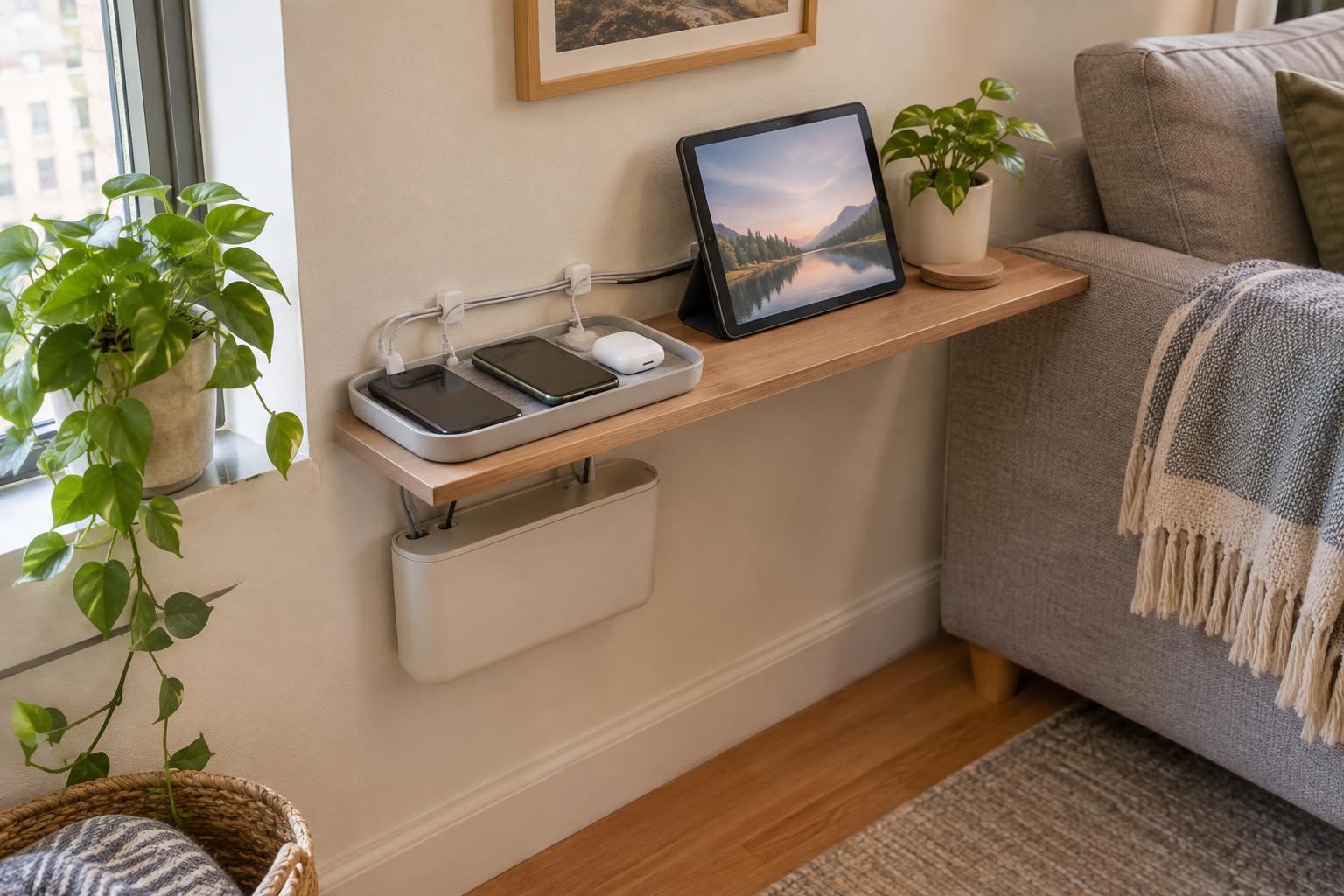
Decide whether the furniture should roll
Casters are useful on a low storage unit that needs to move for cleaning, a craft cart that serves two rooms, or a small side table that changes position during the day. Before buying wheels, picture the piece in use. Will you move it only when empty, or will it carry books, tools or equipment? Does someone lean on it to stand up? Furniture used for support should not rely on casters, even braked ones.
Check the furniture’s shape and construction. Low, broad pieces are generally better candidates than tall, narrow ones that could tip when pushed or when a drawer is opened. Inspect the underside for a sound place to attach each caster. Thin panels, damaged wood and decorative feet may not hold fasteners securely. If you cannot identify a solid mounting point without weakening the piece, leave it stationary or use a purpose-built rolling cart instead.
Match the wheel to the load and the floor
Start with the weight of the furniture plus everything it will normally hold. Choose casters whose combined rated capacity comfortably exceeds that total, and check the rating for each caster rather than assuming all wheels are alike. A margin is sensible because weight may not be distributed evenly as the furniture crosses a threshold or turns. Remember that casters also add height: measure the finished piece against desks, counters and door openings before you commit.
Wheel diameter and tread both affect how a piece moves. Larger wheels usually cross small floor joints more easily; small wheels suit lighter pieces on smooth floors. On hard flooring, look for a soft, non-marking tread that the caster maker identifies as suitable for your surface. Harder wheels may roll better on carpet but can be noisy or harsh on exposed flooring. For thick carpet or an uneven route, test whether the furniture remains easy to control rather than assuming bigger wheels will solve the problem.
Choose a brake that fits the job
Swivel casters let furniture change direction in a tight room, while fixed casters track in a straighter line. Four swivels make a small cart easy to maneuver; two fixed and two swivel casters can make a longer piece easier to steer. Think about where you will stand when parking it. Brakes hidden against a wall or under an overhang are frustrating to reach.
A wheel brake may stop the wheel from turning without preventing the caster from swiveling. A total-locking caster restrains both motions. If the furniture must stay in a precise position, such as a rolling work surface, total locks on accessible corners are worth considering. Even then, a brake is not a substitute for a stable base. Avoid using a rolling piece as a step, seat or handhold, and keep heavy items low to reduce tipping risk.
Mount the casters to a sound base
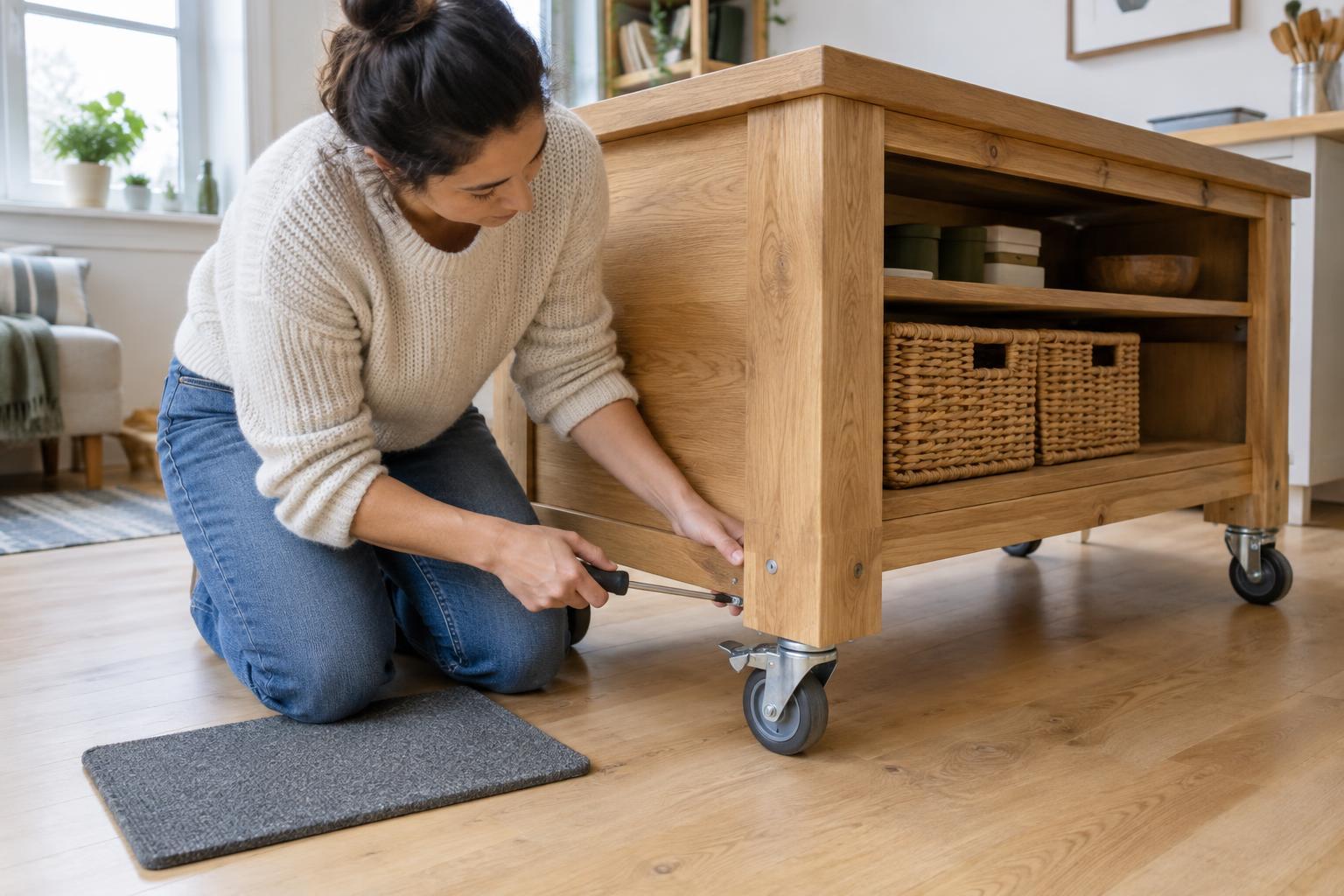
Common fittings include screw-on plates, threaded stems and push-in stems. Buy a fitting that matches the furniture’s construction rather than choosing by appearance alone. Plate casters need solid material where every screw enters; a stem needs a correctly sized, secure socket or threaded insert. Follow the hardware maker’s instructions for fastener size, hole depth and minimum material thickness. Screws that are too long can emerge through the furniture, while short or loose fasteners may pull out.
Turn the furniture over only when you can do so safely, and remove loose contents first. Mark equal caster positions near the corners, checking that drawers, doors and trim will still clear the floor. After fitting the wheels, set the piece upright and test it empty: roll it slowly, turn it, apply the brakes and check for rocking. Add contents gradually and recheck the fittings. If the base flexes, a wheel wobbles or the piece feels top-heavy, stop using it on casters until the problem is resolved.
Protect the floor and keep the setup working
Clean grit from wheels and floors before moving the furniture; trapped particles can scratch even when the tread is described as non-marking. Roll rather than drag the piece sideways, and lift it over a high threshold instead of forcing the wheels across. If the furniture will sit in one place for long periods, check occasionally for marks or dents. A suitable mat can protect a busy work area, provided its edges do not create another obstacle.
Make a quick maintenance check part of your cleaning routine. Remove hair or thread wrapped around axles, tighten accessible fasteners as directed by the maker, and test each brake. Recheck after changing what the furniture stores, especially if you add heavy contents. The best rolling setup is one that moves when you need the room to change and stays steady when you do not.