Start with a quick look, not a deep clean
A narrow gap behind a sofa, bookcase or appliance can collect dust for months because it is easy to overlook and awkward to reach. Before buying a special tool or shifting heavy furniture, shine a flashlight into the space. Check where the dust sits, how wide the opening is and whether there are cords, hoses, vents or fragile items in the way. That quick look helps you choose a tool that fits rather than pushing debris farther back.
Clear the floor in front of the gap and put a small bin or bag nearby. If loose items have fallen behind the furniture, retrieve them first with a grabber or a long-handled tool. Work gently around electrical cords and appliance connections. If you see a leak, damaged cable or anything that looks unsafe, stop cleaning that area until the problem has been addressed.
Choose a tool that matches the gap
For a gap wide enough to admit a vacuum nozzle, a crevice attachment is usually the simplest starting point. Move it slowly along the floor edge and repeat from the other side if the space is open at both ends. If your vacuum hose is too short, reposition the vacuum body rather than stretching the hose until it pulls on nearby objects. A brush attachment can lift dust from an accessible wall or baseboard before you vacuum the floor.
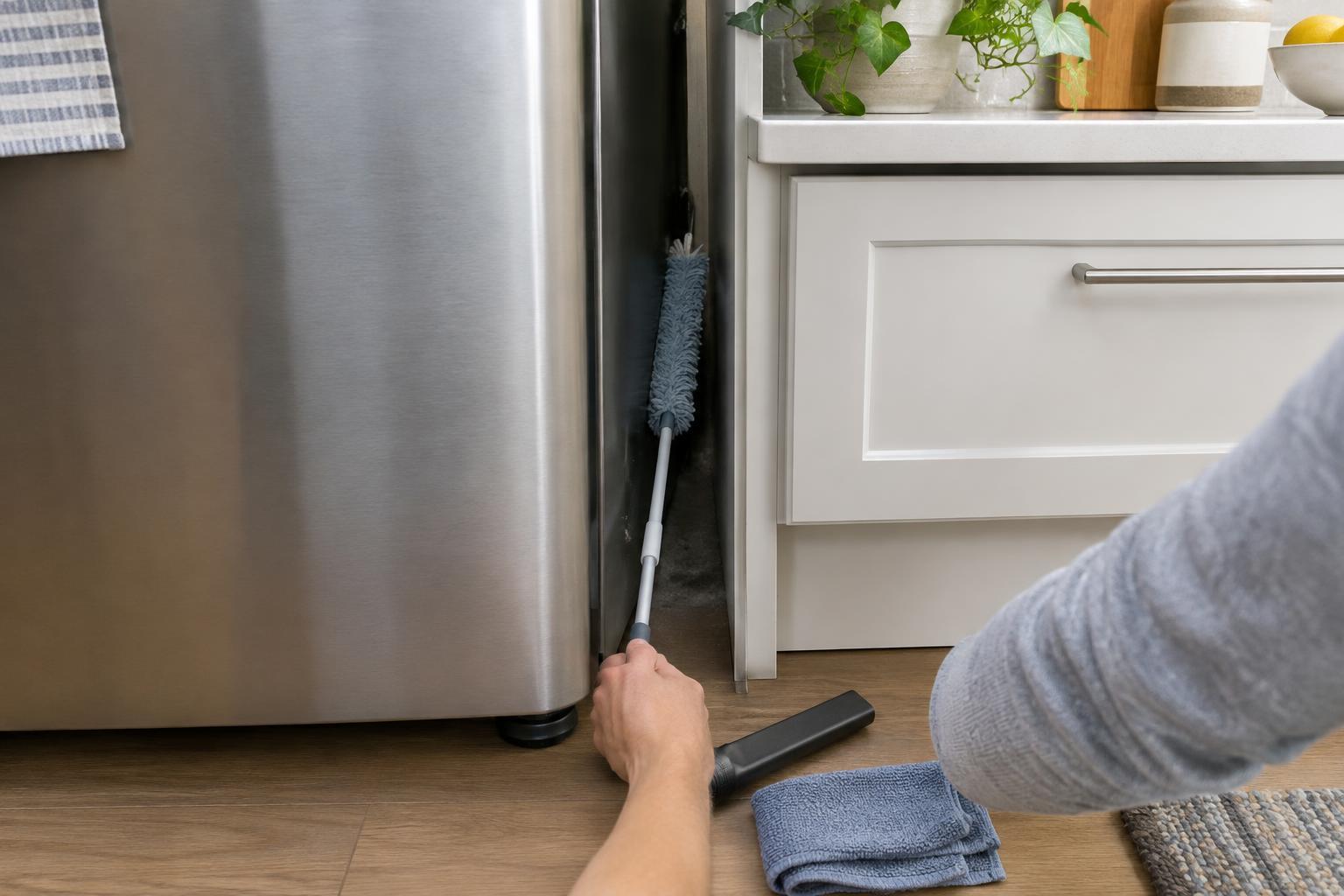
For thinner spaces, try a flat microfiber duster with a flexible handle or a dry cloth secured around a slim ruler or similar blunt tool. Make sure the cloth is firmly attached so it cannot slip off behind a cabinet. A long, narrow brush can loosen crumbs at the back of a gap; pull them toward an opening, then vacuum them up. Avoid sharp edges or forceful scraping, which can mark floors, snag cords or damage appliance parts.
Clean in a dry-to-damp sequence
Start dry. Sweep or dust from the back of the reachable area toward you, then vacuum what you have loosened. This order keeps dry debris from turning into a muddy streak when you wipe. If the gap runs along a wall, give the baseboard a pass as well. For example, behind a desk, one slow sweep along the floor and one along the baseboard may catch most of the buildup without disturbing the workstation.
Once the loose dust is gone, a lightly damp microfiber cloth can handle marks on a reachable floor or baseboard. Wring it out well, especially near wood flooring, outlets and appliance connections. Do not spray cleaner into an unseen space: you cannot control where it lands or how long it stays wet. If a mark is beyond the reach of a gentle wipe, leave it for a time when the furniture can be moved safely.
Treat appliance gaps with extra care
The space beside a refrigerator or washing machine may look like an ordinary dust trap, but it can also contain a power cord, water line or other connection. Clean only what you can see and reach without tugging on those parts. A dry duster or vacuum crevice tool is useful along exposed floor edges. Keep tools away from vents and openings unless the appliance instructions identify them as areas you can clean.
Do not insert a wet cloth or rigid tool behind an appliance to chase a stubborn patch of grime. If proper cleaning requires pulling the appliance out, check its instructions and get help when its weight or connections make that difficult. The same rule applies to large cabinets: cleaning a reachable strip now is better than risking injury or damage to reach the last few inches.
Make the next clean easier
Once the gap is clear, note what collects there. A trail of crumbs behind a dining bench calls for more frequent vacuuming along that edge; lint behind a sofa may only need an occasional duster pass. Keeping a slim attachment with your regular cleaning supplies removes the temptation to postpone the job. You can also add the gap to an existing room routine, such as vacuuming the desk area when you clean the rest of the floor.
Aim for accessible maintenance rather than a perfectly spotless hidden space. A few slow passes made regularly are more manageable than an occasional major furniture-moving session. When you do rearrange a room, take the opportunity to clean the fully exposed floor and check whether the new layout leaves enough space for a vacuum nozzle or duster.