Start with what happens in the room
A multipurpose room can feel cluttered even when it has enough storage. The problem is often that items are kept wherever space was available, rather than near the activity that uses them. A laptop charger ends up in a drawer across the room, while craft supplies occupy the shelf beside the desk. Assigning storage zones gives each activity a place for its tools and makes putting things away less of a separate chore.
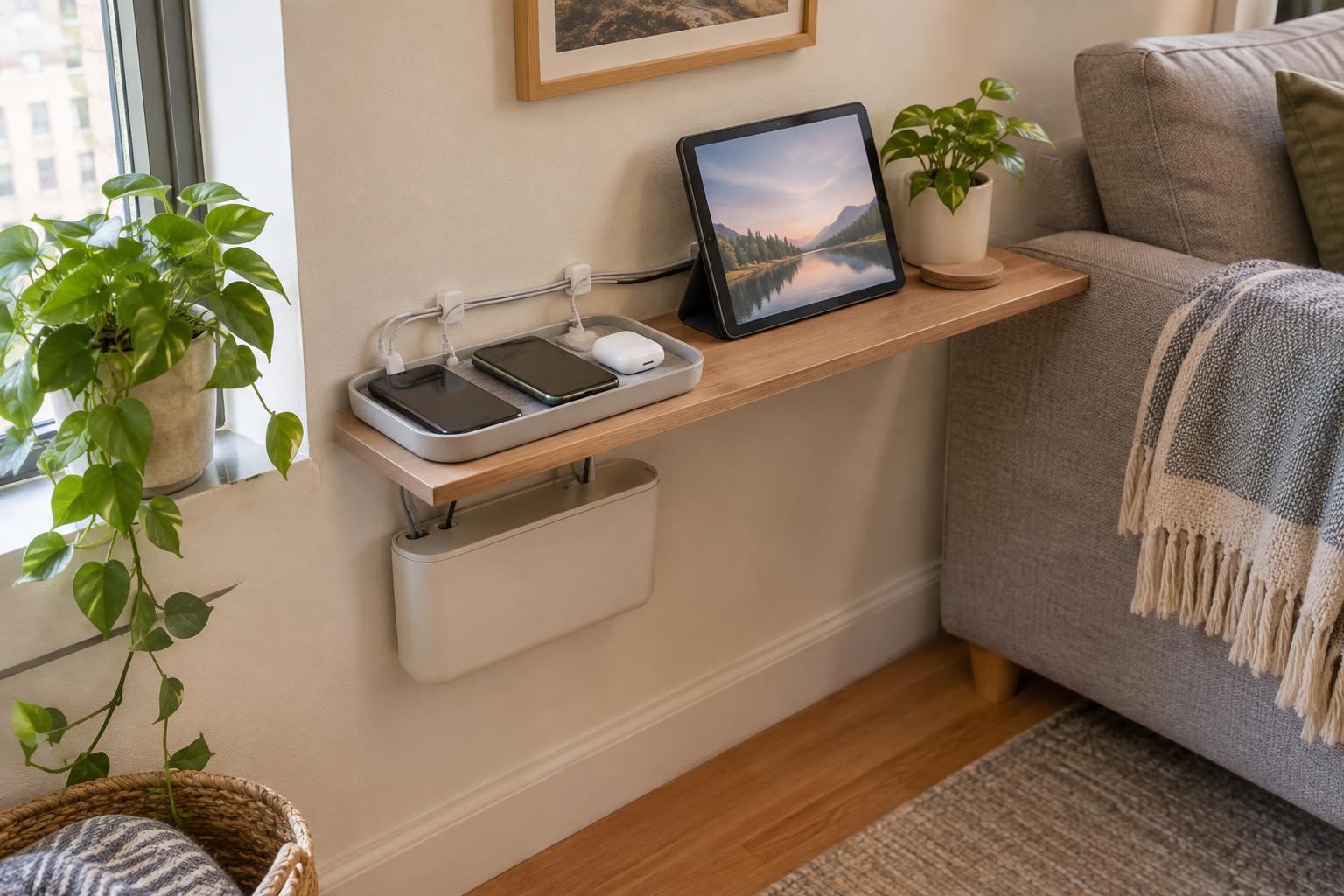
Before moving anything, write down the room’s regular uses: perhaps working, eating, relaxing and exercising. For a few ordinary days, notice which items come out for each activity and where they tend to land afterward. Include the small things, such as pens, remotes and charging cables. This quick inventory is more useful than planning around every item you own, because it shows what the room needs to handle most often.
Give each activity a clear home
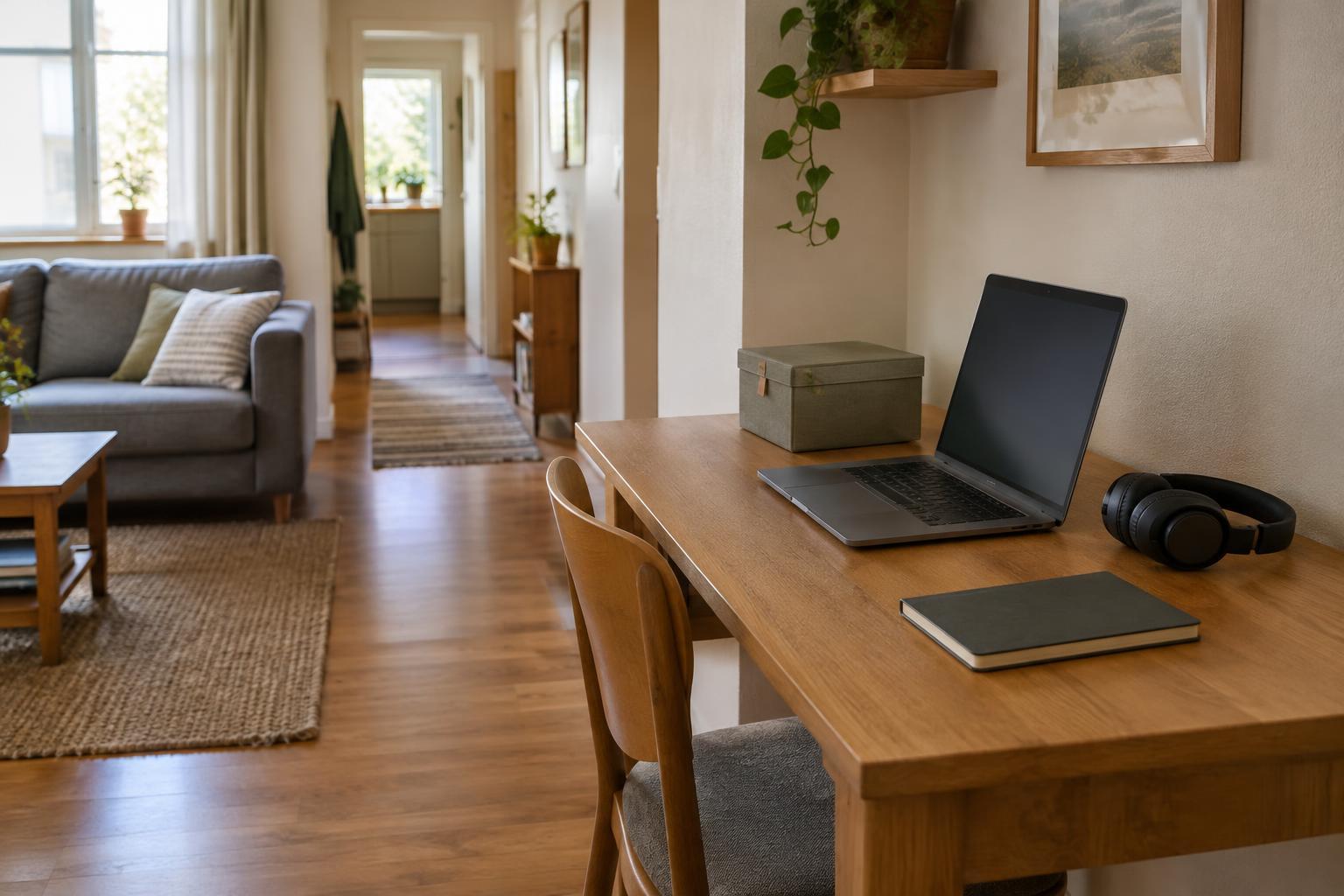
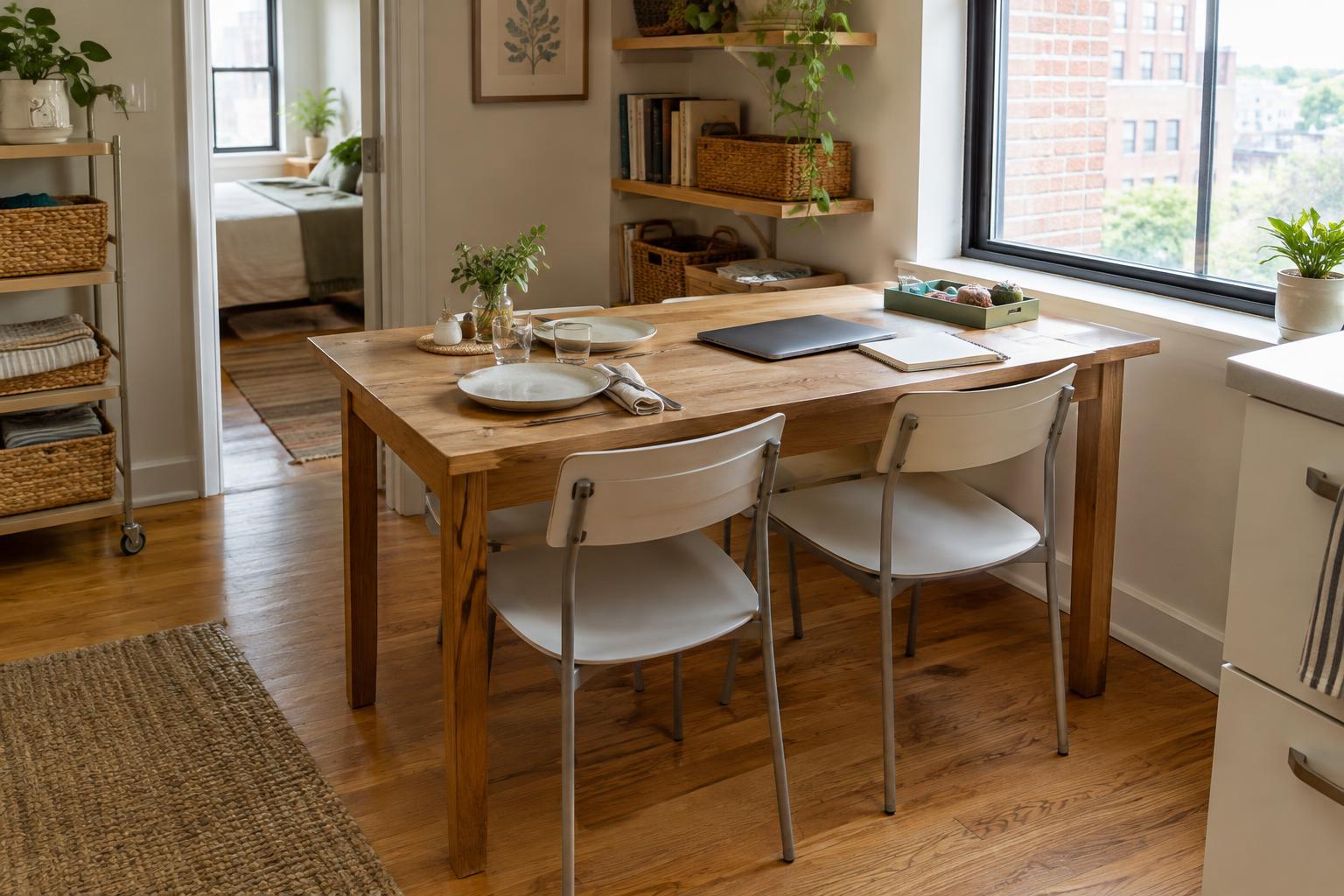
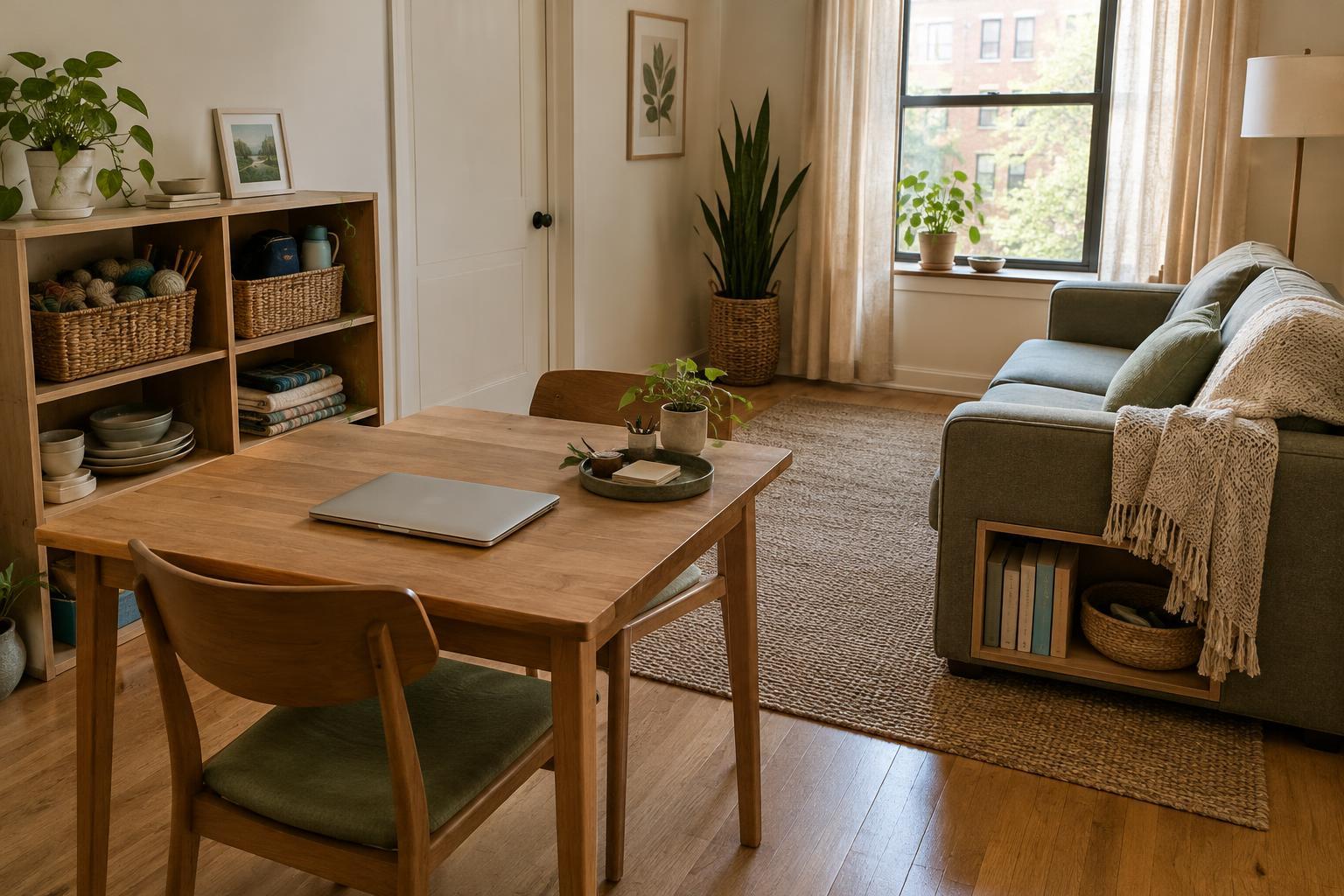
Choose a zone for each regular activity, then assign nearby storage to its everyday items. A work zone might be one desk drawer and a narrow shelf, not an entire wall. A relaxation zone might be a basket beside the sofa for blankets and current reading. If the dining table doubles as a project surface, a portable tray or lidded box can hold the materials that need to clear away before a meal.
Keep the most-used items within easy reach of the place where they are used. Less frequent supplies can go higher up, farther back or in another room if space is tight. Resist dividing storage into too many tiny categories at first. It is easier to maintain a broad home for “desk supplies” than to remember separate locations for every type of pen, note and cable.
Use boundaries when zones overlap
In a compact room, activities often share the same furniture. The aim is not to create rigid divisions, but to make it obvious where one set of items ends and another begins. A drawer divider can separate work supplies from household paperwork. Two small bins on one shelf can distinguish hobby materials from exercise accessories. Containers are most helpful when they fit the shelf, are easy to open and do not hide things you need every day.
Think about transitions, too. If the desk becomes a dinner table, where will the laptop and papers go? Reserve a shelf, drawer or portable box for that changeover. Give items that regularly travel between zones, such as a charger, one default home rather than several possible resting places. A clear return spot reduces the need to search for them later.
Make putting things away the easy option
Place storage where items naturally collect, as long as it does not block movement or make the room harder to use. If shoes and bags pile up by the door, a hook and small basket there may work better than an empty cupboard on the opposite wall. If mail lands on the table, give incoming papers a single shallow tray and choose a regular time to sort it. The goal is to improve the route an item already takes, not to rely on remembering a complicated new one.
Check that each zone has room for its contents without requiring careful stacking. An overfilled box is awkward to use and easy to abandon. Before buying storage furniture, try moving existing baskets, trays or shelves into better positions. If you do need something new, measure the available space and the items it must hold first. A modest container that fits the task can be more useful than a large unit that crowds the room.
Test the setup and adjust it
Live with the zones for a week or two before treating them as fixed. Notice what is still left out, what is hard to reach and which containers no one uses. Items that consistently land in the same spot may need a home closer to that spot. A zone that has become a catch-all may need fewer contents or a clearer purpose.
A short reset at the end of an activity can keep shared surfaces available for their next use: return work supplies to their drawer, put hobby materials in their box and clear the sofa of items that belong elsewhere. The system does not have to make every object invisible. It only needs to make the room easy to switch between its everyday roles.