Start with the desk you need when it is open
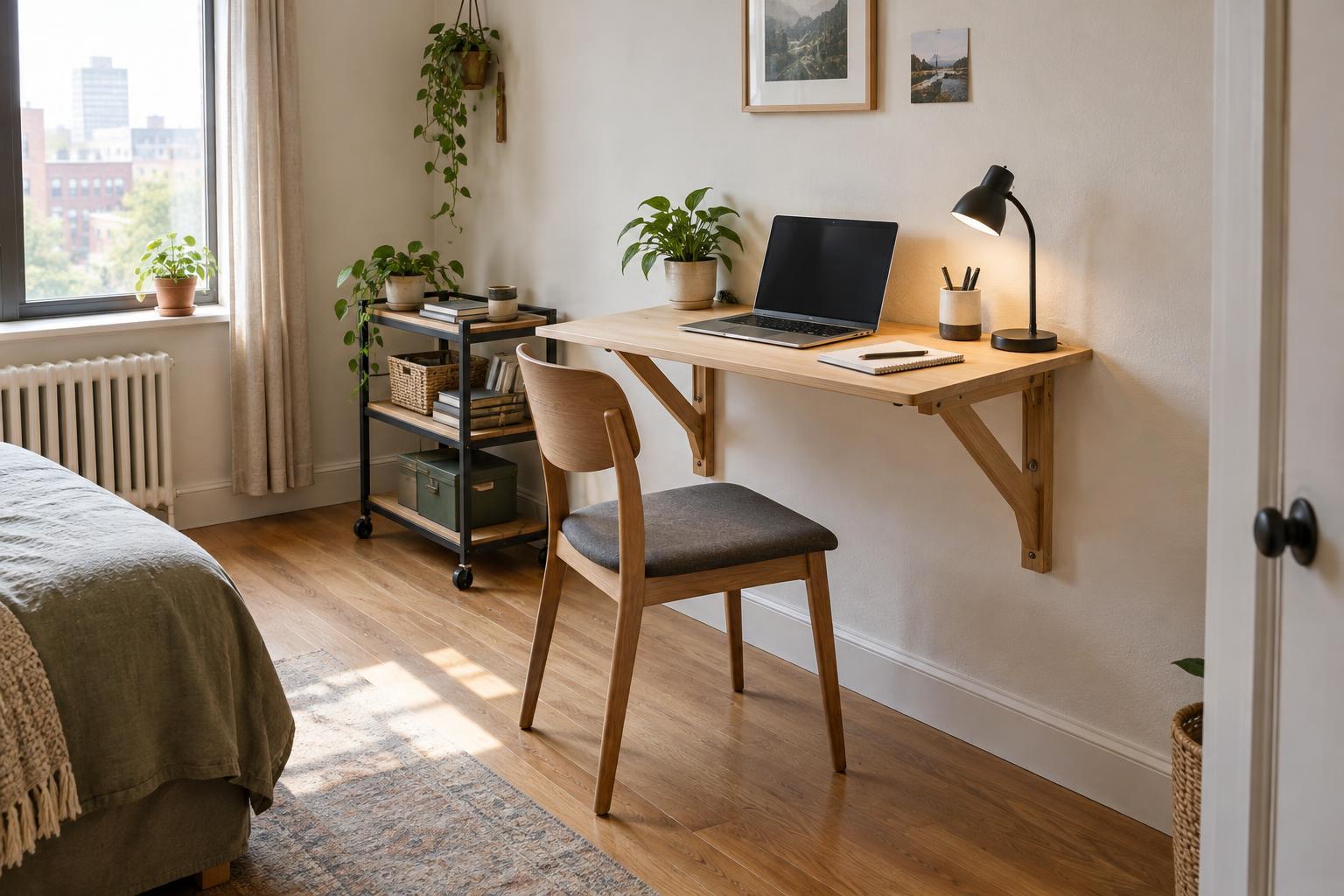
A fold-down desk is appealing because it gives the floor back when work is finished. The useful starting point, though, is its open position. Set out the laptop, notebook, mouse and any other items you use at the same time. Measure the space they occupy, then allow room for your hands and elbows. A narrow shelf may hold a laptop but feel cramped during a full work session.
Mark the proposed desk outline on the wall with removable tape and pull a chair into place. Check that you can sit comfortably, reach an outlet and move past the desk without squeezing around it. Open nearby doors, drawers and cupboards too. Finally, picture the desk folded up: will it block a light switch, cover something you need to reach or leave a chair with nowhere to go? Testing both positions can prevent a space-saving purchase from creating a new obstacle.
Treat the wall as part of the furniture
A wall-mounted desk carries more than the weight of its top. It also has to support the items placed on it and the force created when someone leans on its outer edge. Check the desk maker’s instructions for the permitted load, required fixings and suitable wall types. Do not assume that a fixing supplied with a desk is right for every wall.
The mounting method depends on what is behind the wall surface. Timber studs, masonry and hollow partitions call for different fixings; plasterboard alone should not be treated as solid structural support. Locate the intended fixing points before buying the desk, and consider whether pipes or electrical cables might be hidden nearby. If you cannot identify a suitable mounting method or are unsure what is inside the wall, seek advice from a competent installer rather than guessing. A desk that feels secure when empty may behave differently under everyday use.
Check the moving parts and the daily routine
Compare mechanisms as well as tabletops. Some desks rely on folding brackets, while others use side supports or a drop-front cabinet design. Whichever you choose, the support should lock or settle securely in the working position and be straightforward to close without trapping fingers. Follow the product instructions, including any limits on what can remain on the desk as it folds.
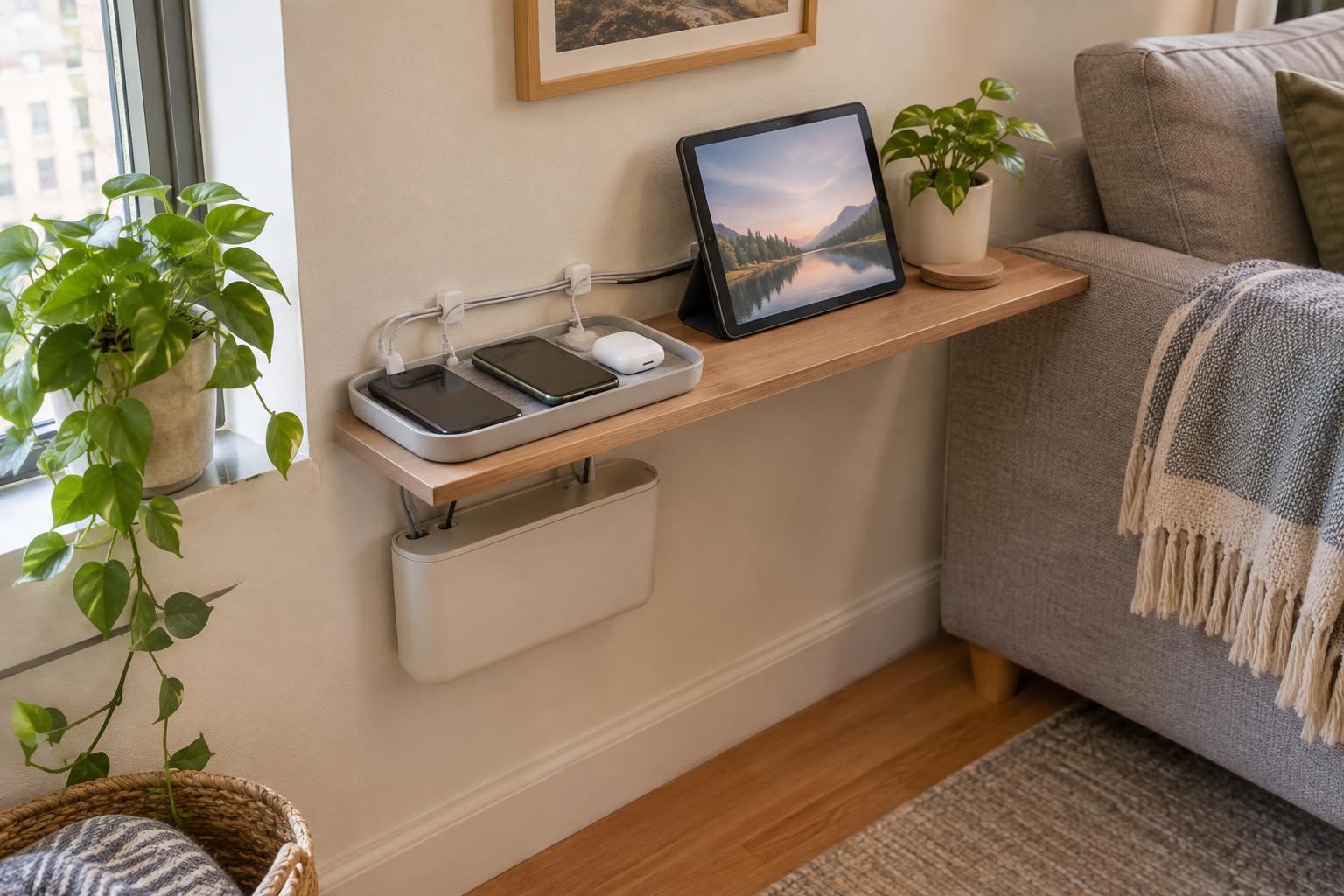
Plan where work supplies will go when the surface closes. A shallow wall shelf, a portable box or a drawer elsewhere in the room can hold chargers and stationery. Keep cables away from hinges and folding edges, and avoid leaving a cord stretched across a walkway. If clearing the desktop every day would be frustrating, a compact fixed desk or a console that stays in place may fit your routine better.
Know what to ask before drilling in a rental
If you rent, check your tenancy terms and ask the property owner or manager before making mounting holes. A fold-down desk may require several substantial fixings, so it is different from hanging a light picture. Agree on where it can go, who will install it and what should happen when you move out. Keep any permission in writing so expectations are clear.
Build the possible cost of installation and making good into your budget, alongside the desk itself. A cheap wall desk is less of a bargain if the chosen wall needs specialist work or the surface will need repair later. Avoid improvised mounting methods intended only to hide holes: removable adhesive strips and ordinary picture hooks are not substitutes for structural desk fixings.
Choose a no-drill setup if the wall is off limits
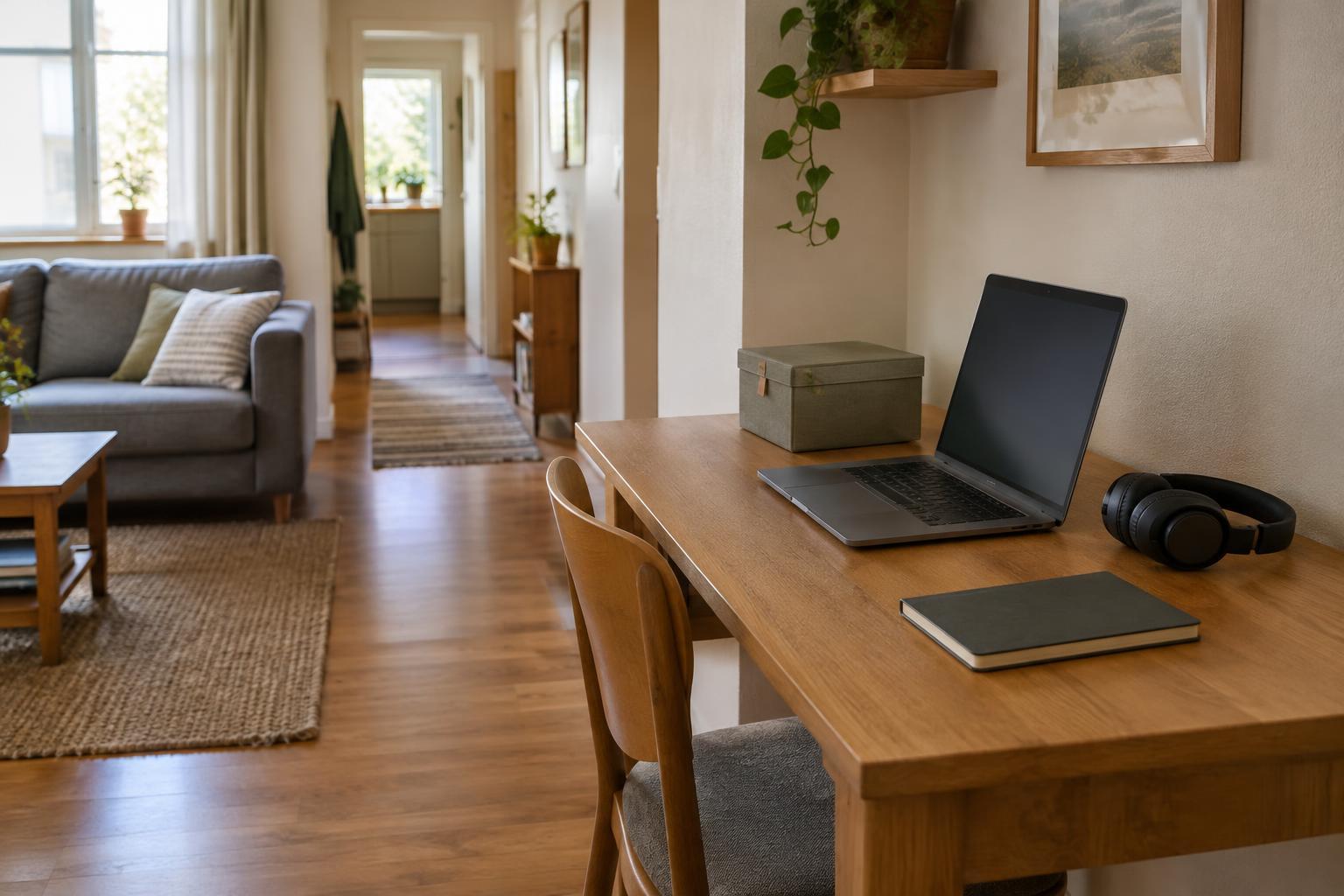
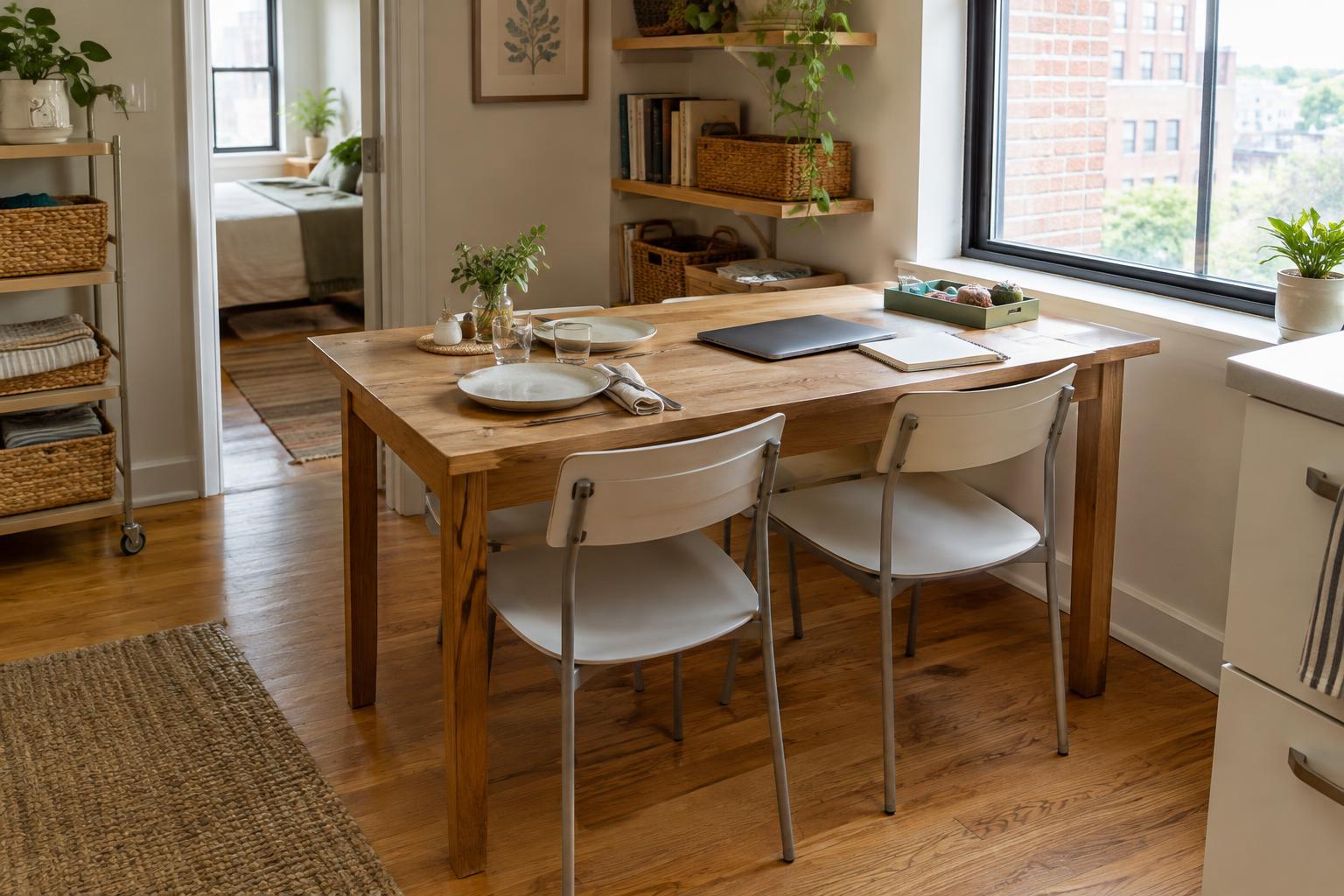
A folding table is the simplest portable alternative. Choose one with a stable frame and a top large enough for your work, then identify a storage spot before buying it. A slim console or small writing desk can also serve another purpose after work hours, particularly if a chair tucks fully underneath. For occasional laptop tasks, a wheeled cart with a suitable work surface may offer flexibility, provided it can be kept steady while in use.
To compare options, measure the footprint in use and in storage, not just the advertised tabletop size. Include space for chair legs, power cords and moving around the room. A freestanding desk will not disappear against the wall like a fold-down model, but it can be moved, adjusted or taken to a new home. The best choice is the one you can set up safely and use comfortably without turning each work session into a furniture-moving project.