Start with the room’s other job
A workstation in a bedroom, living room or dining area has to work when you are not working, too. Before moving furniture, write down what the room must still do. A dining table may need to be clear for meals every evening. A guest room may need space to open a sofa bed. In a living room, the best desk position may be one that does not interrupt the route between the door and the seating.
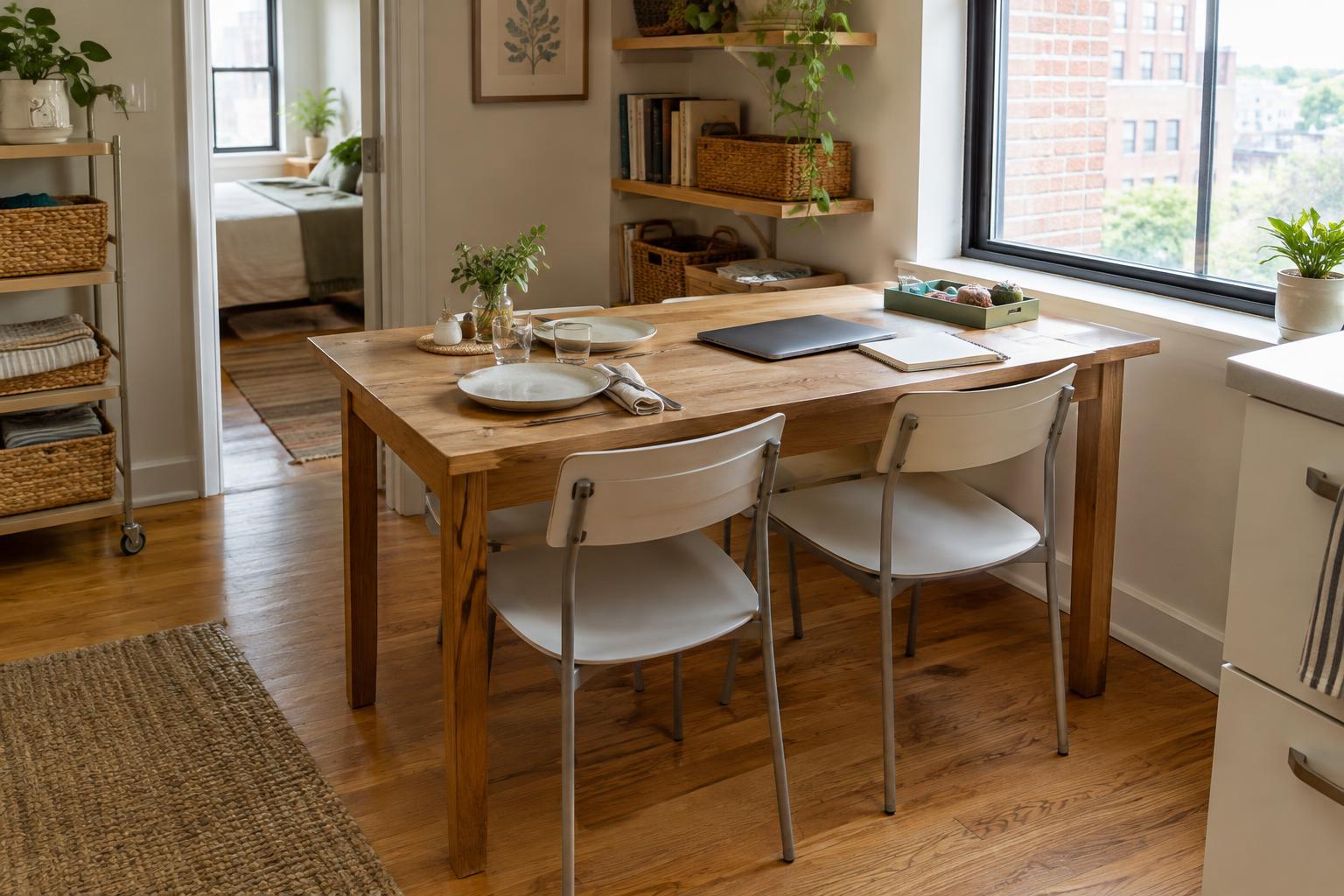
Notice when each activity happens. If nobody uses the dining table during the day, it may be a sensible work surface. If another person watches television while you take calls, a corner farther from the screen could be more useful than the corner with the most attractive backdrop. Measure the available surface and the space behind your chair before buying anything. Being able to sit down, stand up and pass through the room easily matters more than fitting in a large desk.
Choose a surface you can use consistently
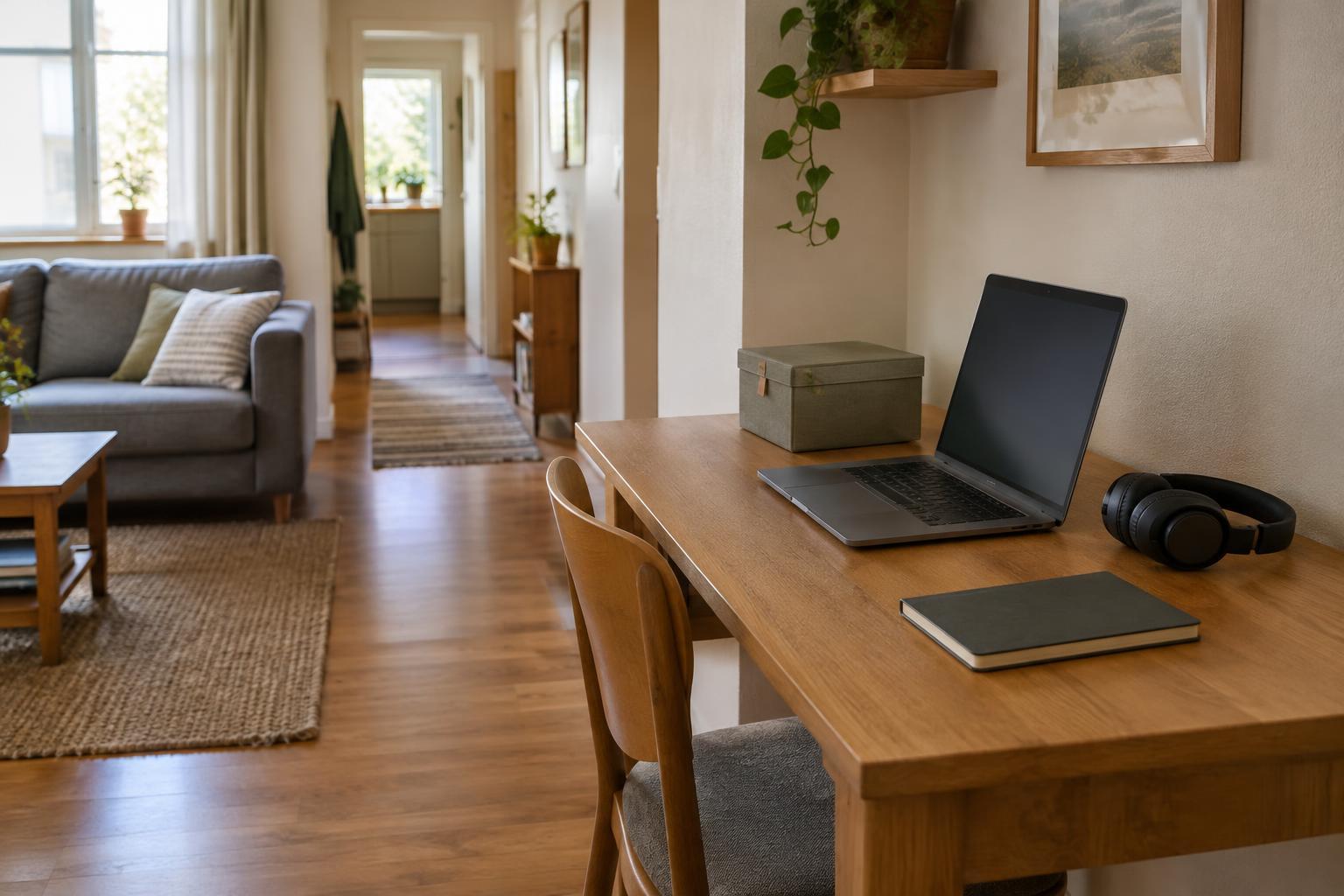
The simplest setup may be an existing table and a supportive chair you already own. If the table is shared, keep your work equipment on a tray or in a box so it can move in one trip. A small desk can make sense when you have a permanent stretch of wall, while a wall-mounted or folding surface may suit a narrow room. Check that any folding option has enough space for your actual tasks, not just a laptop in a product photo.
Try the position before spending money. Sit at the proposed surface and place your keyboard, notebook and drink where you would normally use them. Can you reach a socket without running a cable across a walkway? Is there room to move the chair without hitting a bed or cabinet? If the surface is too high or low for comfortable typing, a different chair or location may be a better fix than adding accessories. A separate keyboard and mouse can also make a laptop setup more flexible if they fit your budget.
Plan for light, calls and everyday noise
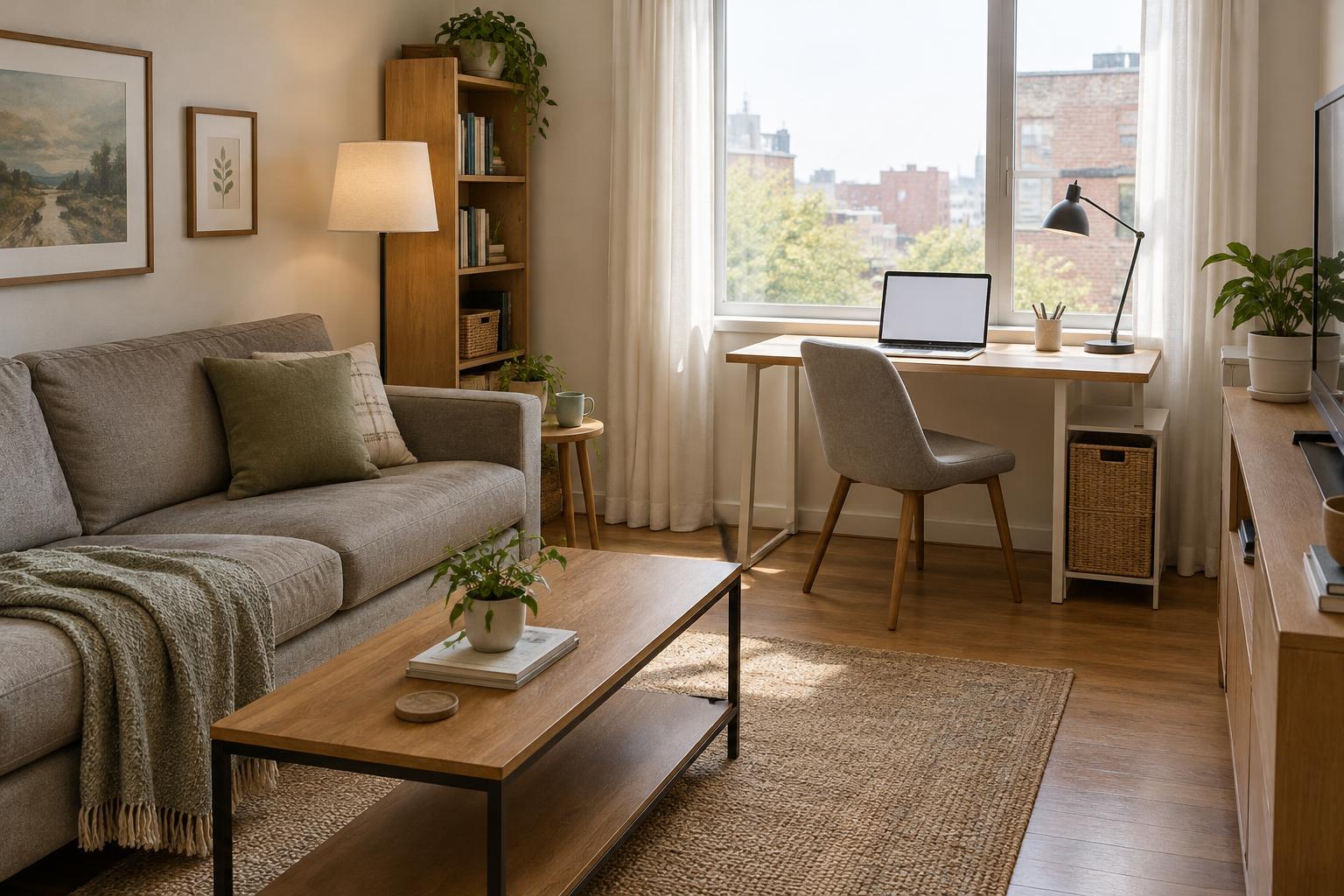
Daylight can make a workspace pleasant, but a window directly behind a screen may create glare. Test the spot at the times you usually work. A movable lamp is a useful addition when the room’s main light leaves your work surface dim; it can serve another purpose after hours. Keep the lamp, screen and frequently used items where you can use them without repeatedly rearranging the room.
For video calls, look at what the camera sees from your normal seated position. You do not need a styled background: a clear wall or an orderly part of the room is enough. If other household activities happen nearby, headphones and a planned place for calls may help. In a bedroom, consider whether your camera angle can avoid showing the bed. In a shared living room, agree on call times or a simple signal that lets others know when you need quiet.
Give work supplies a place to disappear
Multipurpose rooms feel crowded when work items spread beyond the workstation. Choose storage by how often you use each item. Keep daily essentials within reach; put occasional papers, spare cables and stationery in a drawer, lidded box or small rolling cart. A cart can be especially useful beside a dining table because it moves out of the way at mealtimes. Labeling a few containers can prevent supplies from drifting into general household storage.
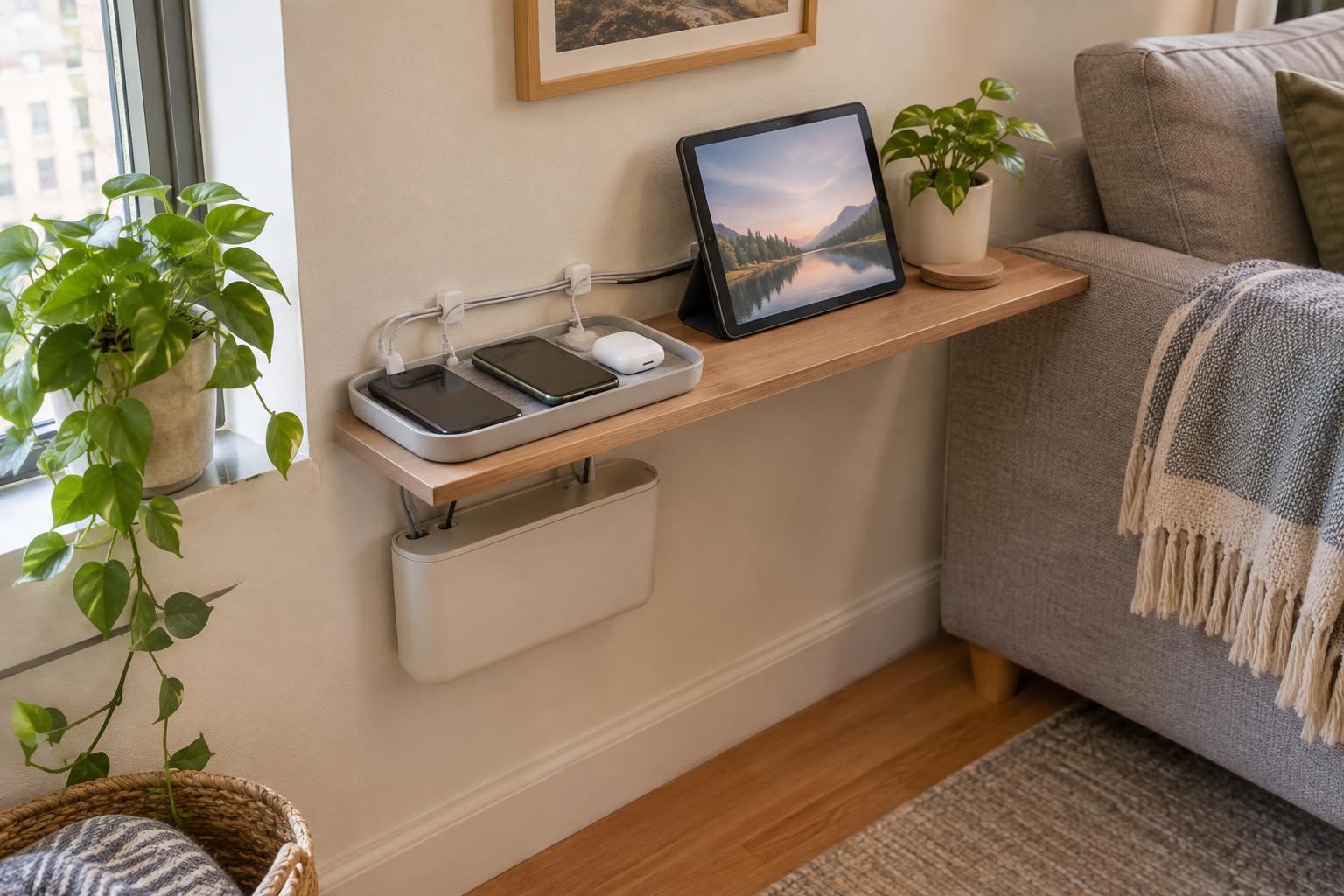
Treat cables as part of the room layout. Route them along furniture where practical, and avoid leaving loose leads across paths or under chair wheels. If you unplug a laptop every day, make that connection easy to reach. A small pouch for the charger, mouse and headphones can turn a shared table back into a dining or hobby surface without a long search for missing pieces the next morning.
Make the changeover a short routine
A good dual-purpose setup has a clear end to the workday. Decide what must be cleared, what can stay and where each item goes. For a dining-table workstation, that might mean closing the laptop, placing papers in one folder, returning equipment to a cart and wiping the table. At a desk in a bedroom, it might mean putting work materials in a drawer and switching off the task lamp. Aim for a routine simple enough to repeat on a busy day.
Live with the arrangement for a week or two before making major purchases. Notice what you move constantly, where clutter builds up and whether the room’s other uses still feel easy. Then change one thing at a time: shift the chair, add a lamp or choose a better storage container. The goal is not to make a shared room look like a dedicated office. It is to make work easy to begin and equally easy to put away.