Decide what needs to live in the bathroom
The easiest way to clear a crowded sink is to store fewer things beside it. Take everything off the basin and sort it into three groups: items used every day, items used occasionally and supplies kept as backups. Return only the daily items to easy-reach storage. A toothbrush, hand soap and perhaps one skincare product may need to be close by; spare bottles and unopened packs usually do not.
If you have a dry cupboard elsewhere, consider keeping backup toilet paper, extra toiletries and clean towels there. This reduces the amount of storage a small bathroom has to provide. Keep products in their original packaging when storage directions matter, and check those directions before moving anything to a damp or warm spot. Medicines are often better stored outside a humid bathroom, according to their labels or packaging.
Give the sink a small, defined footprint
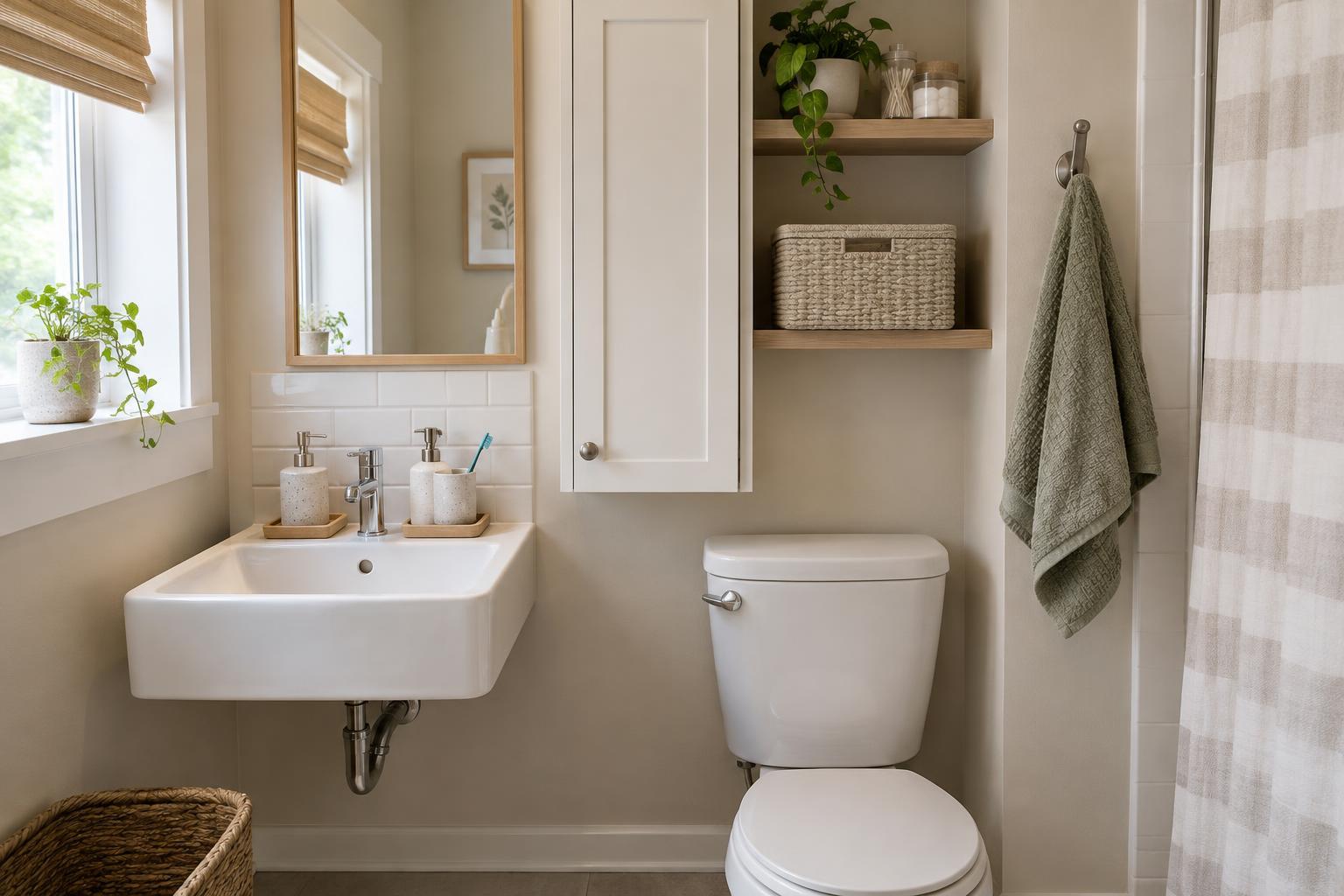
Aim to keep the basin edge and the space immediately around the taps clear enough to wipe in one pass. If a few items must stay out, place them on a small, washable tray rather than spreading them across the counter. Choose a tray that leaves room to set down a cup or wash your hands comfortably. It gives each item a boundary and makes it easy to lift everything at once for cleaning.
For daily products, use the nearest suitable drawer, cabinet or wall shelf instead of the sink ledge. Shallow containers prevent small items from disappearing behind tall bottles. A narrow bin for morning items and another for evening items can work better than organizing by product type, because each bin can be taken out and put away as part of a routine.
Choose storage that can cope with moisture
Bathrooms can collect condensation, especially near a shower. Choose containers that are easy to wipe and dry, such as plastic, coated metal or sealed materials. Woven baskets may look tidy but can be harder to clean if they regularly get damp. Whatever material you use, avoid pushing a container tightly against a wet wall or leaving it in a spot where water pools.
Closed storage helps protect paper goods and spare supplies from splashes, but it should not become a place for damp items. Let washcloths, bath accessories and cleaning tools dry before putting them away. If a cabinet smells musty or shows visible moisture, empty it, clean and dry the surfaces, and reconsider what belongs there. A container cannot make a persistently damp storage spot dry.
Use overlooked space without crowding the room
Look for storage that does not interfere with movement or cleaning. A slim shelf above the toilet, a shallow cabinet above a suitable wall space or a narrow freestanding unit may hold lightweight supplies. Measure the available space first, including the clearance needed to open doors and reach fixtures. Secure wall-mounted storage according to its instructions, and keep heavier items on lower shelves.
For renters or anyone avoiding new holes, an existing under-sink cabinet can often do more with a few removable bins. Arrange them around the plumbing rather than forcing in a large organizer. Labels on the front make supplies easy to find without unpacking every container. An over-door organizer can also work if the door still closes freely and the pockets do not block ventilation or collect shower spray.
Keep the system easy to maintain
Bathroom storage works best when putting something away takes little effort. Give each everyday item one obvious home, with enough spare room that products are not wedged together. When you open a replacement, move the empty packaging out and check whether another backup is already there before buying more.
Once a week, lift the sink tray, wipe and dry the surface beneath it, and return only the items you still use. Check nearby shelves and cabinets for leaks, residue or damp packaging. This short reset is easier than reorganizing a crowded bathroom all at once, and it helps keep the sink useful as a sink rather than a permanent storage shelf.