Start with the space you actually use
Folding saves rail space, while hanging keeps many garments visible and reduces the need to unfold them. Neither method is automatically better for a small room. A tightly packed rail can hide clothes just as effectively as an overfilled drawer. The useful question is whether you can find an item, remove it and put it back without disturbing everything around it.
Before buying organizers, look at the storage you already have. Is the rail crowded while a drawer has room? Are shelves deep enough that clothes disappear at the back? Notice where clean laundry tends to land instead of being put away. That spot may tell you which part of your current system takes too much effort. Leave a little working room in each area; storage that only functions when packed perfectly is hard to maintain.
Hang clothes that benefit from their own space
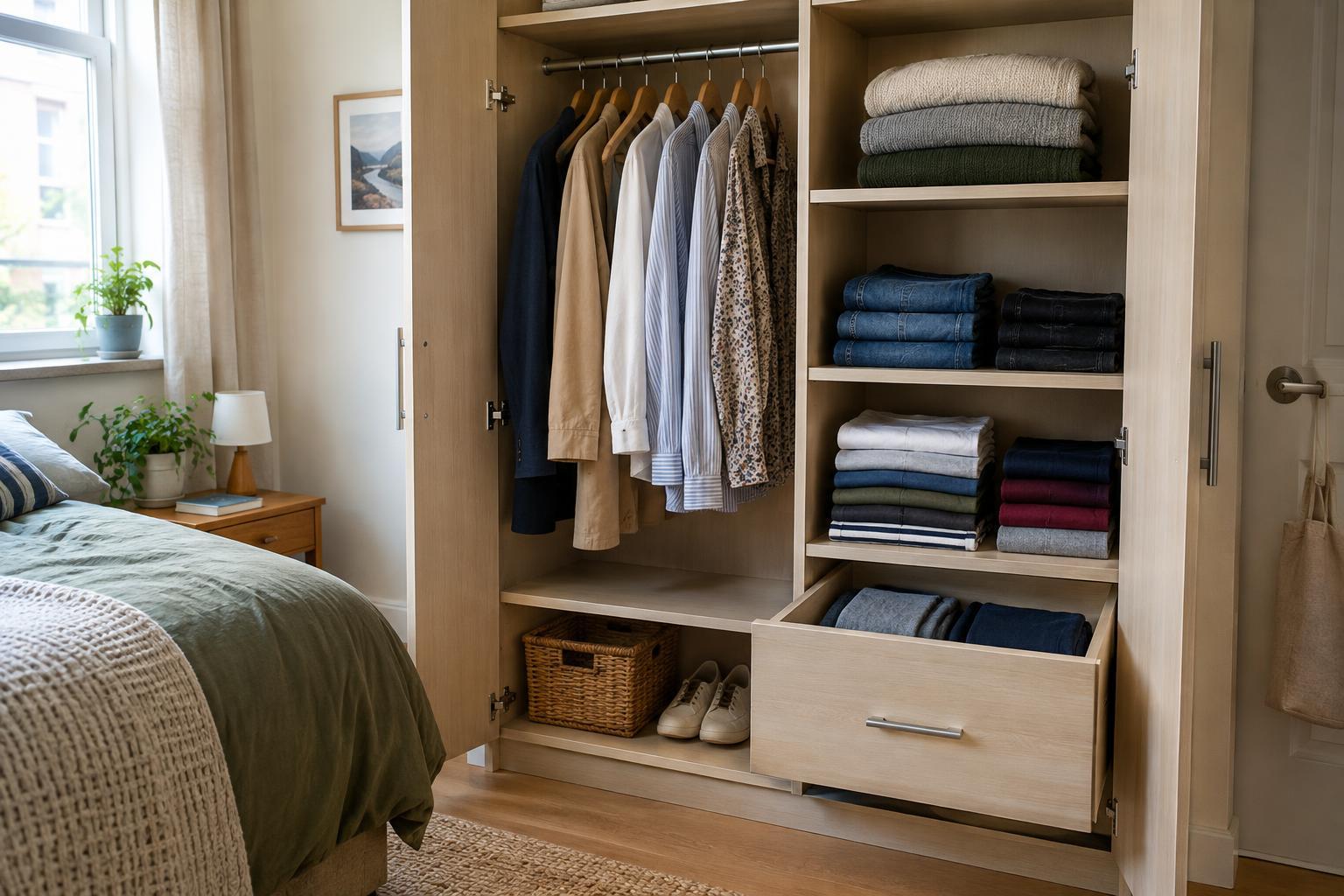
Hanging is useful for jackets, shirts, dresses and other garments that you prefer to keep relatively smooth. It also works well for pieces you choose by color, length or style: you can scan a rail faster than a stack. Put frequently worn items where you can reach them comfortably, and group similar types together so one outfit choice does not require searching the whole closet.
Hanging does use width. If the rail feels full, start by removing empty hangers, moving rarely worn items elsewhere and checking whether several bulky pieces could be folded without making them awkward to use. Avoid squeezing garments so closely that you have to force them apart. A little space between sections makes it easier to see what is there and to return an item after wearing it.
Some clothes may change shape if left on a hanger, particularly heavier knits. Fold those unless their care instructions suggest otherwise. If an item is delicate or difficult to reshape, use its care label as your guide rather than relying on a general rule.
Fold for density, then arrange for visibility
T-shirts, casual trousers, workout clothes, knitwear and sleepwear often fold well. In a drawer, try placing folded items upright in short rows so each one has a visible edge. This is sometimes called file folding. It is not essential to make identical rectangles; the aim is simply to see your choices without lifting a pile. If upright rows topple, a small box you already own can divide the drawer into manageable sections.
Shelves need a different approach. Keep stacks low enough that you can lift the top item without pulling the rest down. Separate categories, such as sweaters and jeans, rather than building one tall mixed tower. On a deep shelf, put less-used items toward the back in a container you can pull forward. A container can make the space usable, but it should not become a place where clothes are forgotten. If you cannot see inside it, label it in plain language.
Use a mixed system for awkward items
Some categories do not belong entirely on a rail or in a drawer. You might hang work shirts but fold casual shirts, or hang the trousers you wear most and fold the rest. In a shared closet, each person may need a different balance. Choose locations according to how clothes are selected and put away, not according to a rule that every garment of one type must live together.
For example, in a room with one short rail and two drawers, the rail could hold jackets, dresses and easily creased tops. One drawer could hold upright rows of everyday tops, while the other holds folded trousers and nightwear. A shelf above the rail might take a few low stacks of sweaters. This arrangement costs nothing to try and can be changed if laundry day reveals that a category is too difficult to reach.
Test the system before adding organizers
Live with your new arrangement through a few laundry cycles. If clothes repeatedly end up on a chair, ask whether their assigned place is too full, too high or too fiddly to use. Move that category before purchasing more storage. A divider, shelf bin or extra hanger helps only when it solves a specific problem you have noticed.
Keep a small amount of open space for items in regular rotation, and return things to their chosen spots while putting laundry away. When a drawer becomes hard to close or a rail becomes hard to scan, reassess what belongs there. The best folding-versus-hanging system is not the one that fits the most clothes into a compact room. It is the one that lets you see and use what you have.