Start with the light you want to improve
A mirror does not create light; it redirects what already reaches it. Before choosing a wall, notice which parts of the room feel dim during the hours you use them. In a multipurpose room, that might be the reading chair in the afternoon or the dining table that doubles as a work surface. Improving one useful area is a better goal than trying to make every corner brighter.
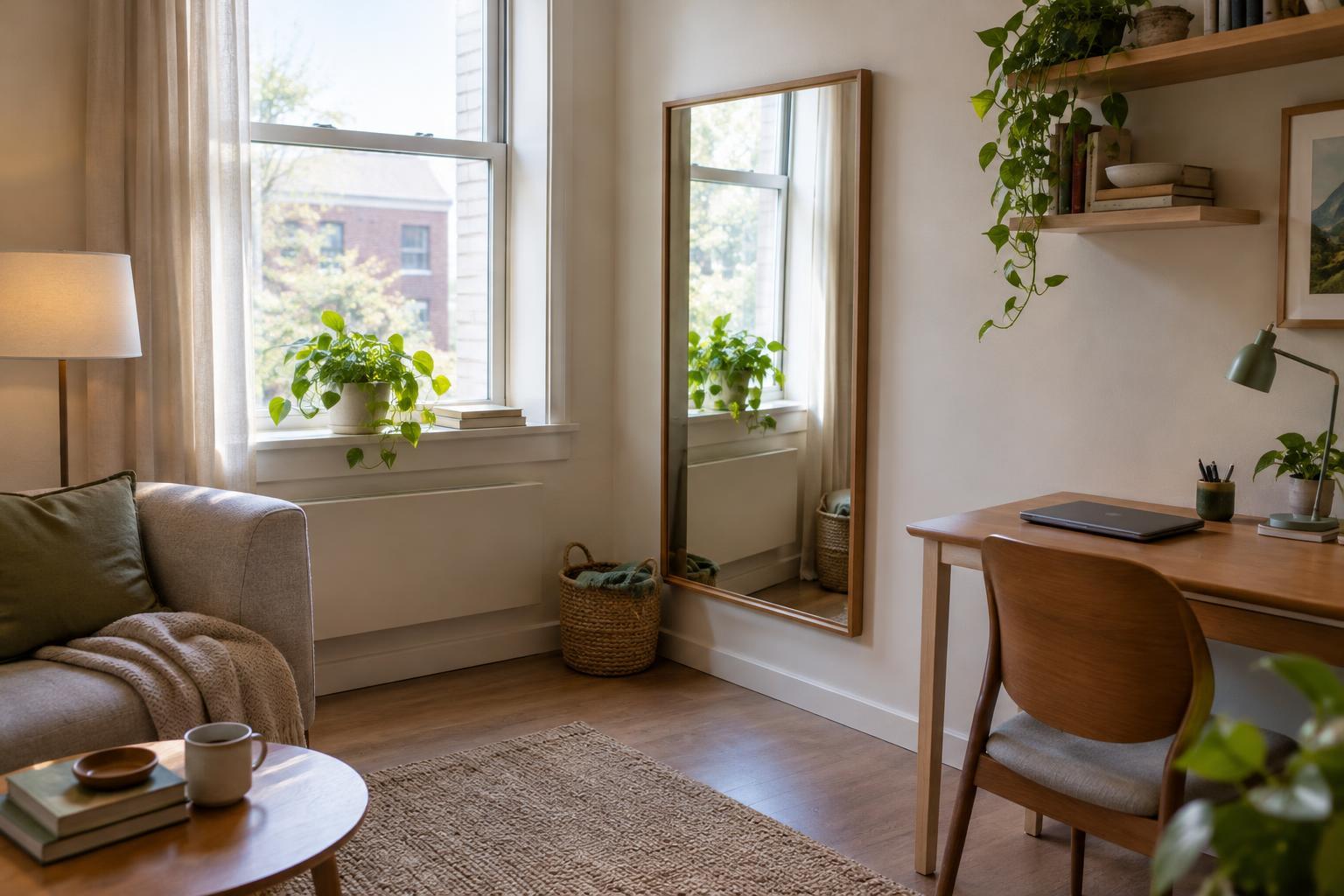
Stand near the window and look toward the area you want to brighten. A mirror placed where it catches some window light may help, but facing the window directly is not always the best choice. It can produce a bright patch that is uncomfortable to look at. A side wall often gives you a softer reflection and lets you see more of the room from the doorway.
Test the angle before making holes
Glare depends on where the mirror is, where you sit and how light changes through the day. Before mounting anything, ask someone to hold the mirror in a possible position, or lean it securely against a wall while you check it. Sit at your desk, sofa and dining spot. Look for sunlight in your eyes, a bright reflection on a laptop or television, and any lamp bulb reflected at eye level.
Repeat the check at a different time of day if direct sun reaches the room. A position that feels comfortable in the morning may be distracting later. You can also hold a small handheld mirror against a candidate wall to get a rough sense of what a larger one would show. The view will not be identical, but it can help you rule out a wall that reflects a screen, a cluttered shelf or a light fixture.
Choose a view worth reflecting
In a small room, a mirror has a visual job as well as a lighting job. It doubles whatever appears in it from your usual viewing position. If it reflects a clear stretch of wall, a plant or a tidy corner, the room may feel calmer. If it reflects an overflowing coat rack, it can make the space feel busier. Check the view from the entrance and from the seat you use most often before deciding.
Height matters too. A mirror hung only to catch the highest part of a window might reflect the ceiling rather than the room. Try placing its center near a comfortable viewing height, then adjust for the furniture below it. Above a narrow console or dresser, leave enough space to use the surface without knocking the frame. In a tight hallway, make sure the mirror does not project into the walking route.
Work around desks, lamps and shared rooms
For a home-working corner, avoid putting a mirror where you can see the window reflected behind your monitor or over your shoulder. That bright area can be distracting even when it does not fall directly on the screen. A mirror on a wall beside the desk may bring light into view without placing it in your line of sight. Test the setup with the screen on, since a dark screen and an active one can show reflections differently.
Lamps need the same attention. If a bare bulb appears in the mirror from the sofa or bed, move the mirror, change the lamp position or use a shade that softens the visible light. In a room used for both relaxing and working, check both activities. The most useful placement is one that remains comfortable during ordinary use, not just one that looks bright in a photo.
Keep the project simple and secure
You do not need a large statement mirror to make a difference. A modest mirror in the right place may be more useful than an oversized one that dominates a compact wall. If you are buying one, measure the available space and mark the proposed outline with removable tape first. This helps you judge its scale alongside shelves, doors and furniture without committing to a purchase or a mounting position.
Once you have tested the spot, follow the mirror maker’s mounting instructions and use fixings suited to the wall and the mirror’s weight. Do not assume an adhesive strip will hold a heavy framed mirror. If you rent, check what changes are permitted before drilling. A securely placed freestanding mirror can be an alternative, provided it cannot easily tip or obstruct a doorway. The final check is simple: live with the position briefly and move it if the reflected light feels harsh.