Start with the visit, not the chair
A folding chair for a quick cup of tea has a different job from one used throughout a long dinner or board-game evening. Before shopping, think about where guests will sit, how long they are likely to stay, and how many extra seats you actually need. If two people visit regularly, a comfortable pair may be more useful than a larger set that is awkward to store.
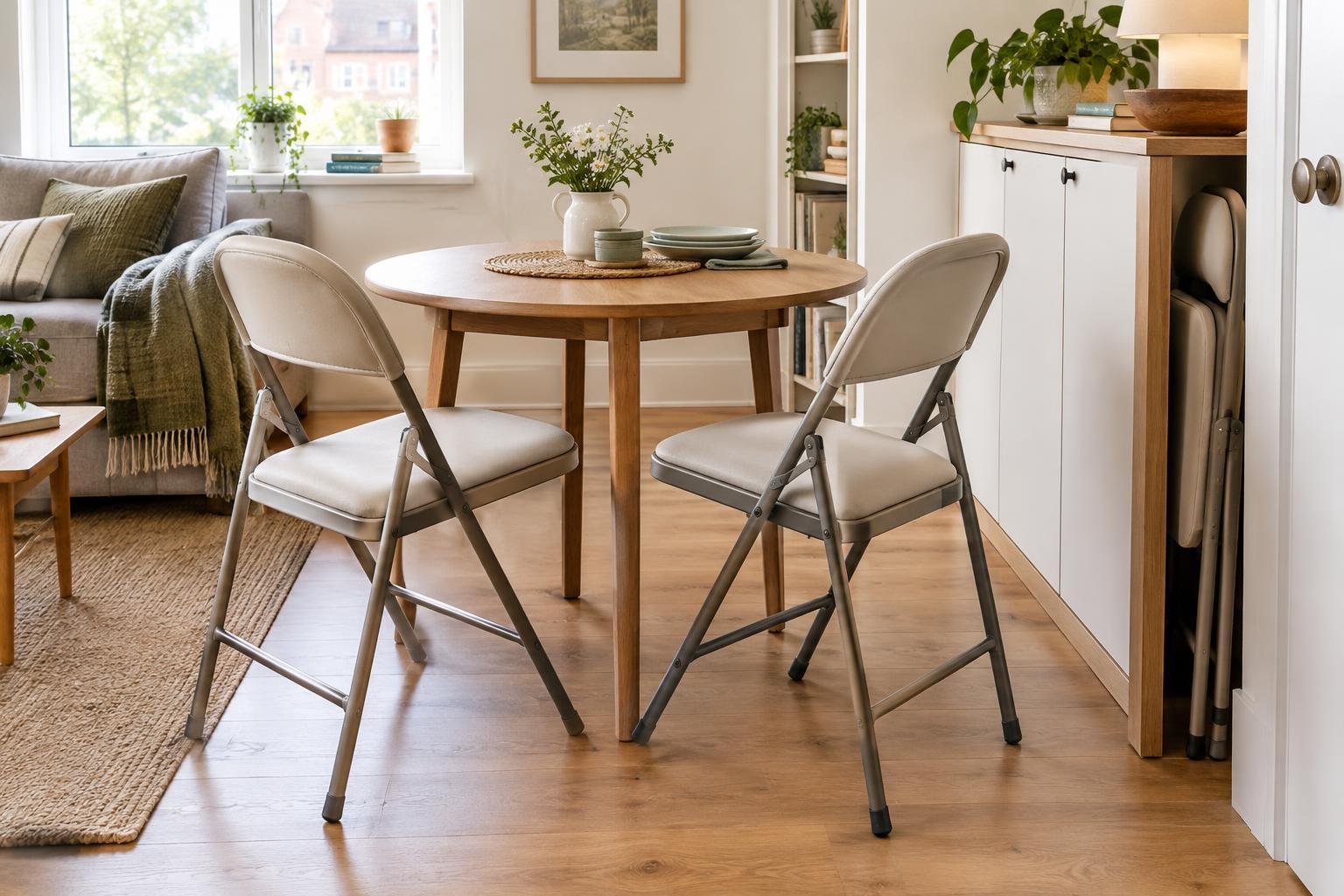
Measure the space around your table with the chairs you already use pulled out. Leave enough room for guests to sit down and get up without squeezing past furniture or blocking a doorway. A folding chair is only flexible if it works when open as well as when stored; a slim folded profile will not help much if its legs crowd the room during a meal.
Check comfort from seat to backrest
If possible, sit in a chair before buying it. Keep your feet on the floor and notice whether the seat edge presses into the backs of your legs. Check that the seat feels wide enough to shift position and that the backrest supports you without forcing you to lean forward. A little padding can make a hard seat more pleasant, but seat shape and backrest position matter too.
For longer visits, compare the folding chair with your regular dining chairs. A very low or high seat can leave a guest sitting awkwardly at the table even if the chair feels fine on its own. Armrests may add comfort, but they can make a chair wider and prevent it from sliding under a tabletop. If you are ordering online, compare listed seat heights and widths with a chair you find comfortable at home, and check the return terms in case the fit is wrong.
Make stability part of the test
Open and close a chair several times to see whether the mechanism moves smoothly and locks into its intended position. Once open, set it on a level floor and check for wobble, flexing or loose joints. Look at the manufacturer’s stated weight capacity and use instructions rather than assuming that all folding chairs are built for the same load. A chair should be easy to carry without feeling flimsy when someone sits down.
Consider your flooring as well. Feet that grip and sit evenly are helpful on smooth surfaces; protective caps can also reduce marks on hard floors. If the chair has fabric or a cushioned seat, think about how you will clean spills. Wipeable surfaces are convenient around food, while removable cushions give you more options for washing or replacing a worn part.
Plan the storage spot before you buy
Measure the cupboard, closet or gap where the chairs will live, including its height, width and depth. Then check each chair’s folded dimensions. Remember to allow space for your hand to lift a chair out; a perfect fit on paper can be frustrating in daily use. If you plan to hang chairs on hooks, confirm that the hooks and wall fixings are suitable for the weight and that the chairs can hang without obstructing a door.
Weight matters if you will move the chairs often or carry them between rooms. Try lifting one with a single hand, especially if the intended storage spot is overhead or down a hallway. A lightweight chair that stacks neatly may suit frequent use, while a heavier, more cushioned design may be worth the storage effort if guests usually stay for hours. Store chairs somewhere dry and steady so they are less likely to tip over or get damaged.
Spend on the qualities you will use
On a tight budget, prioritize a stable frame and a comfortable seat over a finish that matches every piece of furniture. Buying just the number of chairs you need can leave room in the budget for better construction. Secondhand chairs can be an option, provided you inspect hinges, joints, feet and seat surfaces carefully before relying on them for guests.
At home, do a trial run: set the chairs around the table, sit in each place, then fold and put them away. This reveals small annoyances, such as a chair that catches on a table leg or needs two people to fit back into a cupboard. The best folding chairs are not necessarily the smallest when closed. They are the ones guests can use comfortably and you can store without rearranging the whole room.