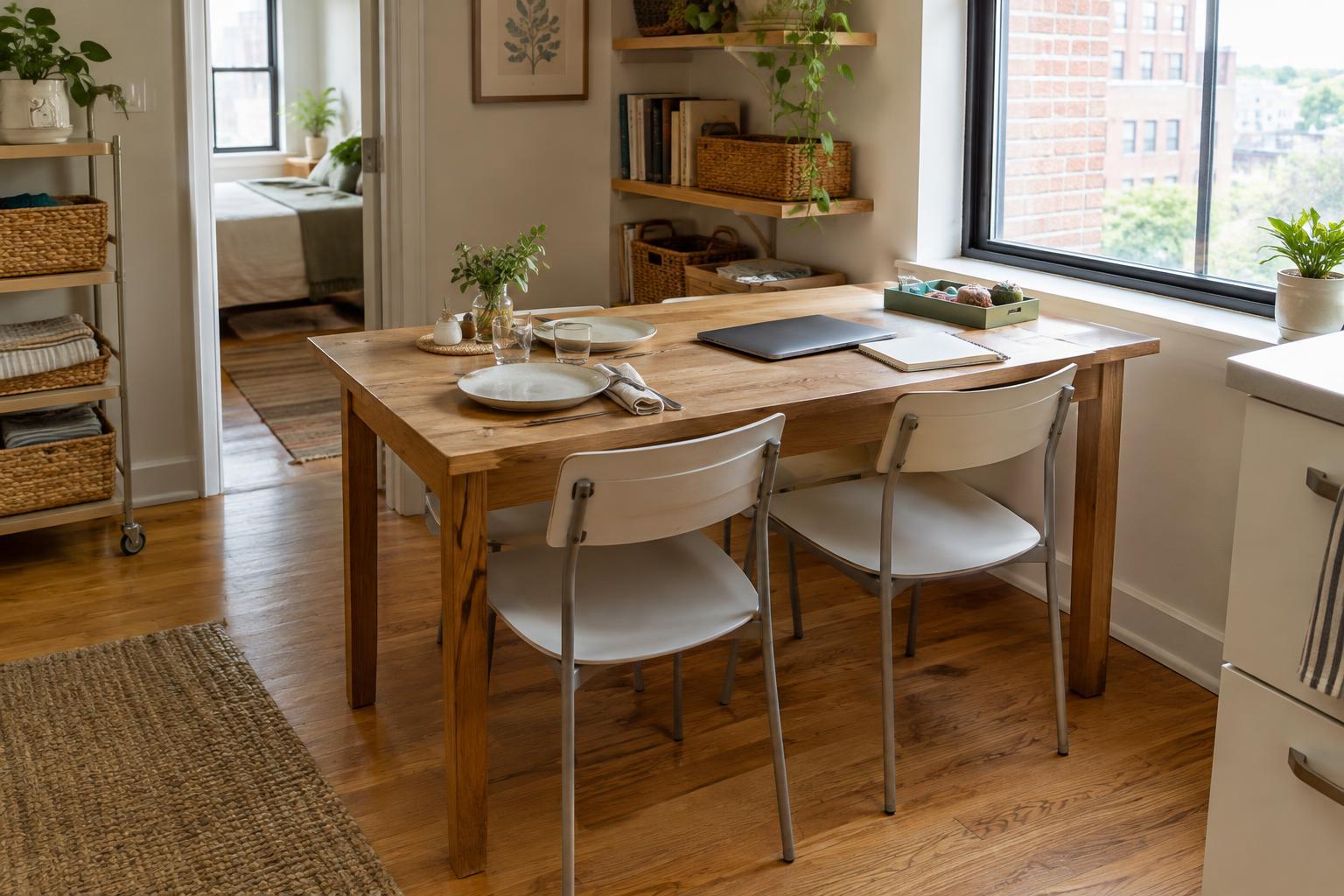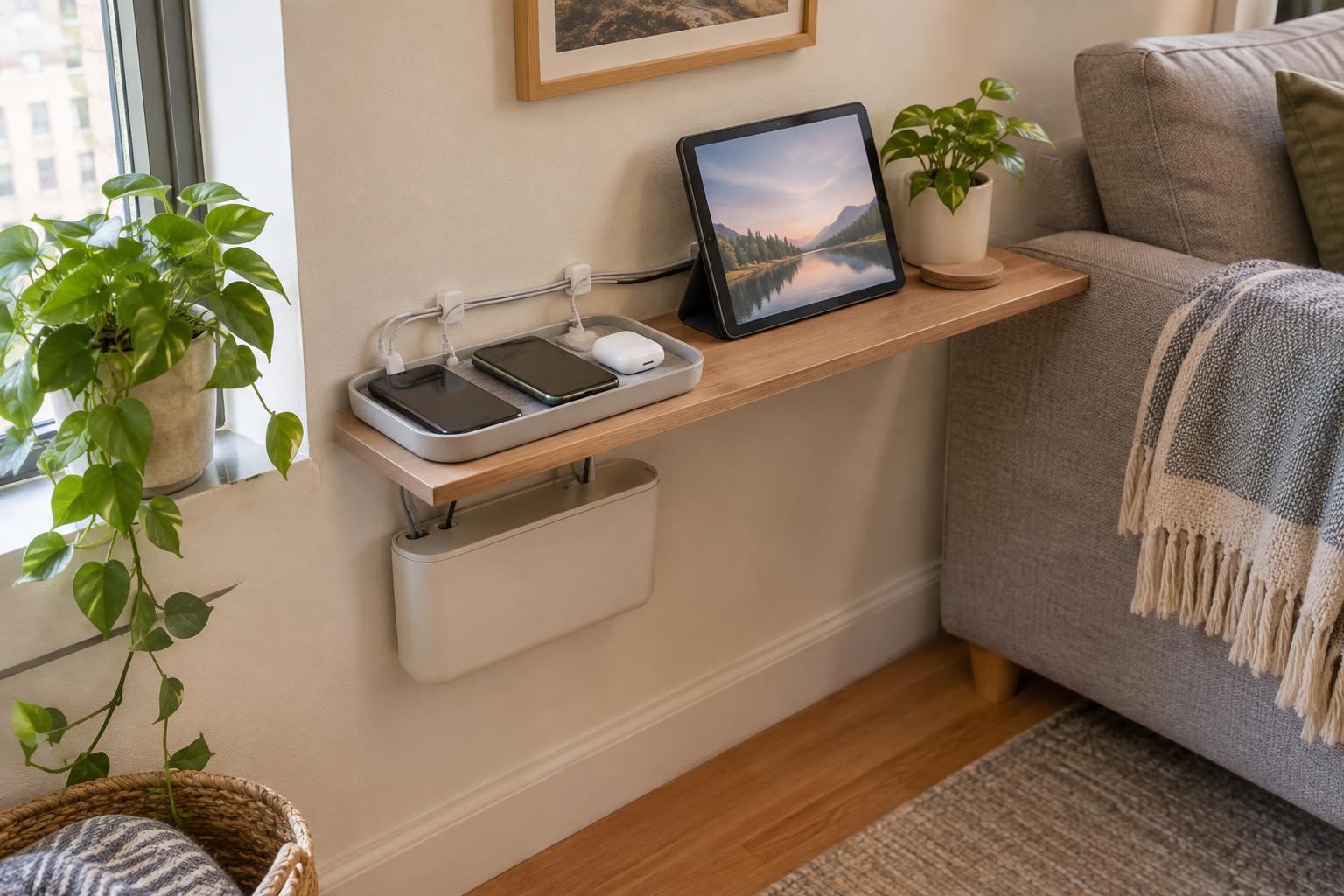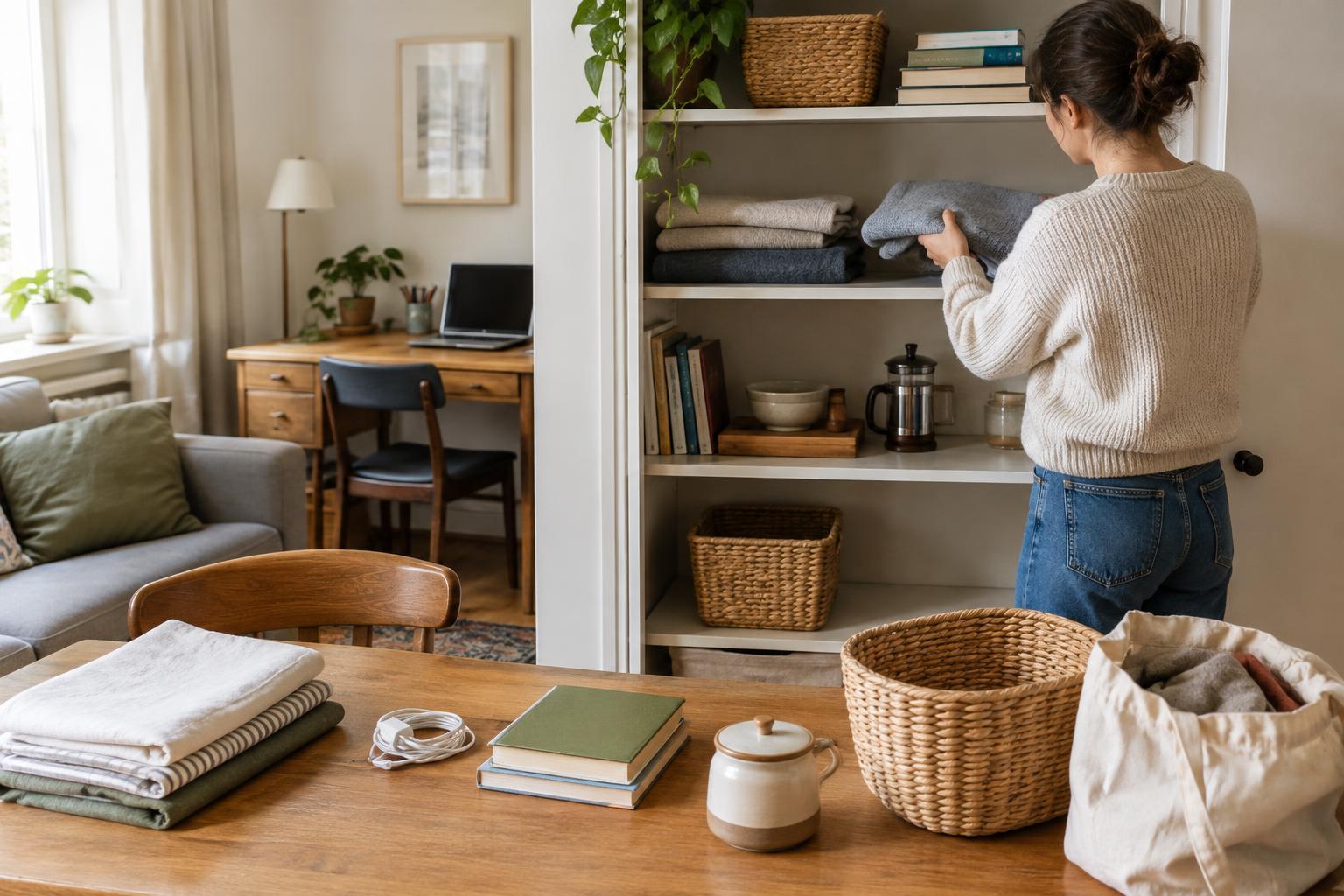
Start with one storage zone
A storage audit is a check of what you have and whether it lives in a useful place. In a compact home, start smaller than a whole-room clear-out: choose one drawer, shelf, cupboard, or patch of floor. A contained area gives you room to make decisions without turning the entire home upside down. Set aside a short session, and keep a bag for rubbish and a box for items that belong elsewhere.
Before you empty the zone, notice what is difficult about using it. Are everyday supplies buried behind occasional ones? Do you move a pile each time you need the desk? Is a cupboard full but hard to reach into? The goal is not an empty shelf. It is storage that supports what you actually do in that space. If the room changes purpose during the day, note which items need to move with it.
Decide what earns a place nearby
Take items out and group similar things together. Seeing all the spare cables, cleaning cloths, or reusable bags in one place makes it easier to judge how much room each group needs. Then ask when you last used each item, whether it still works, and what you would do if it were not close at hand. Keep frequently used items within easy reach, particularly those that help the room change function, such as work supplies in a living room that doubles as an office.
Keep decisions need not be permanent. A seasonal fan or a set of guest bedding may be worth keeping even if it is rarely used. But it probably does not need the most accessible shelf. Likewise, a duplicate can be useful when it saves repeated trips between rooms; several duplicates in the same drawer may simply crowd out what you need. Aim to give the easiest spots to the items you reach for most often.
Relocate items that are useful but misplaced
Relocating is often the quickest win in a small space. An item may deserve to stay in your home without deserving its current position. Put things where you use them, or where you can retrieve them without disrupting another activity. For example, store wrapping supplies with other occasional craft materials rather than beside daily paperwork, or move spare toiletries out of a bathroom drawer needed for morning essentials.
Before sending anything to a new spot, check that the destination has room. Otherwise, you have only transferred the crowding. Give each item a specific home, not a vague instruction to put it away later. If several rooms share a task, a portable container may work better than a fixed shelf: one small box for home-working supplies can be brought to the table and packed away when the table is needed for meals.
Let go without making a bigger mess
The let-go group may include broken items you will not repair, supplies for a project you no longer plan to do, or extras that exceed the space you can reasonably give them. Do not keep something solely because it fits inside a container. The question is whether having it is worth the space and effort it takes to store and find it. If a decision feels difficult, set the item aside briefly and finish the clearer choices first.
Separate items you can pass on from those that need disposal, and check local options for anything that cannot go in ordinary rubbish. Give the outgoing box a next step, such as taking it to a donation point on an existing errand. Leaving it in a hallway indefinitely creates a new storage problem. Avoid buying bins or dividers until the sorting is done; you may find that the containers you already own are enough.
Put things back so the system is easy to maintain
Return the keep items in order of use. Put daily items where they can be reached without shifting anything else; place occasional items higher, farther back, or in less convenient cupboards. Keep categories together and leave enough room to remove an item easily. A clear label can help on an opaque box, especially when several people use the space, but an elaborate system is not necessary.
Test the arrangement over the next few ordinary days. If something repeatedly ends up on the table or floor, its assigned home may be too far away or too full. Adjust that spot rather than treating the habit as a failure. Once the first zone works better, move to another. A series of small audits is more manageable than one major overhaul, and each one helps you learn which storage choices suit your home.