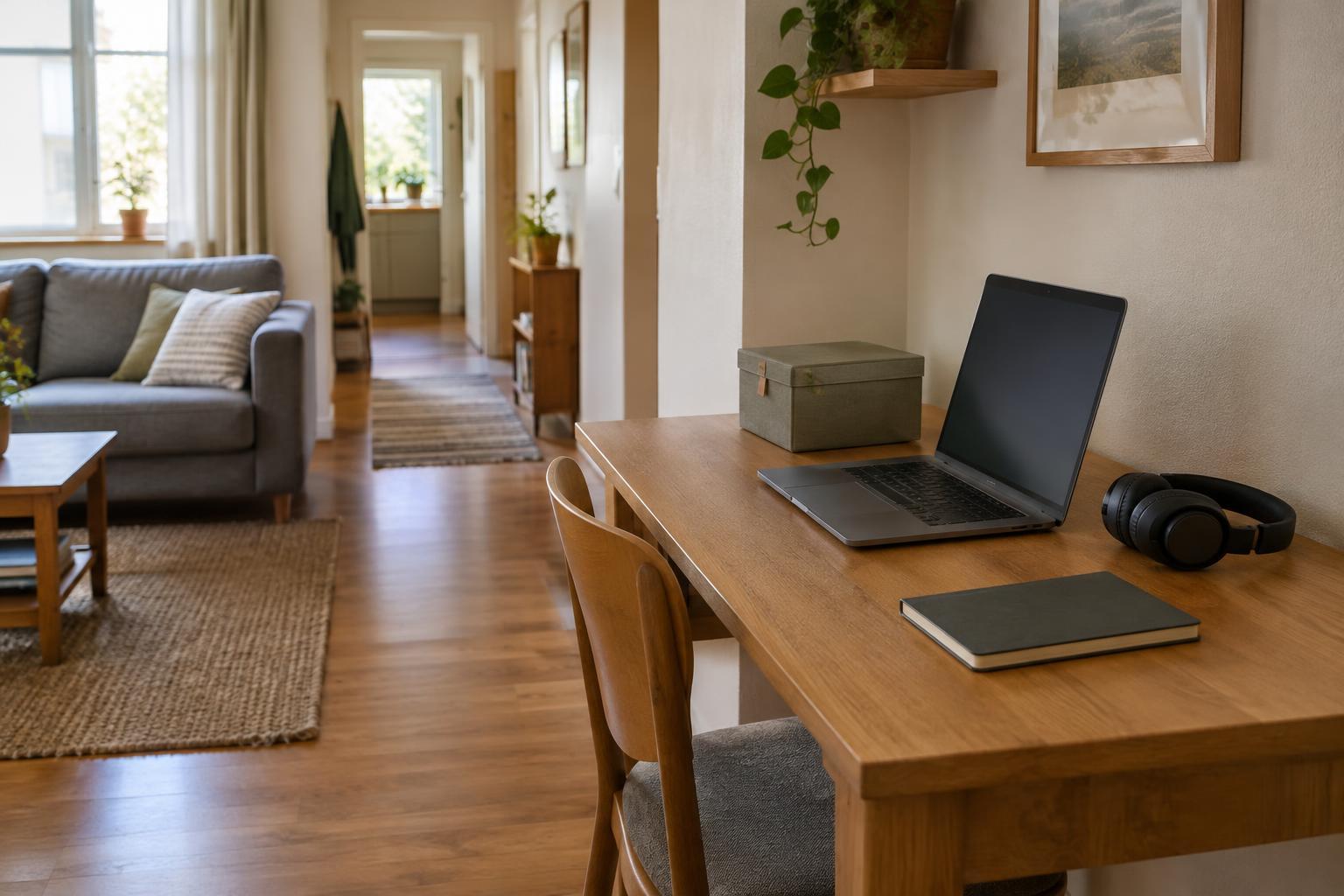
Start with what the shelf will hold
Before buying brackets or picking up a drill, decide what belongs on the shelf. A few framed photos are a different load from a row of books, and a compact room can make it tempting to put every spare item overhead. Include the weight of the shelf and brackets as well as everything you intend to store. If the contents may change, allow room for heavier items rather than planning around an almost empty shelf.
Check the load limits supplied for the shelf, brackets and fixings. The lowest relevant limit matters; strong brackets cannot make an unsuitable wall fixing stronger. Think about how the weight is distributed, too. Heavy objects near the front edge put more strain on the supports than objects placed toward the wall. Keep dense items low where possible, and use higher shelves for lighter things you do not need every day.
Find out what the wall can support
Different walls call for different fixings. Timber studs can provide a solid place to secure suitable screws, while masonry generally needs fixings matched to the material. Plasterboard or drywall without a stud behind it needs anchors intended for hollow walls, with a load rating appropriate to the installation. A hollow-wall anchor is not a universal substitute for fixing into a stud, particularly for a deep shelf carrying heavy objects.
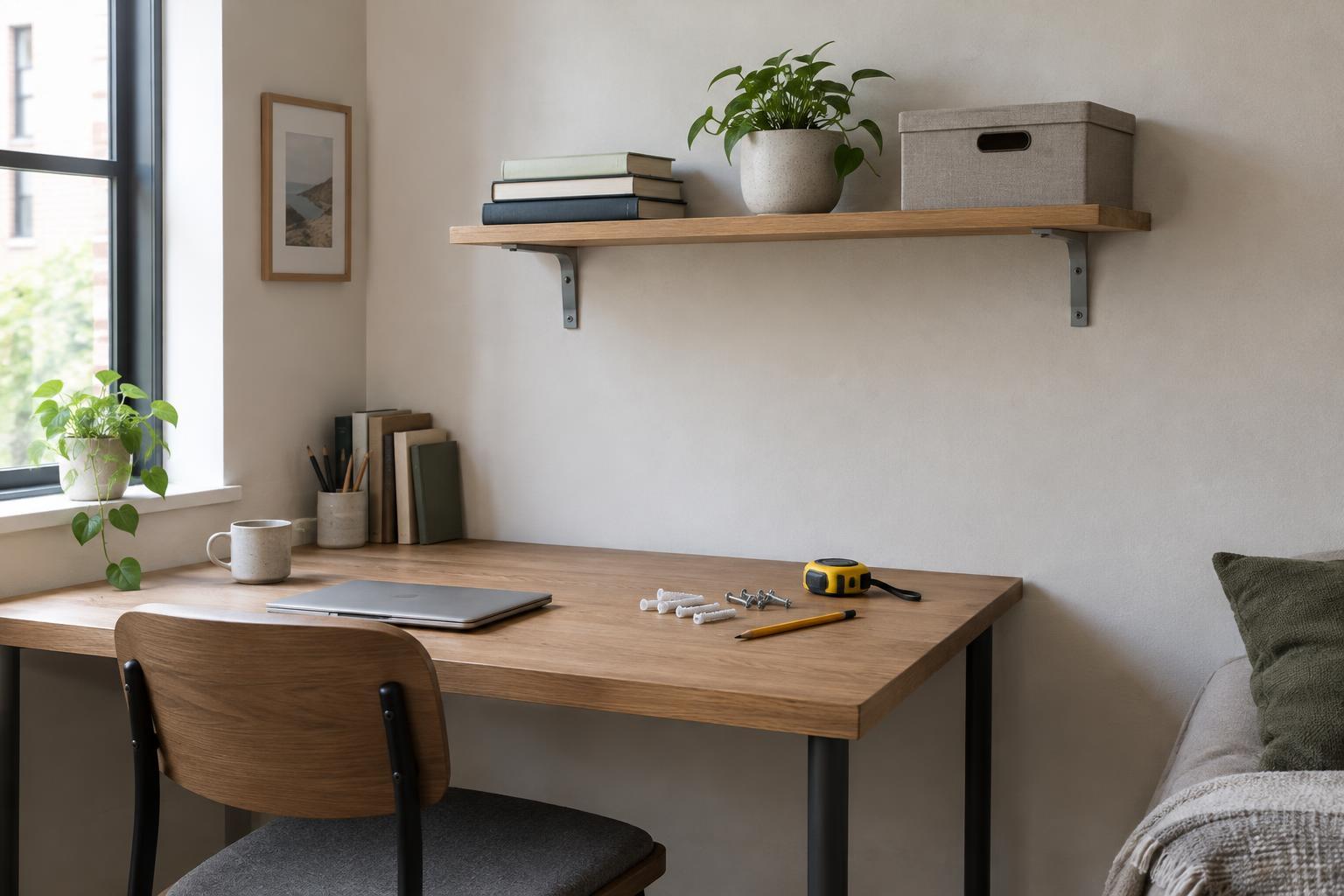
Do not assume a wall is solid because it sounds firm when tapped. Check the construction as carefully as you can, and follow the shelf and fixing manufacturers’ instructions for spacing, screw size and installation. Before drilling, consider where electrical cables and plumbing might run. If you cannot confidently identify the wall type or a safe drilling location, pause and ask a competent installer for help. Guessing is a poor trade for extra storage.
Make the shelf practical in a small room
Position matters as much as capacity. In a multipurpose room, a shelf above a desk may keep supplies within reach, but it should not sit where someone is likely to strike their head when standing up. Avoid placing heavy or breakable objects above a bed, a child’s play area or a frequently used seat. Leave enough clearance to open doors and cupboards and to lift stored items off the shelf without pulling them toward you awkwardly.
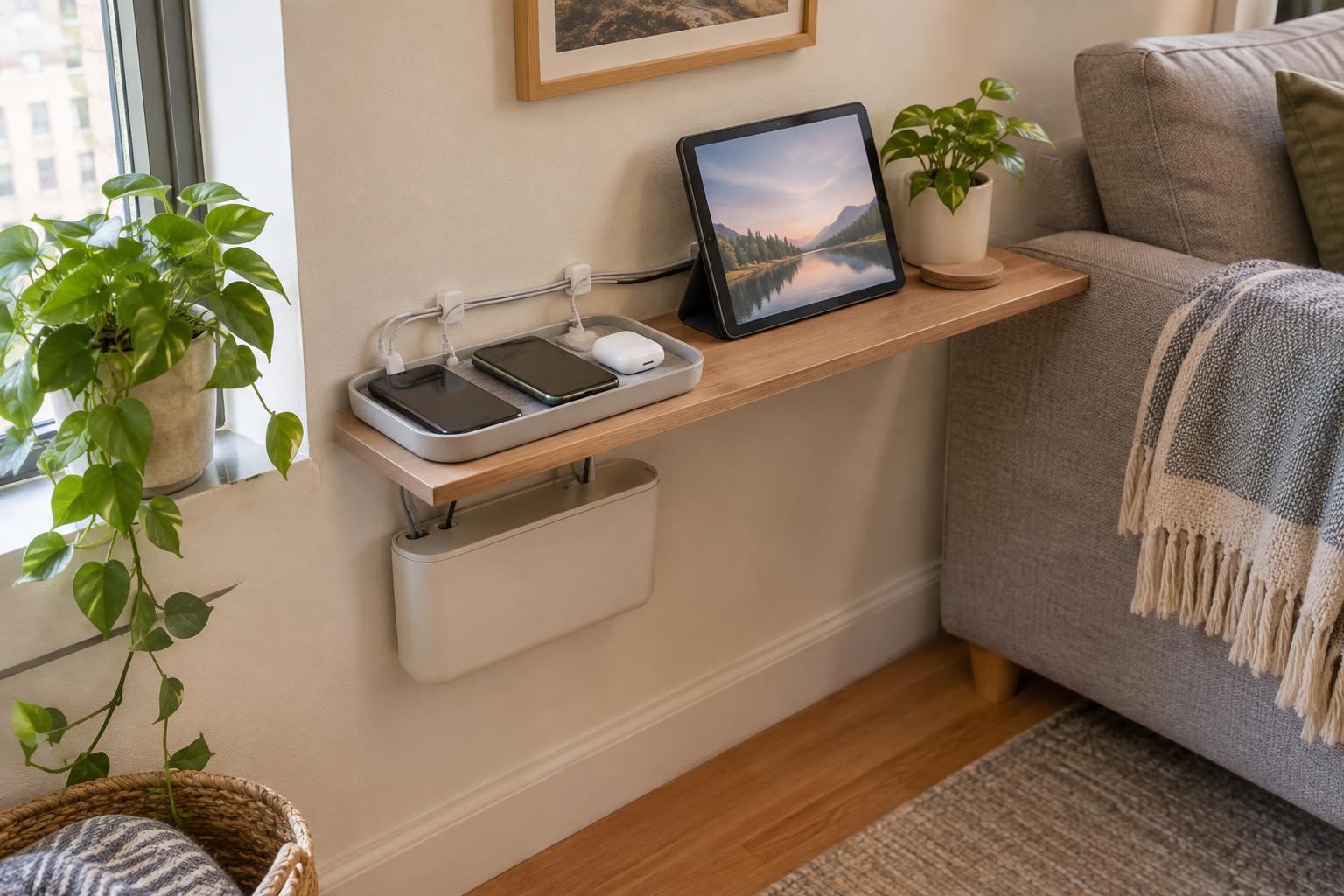
Use the shelf’s depth to guide what goes on it. A narrow ledge suits small, stable objects; it is not a good home for bulky baskets that overhang the edge. Store regularly used items at a comfortable height, and keep loose pieces in containers that fit fully on the shelf. After installation, check that the shelf sits level and feels secure before loading it gradually. Recheck brackets and fixings if the shelf moves, the wall surface changes or you change what you store.
When drilling is not an option
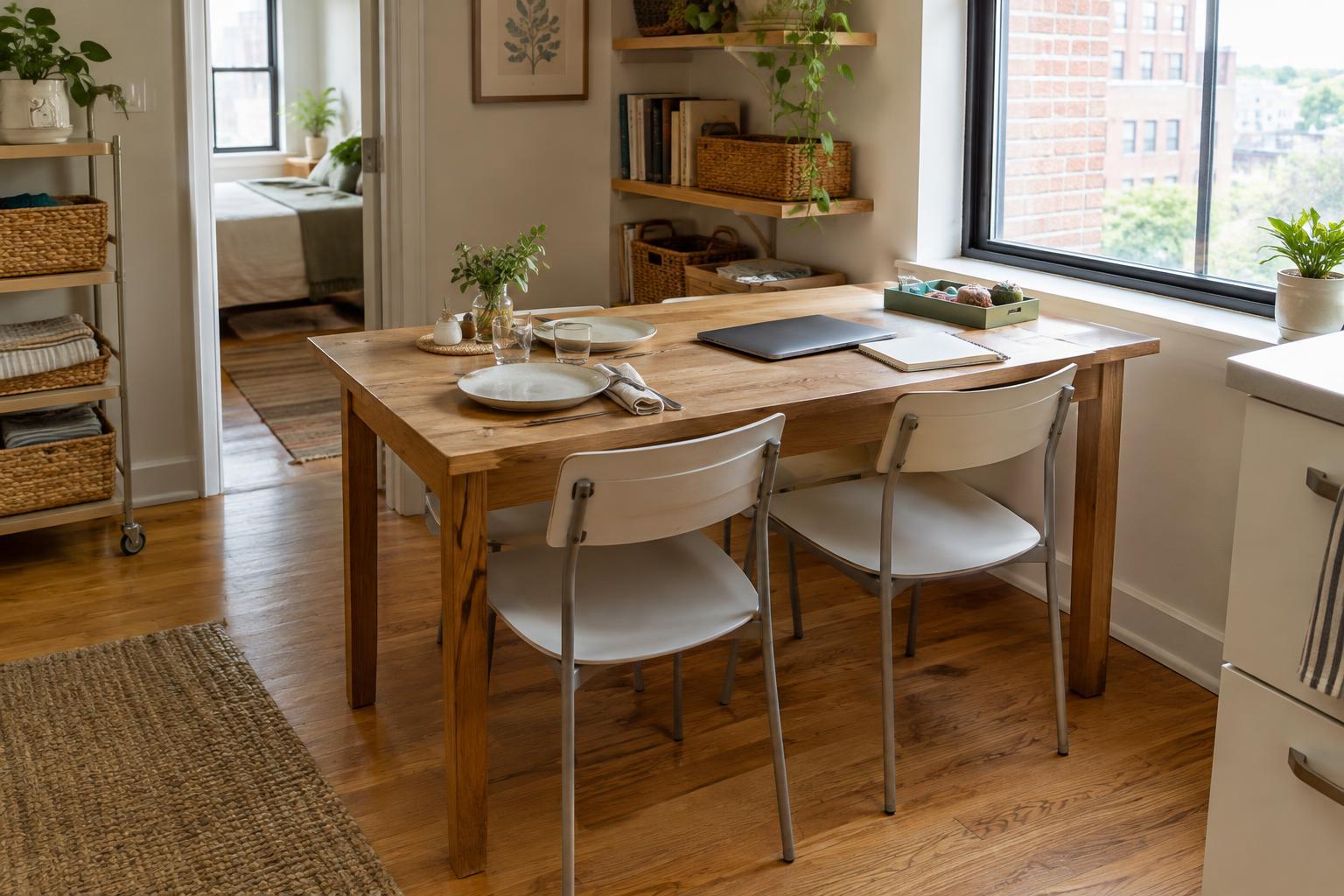
Renters should check their tenancy terms and seek permission where required before making holes. If drilling is off the table, choose storage that does not pretend to be a wall shelf. A slim freestanding bookcase, a shelf that sits on an existing sturdy worktop or an over-door organiser may provide useful space without altering the wall. Check door clearance and the organiser’s load guidance before filling pockets with heavy supplies.
Adhesive shelves and hooks can be useful for very light items on surfaces approved by their manufacturer, but their limits depend on the product, surface and installation. They are not a like-for-like replacement for a shelf of books. Tension-fit storage also needs careful use within its stated limits. Freestanding units deserve attention of their own: tall or narrow furniture can tip, especially if climbed or pulled. Choose a stable unit, place heavier items low, and consider whether an approved anti-tip solution is possible in your home.
Choose the least complicated solution that works
A good storage plan starts with the contents, then matches the support to the wall and the room. If you only need a place for keys, a small organiser may be simpler than a shelf. If you need to store heavy files or books, a low cabinet may be more suitable than putting them overhead. When a wall shelf is the right choice, take time to check every part of the installation rather than relying on how sturdy it looks.
This approach can also keep a project budget sensible. Measure the available space and list the items to store before purchasing anything; you may find that one appropriately sized shelf does more work than several poorly placed ones. Whether you drill or use a movable alternative, leave capacity to spare so the storage remains easy to use as the room changes.